
The IO+ week: Europe wants a future it can count on
Every Sunday, our weekly review offers an overview of the most interesting stories around important innovations.
Published on October 25, 2026

Bart, co-founder of Media52 and Professor of Journalism oversees IO+, events, and Laio. A journalist at heart, he keeps writing as many stories as possible.
Good morning! By a considerable margin, our most-read article this week was about Europe building satellite networks to rival Starlink. I suspect its appeal reaches well beyond an interest in space. The story touches a nerve: the fear that the systems we depend on might ultimately answer to someone whose interests differ from ours. Ukraine’s reliance on Starlink makes that vulnerability painfully tangible. Suddenly, the ownership of infrastructure feels like a question of freedom, security and who gets to make decisions about our lives.
Readership figures cannot tell us exactly what people felt, but my reading is that this story offered something many readers are looking for: evidence that Europe can act. Alongside the anxiety sits a desire for greater independence, and perhaps some wounded pride. We want European ingenuity to translate into companies, infrastructure and choices of our own. A satellite network gives the often abstract ambition of “strategic autonomy” a recognisable shape. It suggests that Europe can help determine the technological future it inhabits.
Unease and ambition
That combination of unease and ambition feels characteristic of our times. The promise of seamless global connectivity now comes with uncomfortable questions about power. Who controls access? What happens when commercial relationships become political instruments? We still want the convenience and possibilities of a connected world, alongside stronger guarantees that essential services will remain available when relationships deteriorate. The article’s popularity suggests how urgently that reassurance is wanted.
Does it give us reason for optimism? I think so, cautiously. IRIS², cooperation between major telecom operators and the planned combination of European space businesses show an effort to turn concern into capability. But launch capacity, financing and industrial coordination remain serious obstacles; meaningful alternatives take years to build. The encouraging part is that Europe has expertise and organisations willing to commit to the task. Optimism becomes credible when someone starts doing the difficult work. This story shows that work beginning.
https://ioplus.nl/en/posts/europe-builds-its-own-satellite-networks-to-rival-starlink
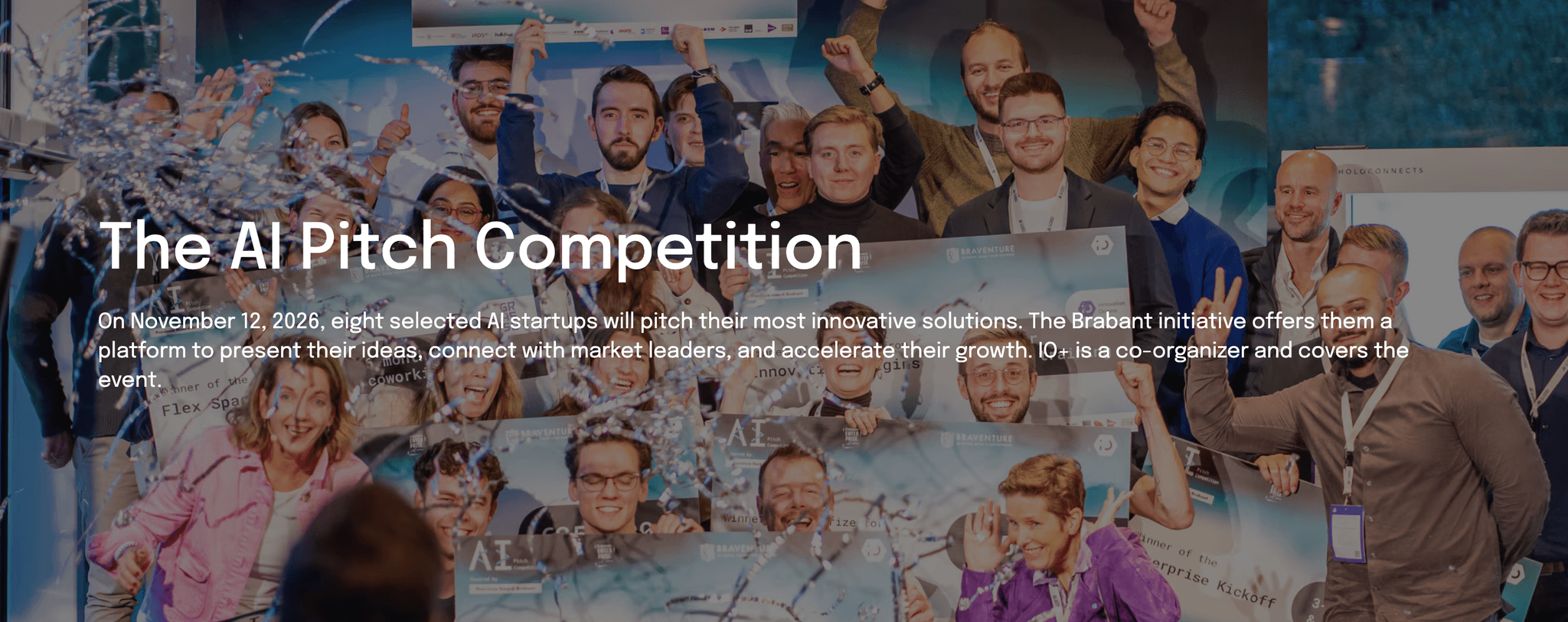
We have five new episodes in our AI Pitch Competition Profile series:
AI that does the heavy lifting
Inside an aircraft’s baggage hold, workers lift heavy suitcases in cramped conditions, under relentless time pressure. Eindhoven startup UNSEQ is developing robots to take on that physical burden, using AI to recognise and handle bags of different shapes, materials and sizes. The ambition is clear; making it reliable throughout a working day is the engineering challenge. This AI Pitch Competition finalist offers a compelling measure of useful progress: whether technology can help someone finish a shift with less strain on their body. https://ioplus.nl/en/posts/a-flight-should-not-come-at-the-expense-of-someones-back
Automating without handing over control
The desire for technological independence runs through this week’s AI coverage too. One Horizon is building a platform that lets businesses automate workflows while choosing their own AI models, running them locally where needed and keeping people involved in important decisions. Founders Gijs van de Nieuwegiessen and Tijn van Daelen bring experience from an earlier enterprise automation venture. Their focus is the demanding step between an impressive demonstration and a dependable business tool: making different systems work together while preserving control over data and operations. https://ioplus.nl/en/posts/how-one-horizon-brings-independent-ai-automation-to-enterprises
A different soundtrack for small businesses
For gyms, cafés and shops, background music helps set the atmosphere, but licensing costs can weigh heavily on the business. YourNeuroTune offers AI-generated soundtracks tailored to commercial settings, combining music production with similarity screening and human curation. The company says its approach can reduce traditional collecting-society fees, with legal assessments made for each market. Already operating in four countries, the startup raises an interesting question about generative AI: how much of the music surrounding our daily activities will become something created specifically for the moment and place? https://ioplus.nl/en/posts/functional-not-for-the-charts-yourneurotune-on-copyright-fees
When two permitted actions create one dangerous outcome
An AI agent might be authorised to read customer information and to send an email. Putting those actions together can still create a serious data leak. That is the problem Kyvvu wants to address with its Agent Security Kernel, which checks proposed actions against the sequence of events that preceded them. Co-founder Maurits Kaptein argues that dependable safeguards belong in the software executing an agent’s actions. As AI gains the ability to operate business systems, understanding what it has already done becomes essential to deciding what it should do next. https://ioplus.nl/en/posts/this-action-is-fine-except-after-that-one
Workplace culture lives in everyday language
A performance review, a recruitment advert or a hastily written email can shape whether someone feels valued and able to speak up. Be-Inc founder Eline Schoonen is bringing that insight into Microsoft 365 with an AI coach that flags potentially problematic wording, explains its reasoning and offers alternatives. Writers retain the final decision, and the platform’s design rules exclude individual employee scoring. Her argument is persuasive: improving workplace culture requires attention to the ordinary exchanges through which people experience it every day. https://ioplus.nl/en/posts/culture-isnt-made-at-an-away-day-its-made-in-the-sentence
Europe’s inventions need room to grow
Quantum-computing cables, laser markings on fruit and technology for newborn care: the Dutch companies featured in Rise Europe’s startup landscape make deep tech’s potential tangible. Twenty Dutch ventures appear in the report, illustrating strengths in areas including photonics, quantum technology and advanced manufacturing. They also expose a familiar challenge. A scientific breakthrough still needs manufacturing capacity, certification, customers and patient investment before it becomes a substantial business. Europe’s technological ambitions depend on supporting that entire journey. https://ioplus.nl/en/posts/dutch-deep-tech-takes-on-europes-scaling-challenge
The robots preparing the ground for new homes
Building more homes also means building the infrastructure around them. Danish startup ERLEtek is developing compact robots that construct retaining walls and flood defences by depositing concrete layer by layer, without conventional formwork. The company says its approach can substantially reduce labour hours, and it is working with contractors to fit the technology into existing construction practices. Robots cannot resolve infrastructure funding shortages, but they could help scarce workers deliver more of the groundwork that new neighbourhoods need. https://ioplus.nl/en/posts/housing-needs-infrastructure-can-robots-build-it-faster
Twente’s chip ambitions clear practical obstacles
Europe’s technological independence also depends on very practical things: electricity and water. New Origin’s planned photonic chip factory in Enschede has made progress on both, with partners developing a smart-grid solution and arrangements for process water from the Twente Canal, potentially supplemented by treated wastewater. Technical details and formal agreements still need work, but the progress strengthens confidence in the project. The facility would help bring Twente’s photonics expertise into industrial production, supporting applications ranging from communications to healthcare. https://ioplus.nl/en/posts/enschede-chip-factory-clears-major-construction-hurdles
Seeing injuries while the body moves
Symptoms often appear during movement, while many examinations assess the body at rest. At FC Eindhoven, Artrofy, Usono and Fysiotherapie Hagenaars are demonstrating a different approach: mobile ultrasound diagnostics that can capture what happens as someone moves. Combining Ultrasound on the Move with ProbeFix Dynamic brings specialised examinations directly to sports clubs, practices and other locations. The collaboration initially focuses on hamstring injuries, with broader ambitions for understanding complaints related to sport, work and everyday movement. https://ioplus.nl/en/posts/fc-eindhoven-first-mobile-centre-for-dynamic-ultrasound-imaging
Our Other Newsletters
Thank you for reading this newsletter. But there’s more. Subscribing is easy — via the options on the IO+ homepage or simply by clicking one of the newsletters below:
- IO+ Daily (1,200 subscribers)
- Mauro’s Green Corner (monthly, 13,800 subscribers)
- Elcke’s Saturday Data Dive (monthly, 20,550 subscribers)
- Elcke en Mauro’s BIO+ Bites (monthly, 29,300 subscribers)
- Bart’s Saturday CHIPS (monthly, 16,300 subscribers)
Rather listen?
Here's a small selection of last week's highlights in a half-hour podcast:
External Content
This content is from spotify. To protect your privacy, it'ts not loaded until you accept.
Enjoy your Sunday!