
'Culture isn't made at an away day; it’s made in the sentence'
How Be-Inc brings 'Work EQ' to Microsoft 365: "The real power of AI is not in the spectacular. It is in the defaults."
Published on October 18, 2026
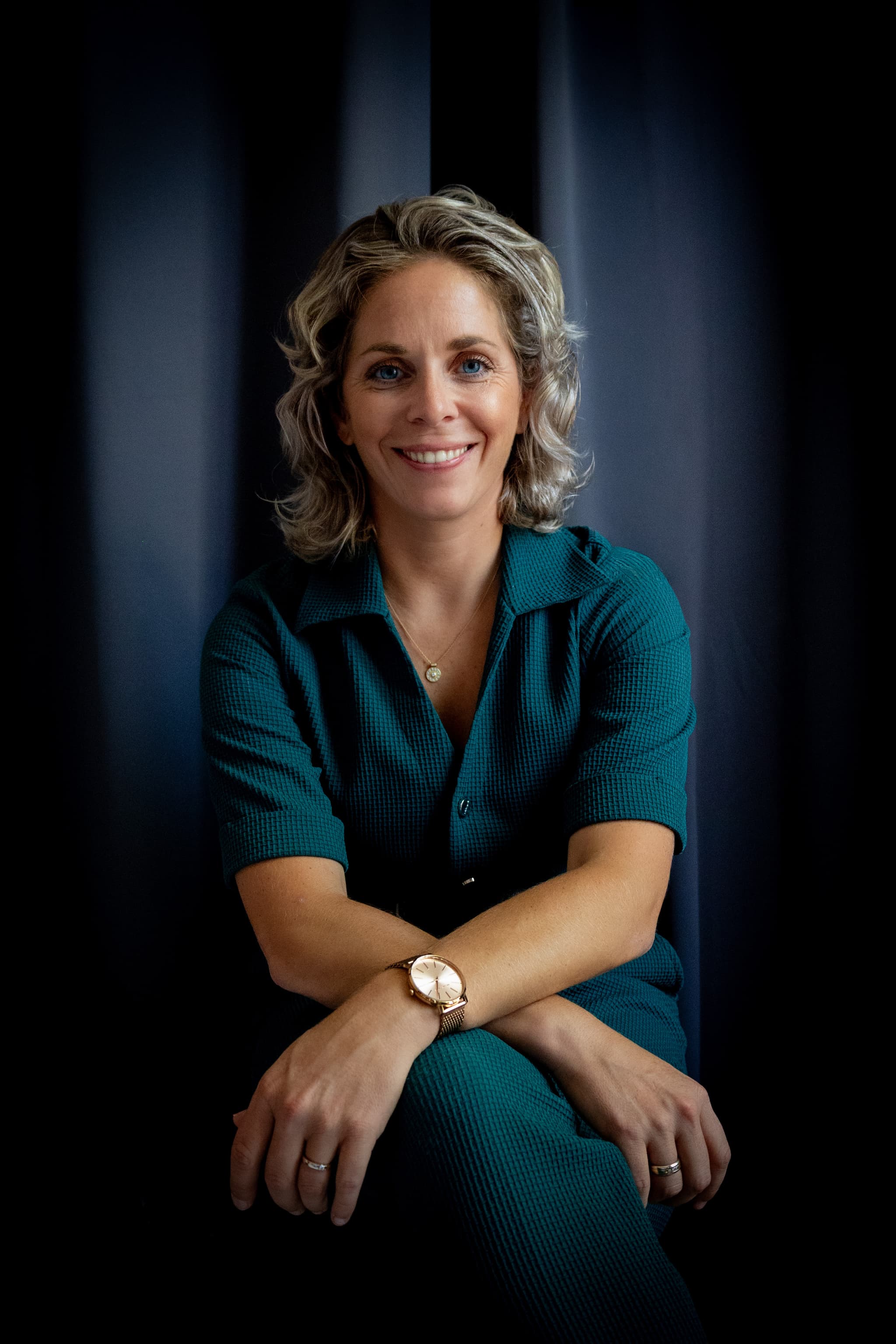
be-inc, Eline Schoonen
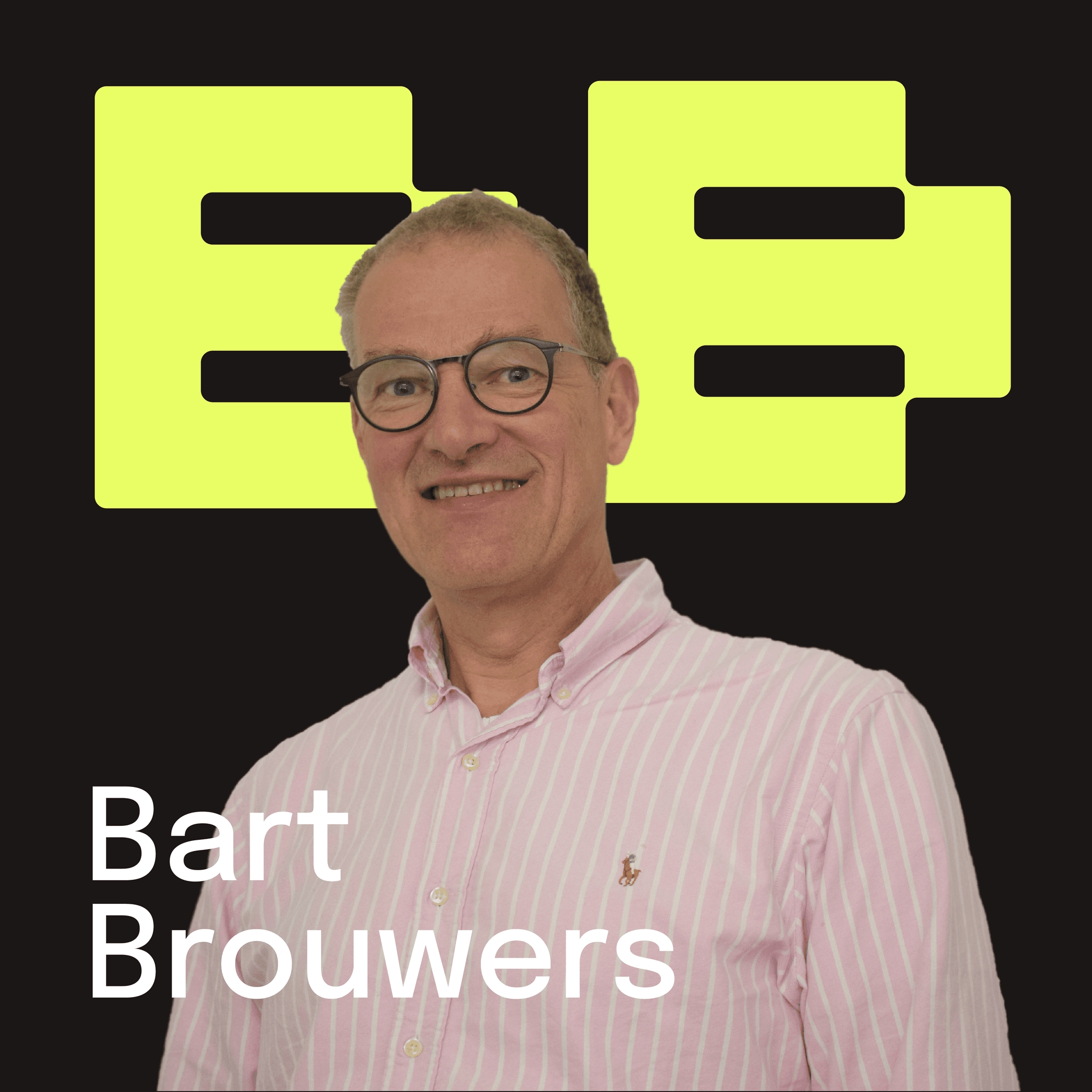
Bart, co-founder of Media52 and Professor of Journalism oversees IO+, events, and Laio. A journalist at heart, he keeps writing as many stories as possible.
Ahead of the AI Pitch Competition finals on 12 November at the Evoluon in Eindhoven, IO+ continues its deep-dive series profiling the eight finalists and one wildcard. In this sixth instalment, Eline Schoonen, founder and CEO of Be-Inc, discusses context engineering, coaching over auto-correction, and why workplace psychological safety depends on the words we type every Tuesday afternoon.
When employees communicate, they rarely set out to exclude or offend. Yet unconscious bias quietly slips into everyday prose: a job description loaded with coded phrases that dissuades qualified candidates, a performance review praising a male colleague for being "passionate" while labelling a woman with the same traits "emotional," or an ambiguous email that leaves a team member hesitant to speak up.
While organisations spend millions on annual diversity workshops and leadership retreats, corporate culture is shaped by the thousands of messages sent across an organisation every single week.
Eline Schoonen, founder and CEO of Be-Inc, is turning that insight into enterprise software. Operating natively inside Microsoft 365, Be-Inc functions as a real-time language and culture coach. Below, Schoonen explains how context engineering outsmarts generic large language models, why European privacy architecture is winning deals, and how she aims to add "Work EQ™" to the enterprise desktop.
Context engineering: Optimising the writer, not just the output
"I believe technology should make people more valuable and connected, not replaceable," Schoonen begins. "That belief shaped every technical choice we made." The technical difficulty with corporate communication is that nuance is entirely context-dependent: "The hard problem in our field is not generating text. It is judging language consistently. Whether, for example, a sentence excludes someone depends on the tone, who it's written to, and the context. Generic AI gets that right sometimes. And sometimes is the same as wrong."
Rather than training a monolithic model on internal files, Be-Inc relies on a separate architectural memory layer: "Knowledge, feedback, and organisational context live outside the foundation model. Stored persistently. Retrieved at the moment of analysis. The system gets better per customer without anyone retraining a public model, and we are not hostage to one provider's roadmap."
Schoonen draws a sharp line between Be-Inc and standard writing assistants: "Grammar checkers correct your grammar. Copilot writes your text. Recruitment tools look at job ads. They optimise the output. We optimise the writer on contextual messaging. Every finding comes with an explanation and two or three genuinely different alternatives. A sidekick coach."
Native in Microsoft 365: Scaling across three executive buyers
By deploying directly within the Microsoft 365 ecosystem, Be-Inc eliminates heavy IT integration friction. "We live inside Microsoft 365, which millions of people already use. No hardware. No integration project. One kick-off, and people work with it the same week," Schoonen says.
The SaaS platform targets three core executive stakeholders:
- The Board & ESG Officers: "The board wants compliance without friction. Regulation keeps growing; think of CSRD, ESG (S1), and EcoVadis. Communication has always been a soft skill, not measurable. Be-Inc makes it measurable. Besides that, standard training is not enough—it’s forgotten within the same week. We coach on the job."
- HR & People Teams: "HR is held accountable for psychologically safe workplaces, but has no instrument. L&D runs leadership programmes and DEI sessions, and ends up with a survey where people ticked 'interesting'. Nobody can show whether behaviour changed. We can. We show what changes in the language, or does not."
- Marketing & Communications: "The campaign is on-brand. The ten thousand emails sent that same week are not. Inside the organisation it is the same story: the tone of voice lives in a PDF nobody opens. We put the organisation's own voice into the coach, so it lives in the sentence as it is written. Not a guideline. A habit."
Three non-negotiable ethical rules
Because Be-Inc addresses workplace bias, Schoonen established strict design boundaries before writing code: "Bias rarely lives in intentions. It lives in the sentence," Schoonen explains. "A tool that fights bias has no right to carry it. That standard became three rules, set before we wrote a line of code:
- We explain: Every suggestion comes with a reason, so people can disagree with us. People learn on the go, turning unconscious bias into conscious awareness.
- The human decides: We never auto-correct. We coach. Judgment stays with the person writing.
- Nobody is scored: Not employees, not managers. Reporting only appears above an aggregation threshold, enforced in the architecture. No manager can see who wrote what."
To prevent internal algorithmic drift, Be-Inc runs an active evaluation benchmark: "We built a benchmark of real documents with pass/fail gates. A second model scores every suggestion, and that model is itself calibrated against human labels and checked for drift. If we ask people to trust what we say about their words, we have to prove our own are fair."
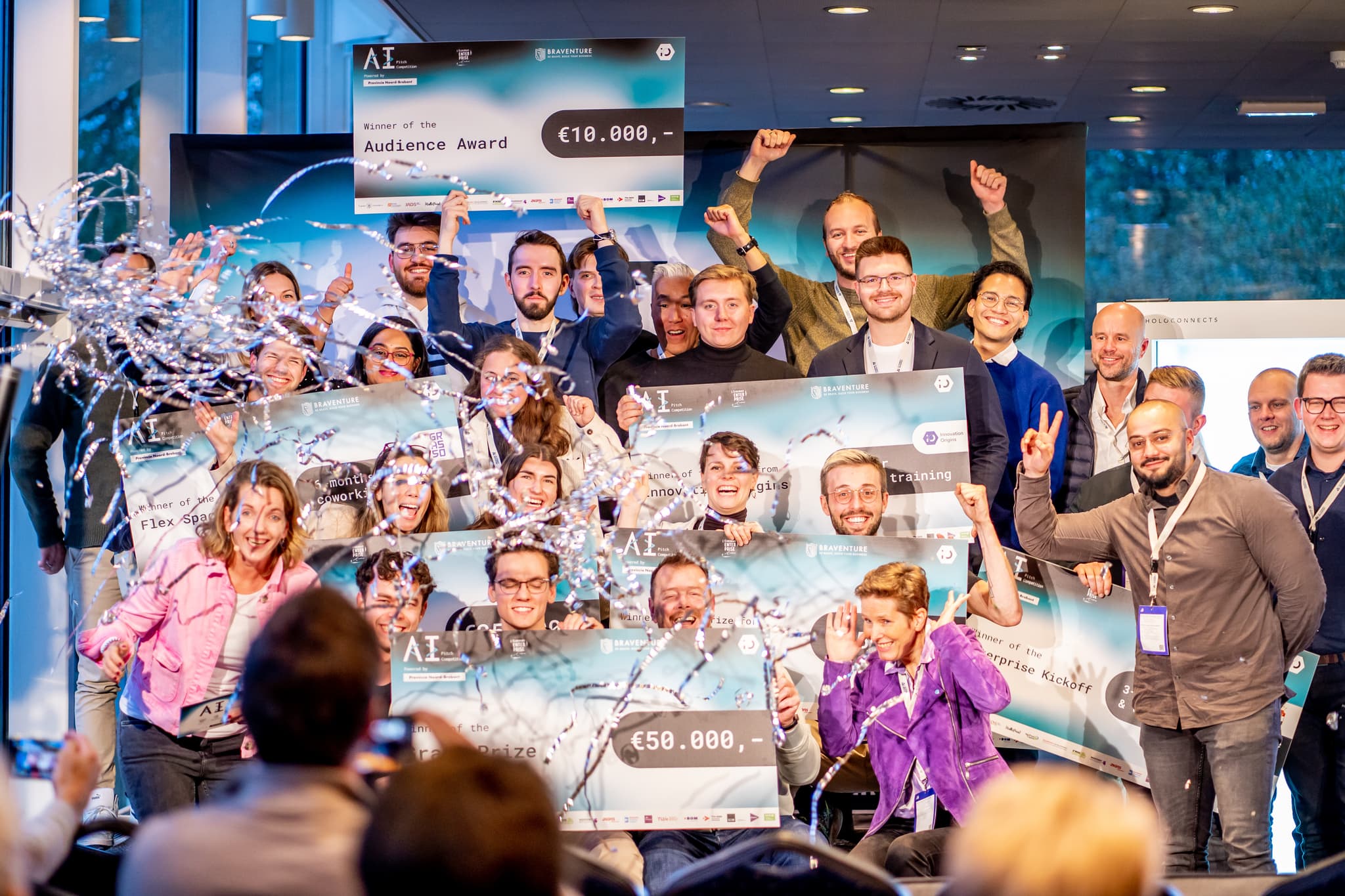
The AI Pitch Competition
Read all our AI Pitch Competition stories here (also last year's
The mirror and the loop: Why language governance matters
The societal stakes of communication extend beyond office etiquette, especially as AI-generated text proliferates. "AI is a mirror," Schoonen warns. "It learned from decades of what we wrote, so it learned our unconscious biases too. And the mirror is turning into a loop: AI now writes a growing share of what we send, and that text becomes tomorrow's training data. Yesterday's bias, repeated at scale, in a confident tone."
"Be-Inc is the filter between the model and the message. We make bias visible at the moment it is written, explain why, and let the person choose—whether the sentence came from a human or from Copilot."
In mission-critical industries, language ambiguity carries tangible danger: "In safety-critical sectors like defence, nuclear, and aviation, incident investigations keep finding the same causes: an ambiguous message, or someone who did not feel safe to speak up. Nobody audits the language a safety system runs on. We do."
To avoid becoming an oppressive speech monitor, organizational tone settings are calibrated strictly per company: "The risk I take seriously is language policing. So norms are set per organisation, suggestions stay suggestions, and nobody is scored. Ever."
From solo commercial founder to enterprise product owner
Schoonen founded Be-Inc after fifteen years in commercial tech roles, frustrated by the persistent gap between corporate diversity statements and daily office realities.
"I started alone," Schoonen recounts. "A commercial founder with a technical product. I wanted to get to market fast, so I bought development instead of building a team. It took far longer than planned, and it taught me an expensive lesson: you can outsource code, but not your product. So I took ownership. Secured the IP. Became the product owner myself, and brought in a principal engineer with big-tech experience who fundamentally changed our architecture."
She is deliberate about finding a permanent technical partner: "The next step is finding a technical co-founder. I treat it like a marriage: I'd rather do it once, and do it right. Someone with the same drive, work ethic, and belief in why we exist."
When Microsoft Copilot rolled out globally, Be-Inc pivoted strategically: "When Copilot appeared in every Office ribbon, positioning as a DEI tool stopped making sense. We became the coaching and governance layer on top of it."
Compliance as a product: Overcoming the platform filter
Operating in Europe means building for regulatory scrutiny from day one. "Personal data is masked before it reaches the model," Schoonen explains. "Our memory layer is governed: what may be stored and reused is a design decision, not a side effect. Everything runs in Europe, on European models. For a European enterprise, that is the difference between an interesting pilot and a system its privacy officer and works council will actually approve."
An early technical hurdle underscored the complexities of third-party platforms: "A major platform's safety filter sat in front of our analysis and blocked documents containing biased language—exactly the language we exist to detect. The tool was stopped from doing its job by the platform running it. We solved it by changing our architecture. That is the real compliance work: not ticking boxes, but designing so that doing the right thing does not break the product."
"Compliance is not our cost. It is our product."
Brabant's network and the need for launching customers
Rooted in Brabant, Be-Inc has leveraged regional support across Brainport, the Brabantse Ontwikkelingsmaatschappij (BOM), Brabant Startup Fonds, and JADS in 's-Hertogenbosch. "Brabant is close-knit. Within half an hour you can reach corporates, investors, and universities, and people here actually pick up the phone for each other," Schoonen notes.
However, she challenges European corporate procurement to take bolder bets on early software ventures: "What could be improved? Early-stage capital for software ventures that are not hardware deep tech, and large employers willing to be a startup's first customer. One launching customer does more for a European startup than another subsidy scheme. Make that easier in procurement rules, and you will see the effect across the whole ecosystem."
Setting the defaults: AI for good vs. disaster
Reflecting on AI's societal impact, Schoonen quotes Bill Gates' observation that AI will either become the greatest equaliser or the greatest source of injustice. "The real power of AI is not in the spectacular," Schoonen reflects. "It is in the defaults: the suggested answer, the standard tone, the option that comes up first. Most people accept the default. So whoever sets the defaults quietly sets the norm, for millions of people at once."
"That is why I don't believe the disaster will be dramatic. No robots taking over. It will be quiet: we outsource our thinking, we write faster than we reflect, everything starts to sound the same, and decisions get made that nobody can explain anymore. AI can give a voice to people who were never heard, but that happens when leaders treat AI not as an IT project, but as a choice about the kind of organisation they want to build."
The pitch at the Evoluon: Adding Work EQ to enterprise IT
Looking ahead to the finals on 12 November, Schoonen points to the human centre of business performance: "Right now, most AI is built to make systems smarter, processes faster, and machines more capable. But every one of those systems is still run by people. People who write, decide, give feedback, raise a concern, or stay silent. The human side of work is where organisations succeed or fail. And it is the side AI is building for the least."
"Microsoft calls its Graph layer 'Work IQ'. We are adding 'Work EQ™'. Employees spend about 88% of their time communicating. The future of work is being written right now: not only in the boardroom, but in the next email. We're not building a better machine. We're building better colleagues."
Erasmus Enterprise, BOM, and IO+ organise the AI Pitch Competition, supported by the Province of North Brabant. The finals take place during AI Summit Brainport on 12 November at the Evoluon in Eindhoven.