
Gerard & Anton Awards: local deep tech, solutions for the world
Every Sunday, our weekly review offers an overview of the most interesting stories around important innovations.
Published on July 5, 2026
Bart, co-founder of Media52 and Professor of Journalism oversees IO+, events, and Laio. A journalist at heart, he keeps writing as many stories as possible.
The Gerard & Anton Awards — presented for the 12th time last week — show where Brainport’s strength lies today: startups that dive deep into technology, while always starting from a recognisable real-world problem. The ten winners are working on, among other things, more energy-efficient AI, cooler chips, smarter data centres, cleaner industry and new solar-energy technologies. Once again, congratulations to Avendar, CoolSem, Luper, Euclyd, Photonbridge, Astrape, ATA Mute, Perovion, Touchwaves and Helia Biomonitoring!
From photonics and chip technology to biosensors, haptic clothing and silent heat pumps, these companies combine technical depth with a clear route towards societal and industrial impact. In other words, not the next trendy app, but technologies designed to make other technologies, processes and sectors work better. Read here who the winners were and why the jury selected these startups.
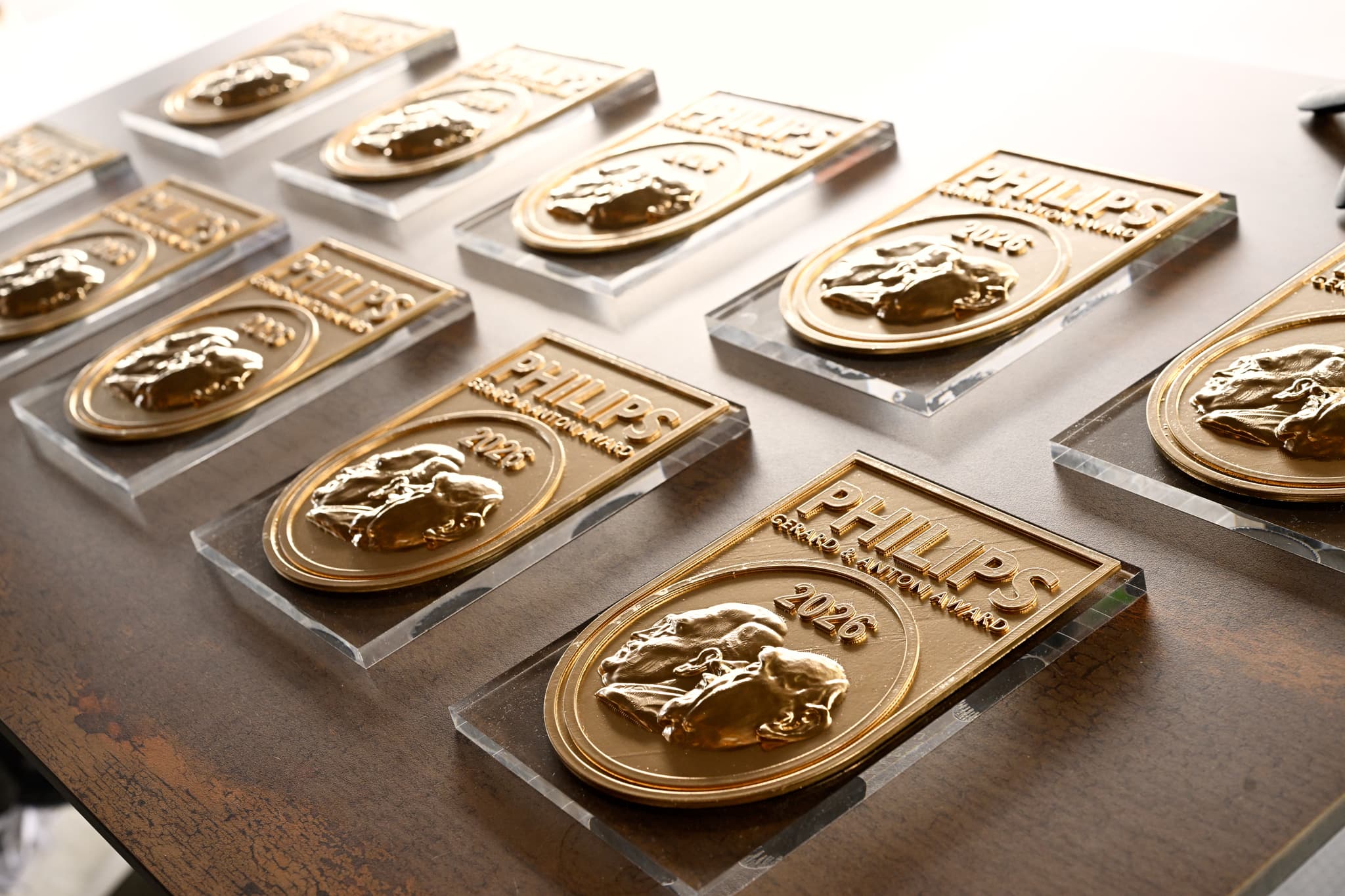
The young company Syntric Medical and the student team EDEN also received awards. Together, the winners underline that Brainport remains fertile ground for companies that dare to think big, want to scale internationally and aim to solve concrete global challenges.
A high success rate
Together, the 120 startups that have won a Gerard & Anton Award are now trying to turn their ambitious dreams into reality. And they are doing remarkably well, judging by their success rate. More than 90% of former winners are still active — an exceptional percentage in the startup world. Together, they have raised more than €4 billion in investments.
That high success rate has everything to do with the fact that the jury itself operates in the heart of this region’s innovation ecosystem. They do not merely see pitch decks and press releases; they know the founders and their teams inside out.
Read more here, including references to the underlying data. Starting on Monday, we will publish a portrait of each winner every day.
What else happened this week?
Of course, much more happened. Here is our overview:
Brainport semicon: from industrial strength to new companies
Brainport has been strong in semiconductors for decades, but the ecosystem is increasingly developing a second face: that of new, independent companies around AI chips, photonics, metrology, sensors, cooling and data transport. Matthijs Bulsink’s analysis shows how knowledge from corporates, research institutions and Eindhoven University of Technology is translating into a growing generation of scale-ups. The major challenge now is to convert that technological edge into manufacturing capacity and internationally competitive companies.
Read the article: https://ioplus.nl/en/posts/brainport-semicon-is-moving-industrial-strength-into-new-ventures
Holst Centre: the next step is industrial strength
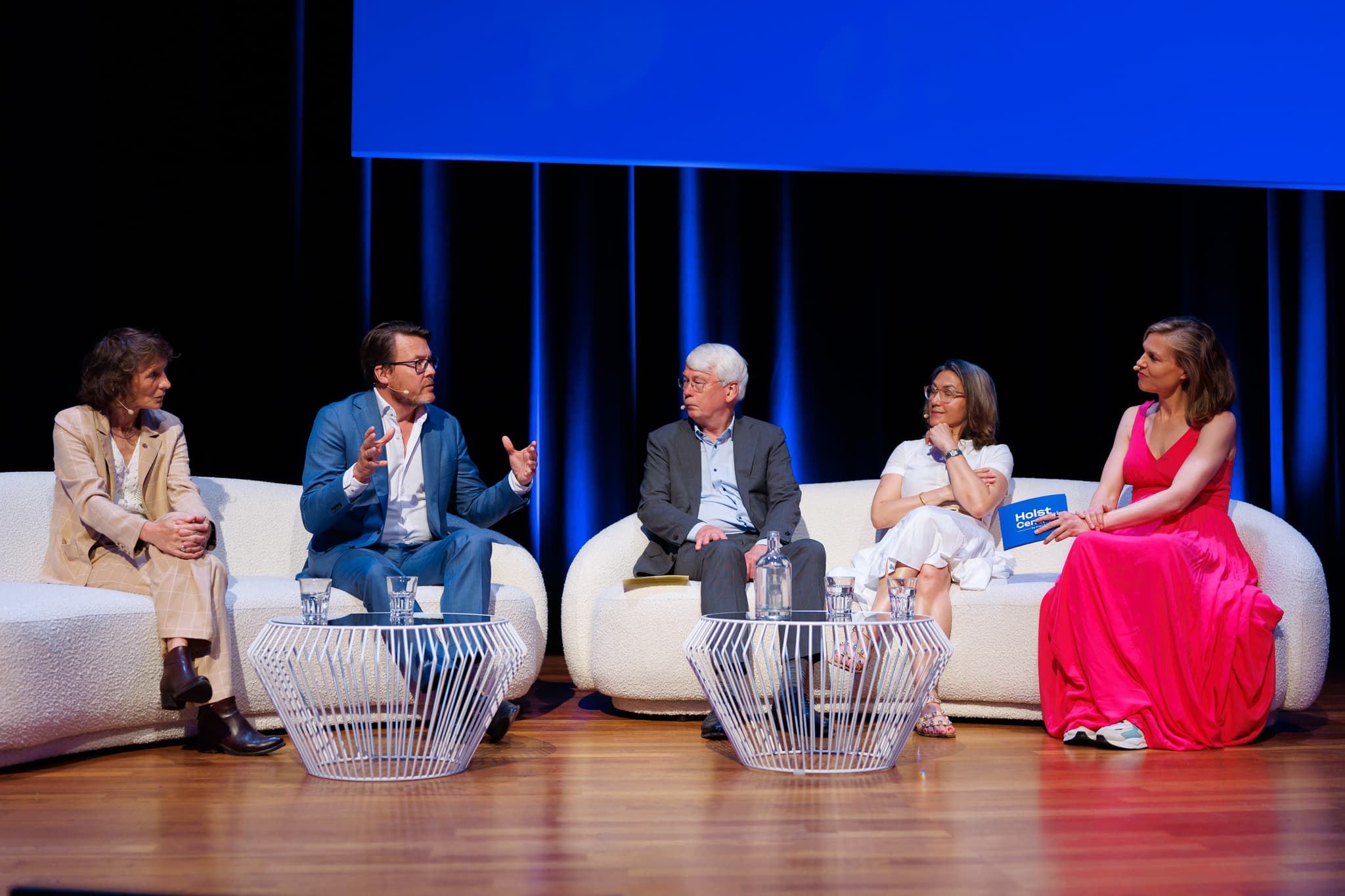
Europe excels in research, prototypes and promising startups, but too often that is where it stops. During Holst Centre Innovation Day, there was therefore a clear call for less fragmentation, more focus and, above all, greater ambition to develop technology into products, factories, supply chains and large international companies. For Brainport, the challenge is not only to invent the next breakthrough, but to build the industry that follows.
Read the article: https://ioplus.nl/en/posts/holst-centres-next-challenge-is-achieving-industrial-power
The future of computing requires more than faster chips
The next leap in AI hardware is not only about greater computing power, but also about using energy and data much more intelligently. Paul Detterer of imec shows why nature offers an inspiring starting point: biological systems respond only when necessary and do not waste energy on constant data traffic. Neuromorphic, near-memory and in-memory computing could play a crucial role, particularly in edge-AI applications such as drones, robots and smart cameras.
Read the article: https://ioplus.nl/en/posts/the-future-of-computing-will-not-be-solved-by-a-faster-chip
New plastic dissolves in seawater — but can it truly disappear?
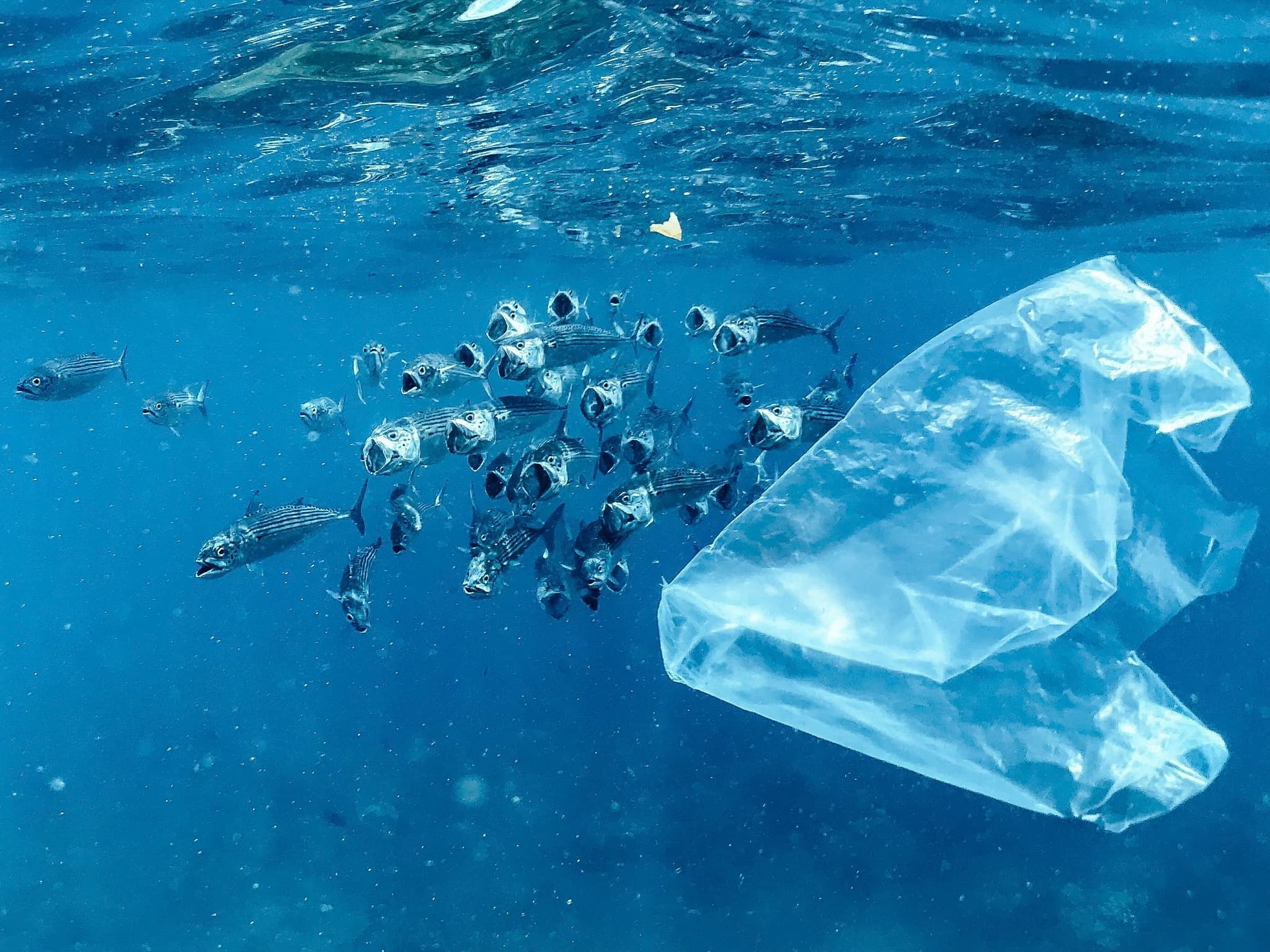
Researcher Julian Engelhardt of Wageningen University is working on saloplastics: plastics that dissolve in salt water. By introducing oxygen atoms into the molecular structure, weaker bonds are also created that may be broken down by water and micro-organisms. Full biodegradation still needs to be proven, but the application could be of interest for, among other things, agricultural films and coral restoration.
Read the article: https://ioplus.nl/en/posts/new-plastic-dissolves-in-seawater--and-may-truly-break-down-
© Naja Bertolt Jensen - Unsplash
For TracXon, intellectual property becomes visible in the machine
Four years after spinning out of Holst Centre, TracXon is building a production machine for flexible printed electronics. Patents are not only a legal shield, according to the company; they become literally visible in the technology of the machine and in the circuits produced with it. The story shows how a deep-tech startup navigates the costs of patenting, licences for existing knowledge and the need to build its own distinctive technological position.
Read the article: https://ioplus.nl/en/posts/for-tracxon-patents-are-visible-in-the-product
Asteroid Day: how do we keep a dangerous asteroid away from Earth?
A major impact is rare, but the consequences would be catastrophic. That is why space agencies are working on several ways to alter the course of an approaching asteroid: from a high-speed collision with a spacecraft, as demonstrated by NASA’s DART mission, to a slow-acting “gravity tractor” or laser ablation. In an extreme scenario, even a nuclear intervention is being studied as an emergency option. The technology is developing quickly, but a real threat would also require international decision-making.
Read the article: https://ioplus.nl/en/posts/happy-asteroid-day-how-do-we-stop-a-deadly-asteroid
Have a great summer!
That is all for now. We are taking a short break from this newsletter. See you again in August!