
For TracXon, patents are visible in the product
Four years after spinning out of Holst Centre, TracXon is turning its patent portfolio into a manufacturing advantage.
Published on July 1, 2026

Mauro swapped Sardinia for Eindhoven and has been an IO+ editor for 3 years. As a GREEN+ expert, he covers the energy transition with data-driven stories.
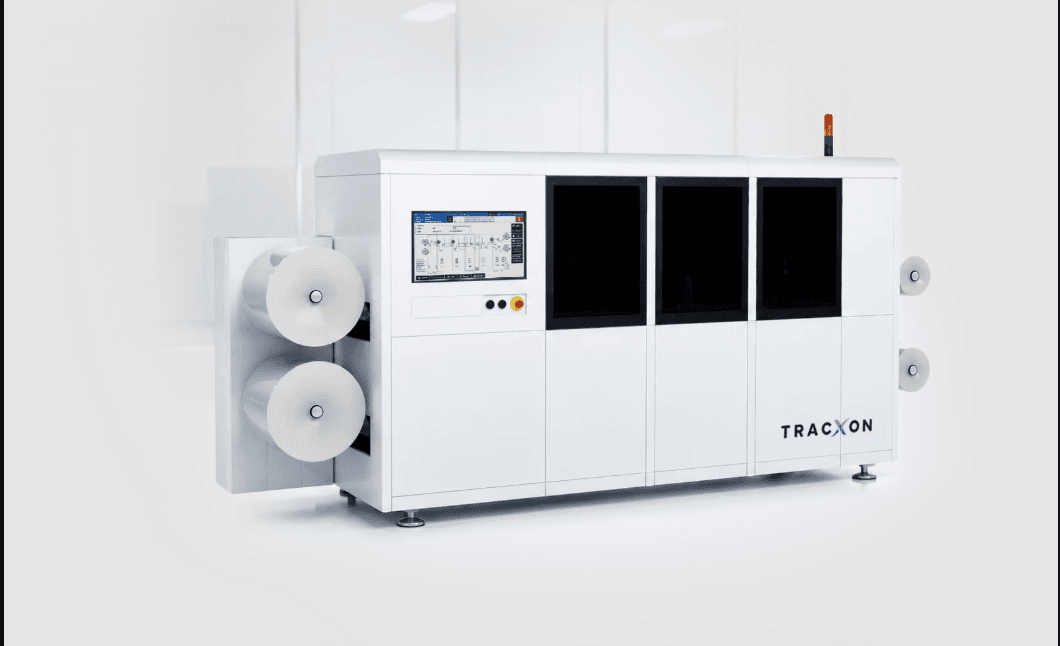
At its Innovation Day on 25 June, TracXon presented an eight-metre-long machine to manufacture flexible printed circuit boards (PCBs). Behind this prototype, there is a journey of building, navigating, and protecting intellectual property (IP). And this wealth is offering TracXon and its customers an edge over competitors.
Founded in 2022, the startup is active in the printable electronics space. The company has its foundation in the work done by the Dutch research institute TNO, which developed a roll-to-roll process for printing thin, flexible printed circuit boards (PCBs). These are needed in battery systems, smart packaging, and wearables.
Building on that IP and on the know-how of its founders, TracXon is growing into a machine manufacturing company. “We have evolved from depending on TNO’s original IP to building TracXon’s own,” underlines Ashok Sridhar, CEO of the company. “We have been granted four more patents, expanding on the process innovation side and equipment.”
Series on startups and patents
Exclusivity or traction?
As a spin-off of Holst Centre – a joint research center owned by the Belgian and Dutch main scientific institutions imec and TNO – having a grip on patents has been more challenging for TracXon.
Given Holst Centre’s participation in open innovation programs, a large share of the IP is co-developed, meaning that it can’t be simply handed over. Therefore, TracXon opted for non-exclusive licenses for the patents it needed and an option agreement covering multiple patents.
“We started as a manufacturing entity, meaning that in the beginning we didn’t need exclusivity, but a right to practice,” explains Shridar. “We had the choice to secure IP exclusively as well, but we didn’t do so for financial reasons and because TNO couldn’t give away knowledge that was partly created using public funding.” Eventually, TracXon took over the patents from TNO for a fee.
Know-how can still make a great difference
But there is more than just bearing the costs of exclusivity. “In printed electronics and flexible hybrid electronics, many processes come into play, meaning that at the time we weren’t sure what IP would prove differentiating — we needed control over the whole process.”
Sridhar and the other two co-founders, Corne Rentrop and Raghu Kishore Pendyala, were actively involved in developing that knowledge at TNO. Beyond patents, the three founders carried with them a wealth of know-how. As the CEO underlines, “that expertise was central to our early commercial success and allowed us to manage without having full control of the IP from the start.”
Filing for patents is expensive, particularly for a startup, and so is maintaining them across multiple geographies. At the same time, they are an indispensable asset to appeal to investors and customers. “As a founder, you are caught between two realities: the patent may not immediately transform your business, but without one, you may struggle to raise. It is a very real tension,” he says.
Selecting what to patent
TracXon has found a way to deal with this tension. Pendyala, Rentrop, and Sridhar agreed on the first three patent applications filed by the company — receiving support from the Netherlands Patent Office. Then they established a stage-gate process to determine what is patentable and what isn’t.
“Roll-to-roll manufacturing for Internet of Things devices and wearables has emerged as the leading market segment. Accordingly, we assess any idea that comes from our team in relation to this strategic focus. In addition, we analyze how that idea is defensible and genuinely differentiating,” explains the CEO.
At the same time, there is still space for ideas that are not currently patentable. TracXon is setting up an idea vault, a digital record to be signed off on by employees who contribute new ideas. In this way, the company preserves claims to concepts that are not ready to file.
In this way, once a concept becomes more mature and tangible, it can find a role in the company’s strategy – and add value. Moreover, employees are free to run ideas that are fully rejected by this process.
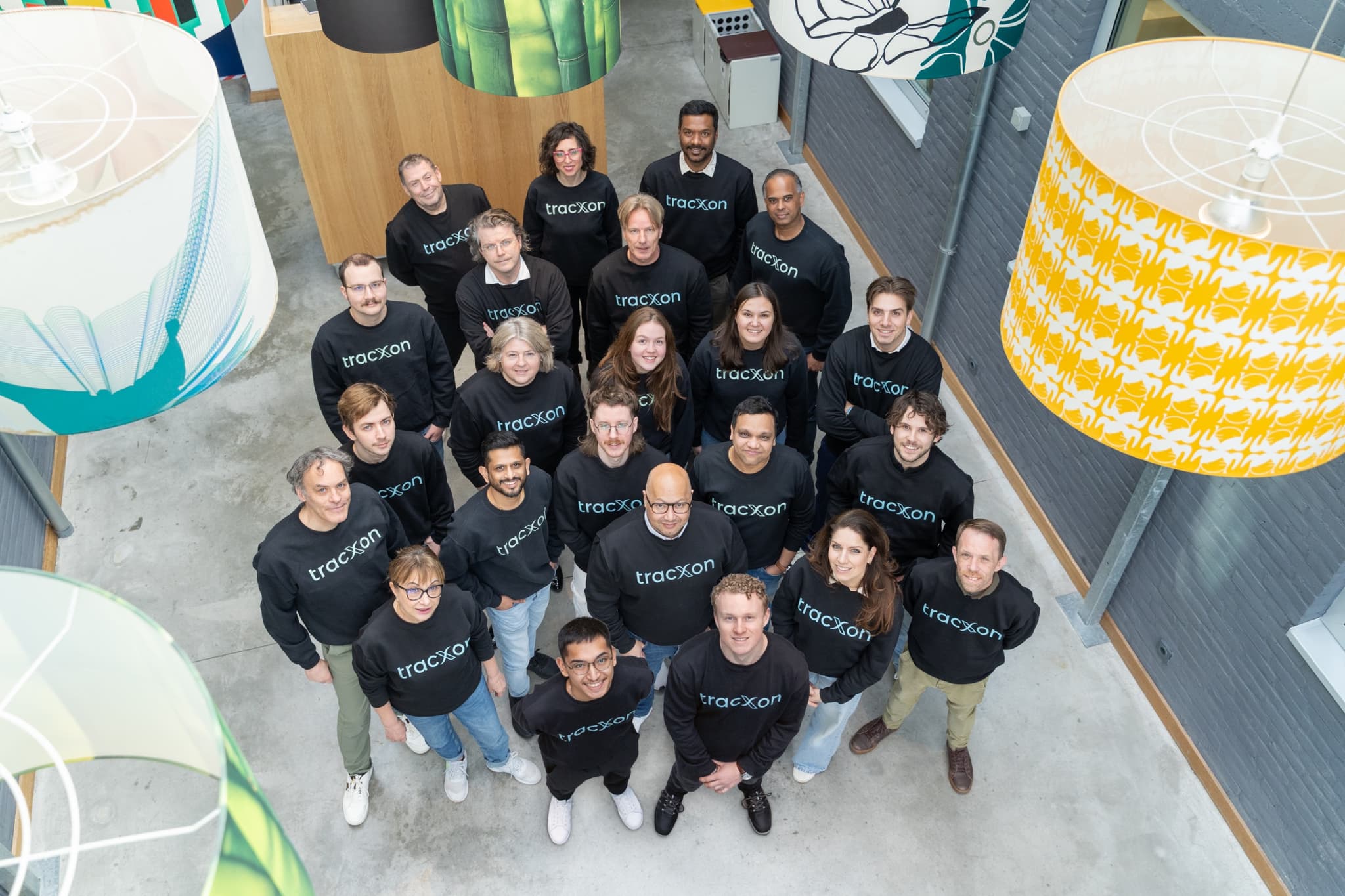
TracXon's team - © TracXon
How IP makes a difference
Shridar confidently claims that TracXon's newly acquired patents will materially show up in the printing machine the company is set to launch. Some of them are directly in the equipment, while others materialize in the printed products that the machinery can manufacture.
One of the questions the Eindhoven-based startup receives most is whether Chinese competitors will quickly replicate what TracXon does. Given the strong electronics and PCB manufacturing ecosystem, that might be a reasonable concern. The CEO has an answer for that.
“Those two patents tied to our machine are my answer. Smart people can come up with brilliant ideas elsewhere, but they can’t do what we do one-to-one, as the printed circuits show. This aspect is also at the core of our value proposition: customers can create unique, protectable products.”
Patent wisely
Sridhar has some advice for budding entrepreneurs on approaching the patenting journey. “As a startup, you need to map out your runway and how much you can realistically allocate to patenting not just now, but over the next two years," he says. “Patenting for the sake of patenting doesn’t make sense.”
With years of experience with patents and an in-house pipeline of ideas, TracXon looks confidently at what is to come. IP is the distinguishing factor as its first generation of equipment heads to market.
Sponsored
This story is the result of a collaboration between Octrooicentrum Nederland and our editorial team. IO+ is an independent journalism platform that carefully chooses its partners and only cooperates with companies and institutions that share our mission: spreading the story of innovation. This way we can offer our readers valuable stories that are created according to journalistic guidelines.
Want to know more about how IO+ works with other companies? Click here