
The IO+ week: a smart region needs people believing in it
Every Sunday, our weekly review offers an overview of the most interesting stories around important innovations.
Published on October 18, 2026
Bart, co-founder of Media52 and Professor of Journalism oversees IO+, events, and Laio. A journalist at heart, he keeps writing as many stories as possible.
Good morning! Having lived in Maastricht for twenty years, I felt a particular affection for this week’s news: Brightlands-Limburg has been named Intelligent Community of the Year 2026, fifteen years after Brainport Eindhoven received the same recognition. Yesterday, I wrote about the collaboration behind Limburg’s reinvention. Looking back over the week, another thought keeps returning: how much patience that collaboration requires. A region that loses its economic foundations needs people willing to build something whose results they may only see decades later. Limburg’s award is a welcome recognition of that perseverance.
In Eindhoven, I saw how international recognition helped strengthen a region’s belief in its own potential. I hope Limburg experiences something similar. Confidence matters when you are asking a researcher to start a company, an entrepreneur to invest, or a talented graduate to stay. But I also hope that confidence reaches beyond the campuses. To me, the real promise of a “smart region” is that people can recognise its progress in their own lives: better opportunities, healthier communities and a future they feel part of. That mission remains unaccomplished for Limburg, and for Eindhoven as well.
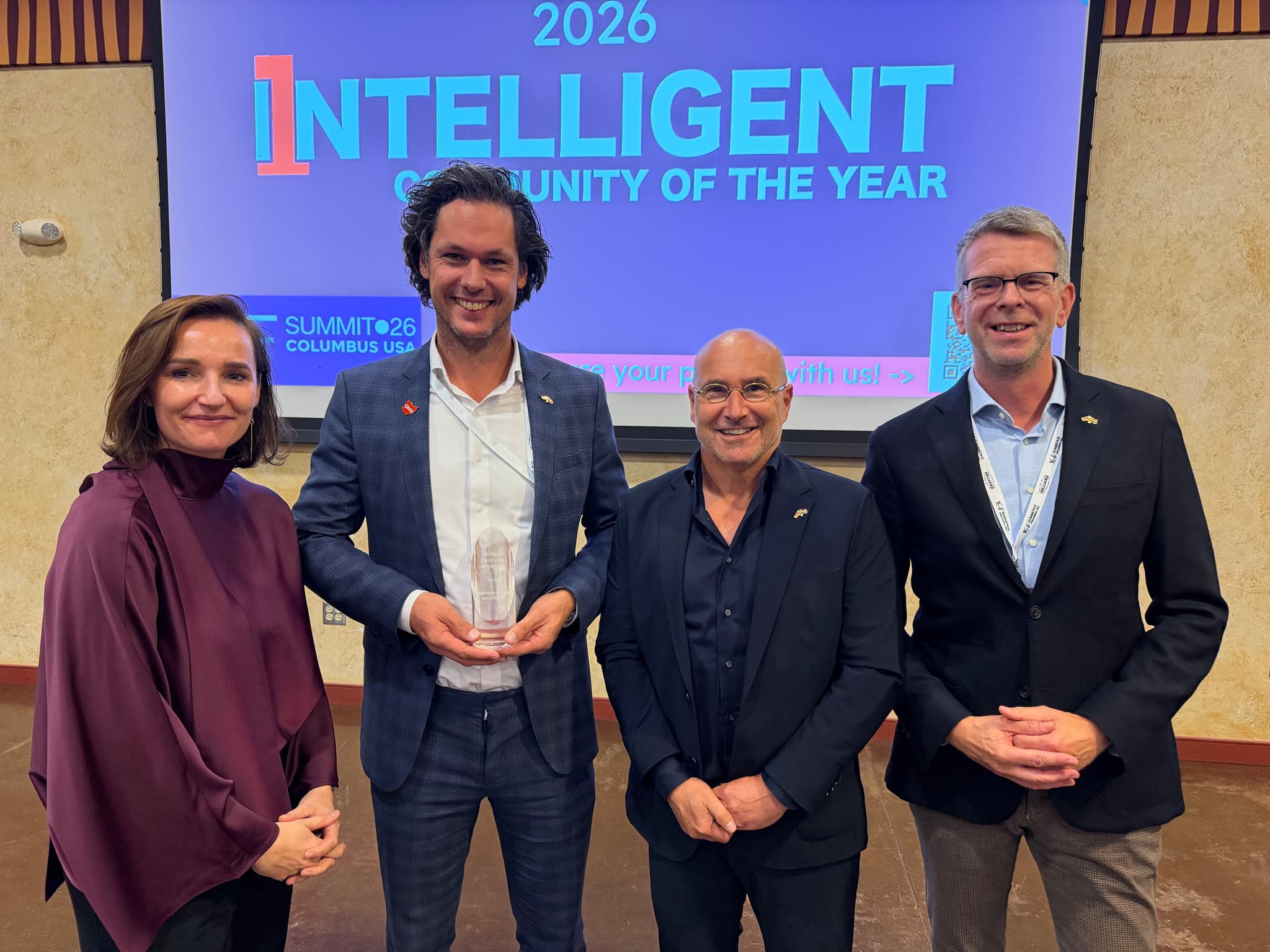
Politicians also have a responsibility here. Three of the four Brightlands campuses remain dependent on substantial public support. That deserves scrutiny, along with a serious discussion of how they can become financially stronger. What worries me is the temptation to let each political change reopen the question of whether the whole effort is worthwhile. Building trust takes years; withdrawing it can happen remarkably quickly. My hope is that this award gives Limburg the confidence to keep investing (and start being invested in), keep asking difficult questions and keep working together. The prize celebrates what has been built. The next chapter depends on who is prepared to stay committed.
https://ioplus.nl/en/posts/limburg-named-the-worlds-smartest-region
Cyberattackers are speeding up. Can defenders keep pace?
An annual security test offers little comfort when attackers are finding new ways in every day. Offensys, one of the AI Pitch Competition finalists, wants to help organisations continuously test their defences through automated attack simulations. Co-founder Cor Verhoeven explains how AI can turn emerging threat information into practical security checks, while keeping security teams in control. What interests me here is the feedback loop: AI helps accelerate cyberattacks, creating an urgent need to use that same technology to strengthen our defences.
https://ioplus.nl/en/posts/defenders-must-keep-pace-with-attacker-scale
The factory has cameras. Now it needs examples of what goes wrong
How do you teach an inspection system to spot a defect that appears only a few times a year? Brainport startup Synthgen generates synthetic images of precisely those rare cases, from damaged pills to diseased crops and faulty welds. Crucially, the resulting models must prove themselves against real customer images kept out of training. Ahead of the AI Pitch Competition final, co-founder Martin Tomov explains why Europe’s factories and machine builders offer fertile ground for physical AI, and why access to suitable training data remains a stubborn obstacle.
https://ioplus.nl/en/posts/europe-has-factories-and-builders-whats-missing-is-the-data
Esther Bisschop’s advice to AI founders: get started, then keep building
.jpg&w=2048&q=75)
It's reassuring to hear an experienced tech entrepreneur say that everything doesn't have to be perfectly thought through before you begin. Esther Bisschop, who co-founded Th3rd and now leads AI hub The Stack, brings that practical attitude to the AI Pitch Competition. Her advice ranges from rehearsing your opening pitch sentences until they become second nature to recognising the moment when a team simply needs to get something working. She also sees particular opportunities where AI meets Dutch strengths in robotics, industry and deep tech.
https://ioplus.nl/en/posts/how-to-build-an-ai-startup-according-to-esther-bisschop
Cleaner aviation needs investors willing to wait
Aviation’s ambitions are enormous, and so is the distance between a promising prototype and an aircraft entering service. At the Luchtvaart in Transitie Conference, entrepreneurs and researchers discussed the money, partnerships and strategic choices needed to cover that distance. Elysian highlighted the mismatch between long development cycles and investors’ expectations, while AeroDelft showed what determination can achieve: the student team taxied an aircraft using gaseous hydrogen earlier this year. A milestone that makes the possibilities tangible, while reminding us how much work still lies ahead.
https://ioplus.nl/en/posts/aviation-in-transition-towards-a-sustainable-future
ASML’s technological strength comes with geopolitical exposure
ASML’s position at the heart of the chip industry gives it extraordinary importance, alongside considerable vulnerability. The proposed US MATCH Act could further restrict deliveries and servicing of chipmaking equipment in China, putting a substantial share of its business at risk. Our article examines the pressure on the Veldhoven company and the potential consequences of tighter controls. For me, it also raises a broader European question: how much room do we have to make our own industrial choices when our most important technology company depends so heavily on markets elsewhere?
https://ioplus.nl/en/posts/asml-caught-between-us-and-china-over-match-act
Stop spreading innovation funding so thinly
Limburg’s story adds weight to Tom van der Horst’s argument this week: building new industries requires sustained collaboration and enough money to reach meaningful scale. The TNO strategy director warns that fragmented subsidies leave the Netherlands poorly equipped to compete internationally. He advocates larger, focused programmes that bring businesses, knowledge institutions, startups and scale-ups together around strategic technologies and markets. His challenge to policymakers is clear: make choices, fund them properly and give those partnerships the continuity they need to turn research into economic strength.
https://ioplus.nl/en/posts/stop-handing-out-innovation-crumbs-join-forces-instead
AI that helps a caregiver be there for someone
A question about dementia can become urgent at two in the morning, when professional advice is difficult to reach. Alzheimer.app aims to give caregivers and families accessible guidance grounded in dementia-specific knowledge and practical care experience. Founder Peter Spijkers, this year’s AI Pitch Competition wildcard, explains why the assistant must recognise its limitations, protect personal information and direct users towards human support when needed. I find his ambition compelling: give people more understanding and confidence, so they have more room for patience, empathy and care.
https://ioplus.nl/en/posts/technology-should-take-away-complexity-not-humanity
Our Other Newsletters
Thank you for reading this newsletter. But there’s more. Subscribing is easy — via the options on the IO+ homepage or simply by clicking one of the newsletters below:
- IO+ Daily (1,200 subscribers)
- Mauro’s Green Corner (monthly, 13,800 subscribers)
- Elcke’s Saturday Data Dive (monthly, 20,550 subscribers)
- Elcke en Mauro’s BIO+ Bites (monthly, 29,300 subscribers)
- Bart’s Saturday CHIPS (monthly, 16,300 subscribers)
Rather listen?
Here's a small selection of last week's highlights in a half-hour podcast:
External Content
This content is from spotify. To protect your privacy, it'ts not loaded until you accept.
Enjoy your Sunday!