
Stop handing out innovation crumbs, join forces instead
Only by achieving scale can we secure our technological sovereignty and future earning capacity, argues Tom van der Horst (TNO).
Published on October 12, 2026

Team IO+ selects and features the most important news stories on innovation and technology, carefully curated by our editors.
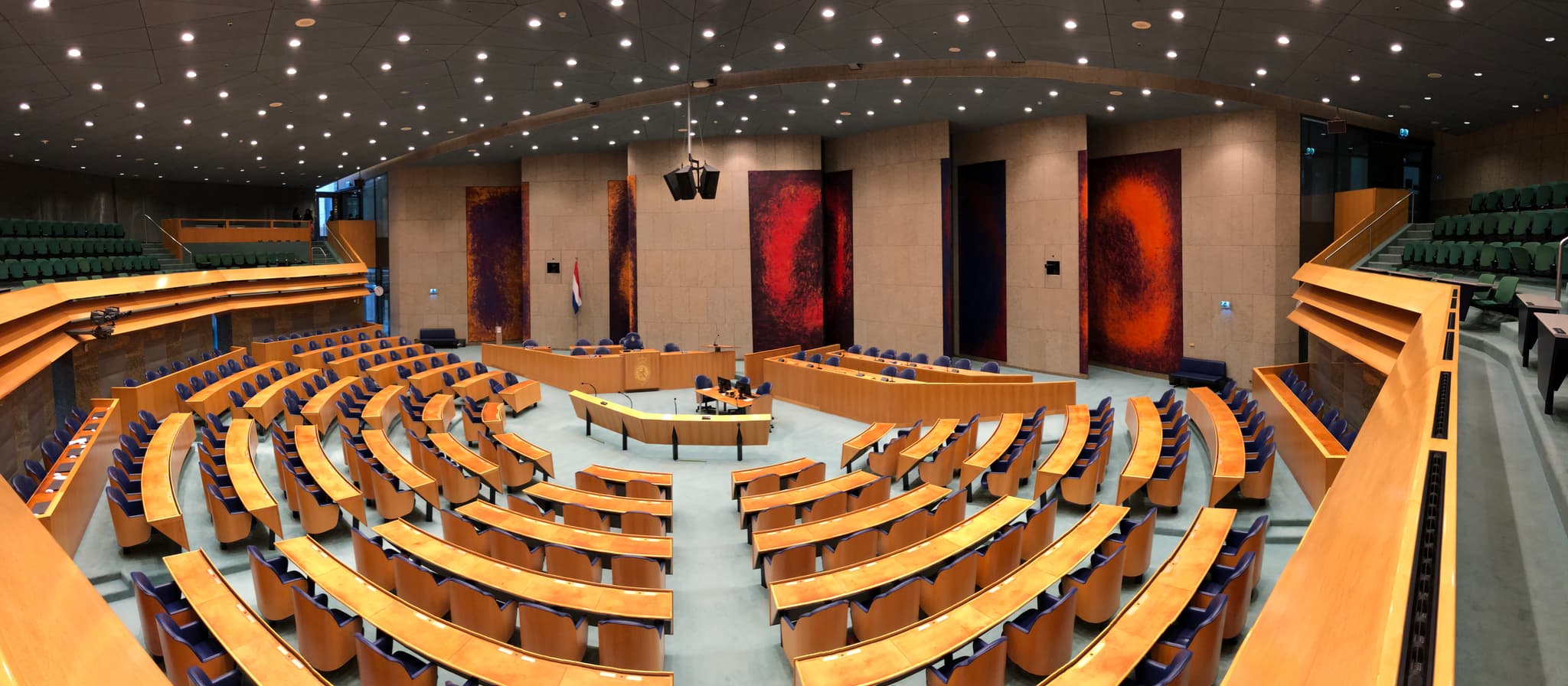
This week, the Dutch House of Representatives debates the Economic Affairs budget. This is the moment to choose internationally leading innovation consortia over fragmented subsidies, Tom van der Horst argues.
By Tom van der Horst, TNO *
The Netherlands faces an urgent challenge. Our economy is worth more than a trillion euros, but it faces severe pressure from geopolitical tensions, a necessary military build-up, and far-reaching transitions in energy, climate, and digitalisation. Our future prosperity and earning capacity depend more than ever on our ability to radically renew the economy. Geopolitically, our sovereignty rests on two pillars: defence and economic strength. Yet while military necessity is now forcing us to catch up, we are hitting the brakes on our economic earning capacity.
At a time when our global competitors are making clear choices and investing heavily in strategic technologies, the Ministry of Economic Affairs and Climate Policy’s budget for targeted innovation policy is shrinking from around €3.6 billion to €1.9 billion in 2030. That amounts to barely 0.2 per cent of our national income.

Tom van der Horst © TNO
Innovation consortia
To bring together the innovative capabilities of businesses and knowledge institutions in innovation consortia, the ministry’s budget leaves only one structural instrument capable of setting direction: the Public-Private Partnership for Innovation scheme (PPS-I). Its budget is €180 million, and falling. That is 0.018 per cent of our national income, far too narrow a foundation.
Moreover, in designing the new PPS-I scheme, The Hague risks falling back on a familiar reflex. Policy papers once again emphasise open tenders, separate calls for proposals and a broad range of objectives. This is the typically Dutch tendency to take a butter knife to scarce public resources, spreading them thinly across many small projects and disparate objectives. This subsidises further fragmentation precisely when the world demands clear innovation choices and scale.
The Netherlands does, admittedly, invest substantial sums in general innovation instruments. Through the WBSO R&D tax credit scheme and the Innovation Box tax regime, businesses receive around €5 billion a year in tax support for research and development, a sum that continues to grow. Meanwhile, research universities and universities of applied sciences receive €7 billion and €5 billion, respectively, plus billions from the Dutch Research Council (NWO). General tax incentives and broad research funding strengthen the foundations of businesses and universities, but they do not set a strategic direction. They do not build new industries or force choices about priorities.
Valley of death
For now, the National Growth Fund still offers promising innovation consortia a way to bridge the so-called “valley of death”: the crucial stage at which promising laboratory discoveries must be turned into demonstrators, pilot plants and industrial production. But beyond an upcoming fourth round funded by money freed up from earlier allocations, the Growth Fund has no prospect of continuity. Nor does the proposed National Agency for Disruptive Innovation (NADI) currently have a permanent footing; it focuses specifically on breakthrough innovations with a high risk of failure.
So we must change course. Developing a new, internationally leading industry requires focus and critical mass. It requires joining forces through lasting public-private collaboration around crucial areas of economic strength. And it requires a sustained approach, with sufficient resources, in which innovation instruments build on and reinforce one another.
Expand the PPS-I scheme and use it as a lever to build strong innovation consortia that provide fertile ground for startups and scale-ups. When allocating the PPS-I budget, dare to choose a handful of large €30 million programmes focused on new technologies such as semiconductors, photonics, quantum, and AI, and strategic markets such as defence, energy, and healthcare. Involve promising startups and scale-ups closely in shaping these programmes: they need to be able to work with them. Mobilise two to three leading innovation consortia for each topic and organise healthy competition for funding. That challenges participants to truly join forces.
National Investment Institution
Building on this, the National Growth Fund should become a permanent fund with large budgets for carefully selected topics, enabling these innovation consortia to push ahead. Within them, startups and scale-ups can grow faster into unique, indispensable positions in the value chain, as ASML and Nearfield Instruments have done. The new National Investment Institution (NII) can then provide successful startups and scale-ups with investment capital.
Leading innovation consortia not only give the Netherlands strength at home, but also serve as the essential catalyst for accessing major European funding instruments, such as the European Chips Act and the Competitiveness Fund. Without strong domestic innovation chains, the Netherlands will become a passive consumer of foreign technology.
Scale
This week, the Dutch House of Representatives debates the Economic Affairs budget. Because the government has yet to secure a majority for this budget, parliament holds the steering wheel. Parliament can seize this opportunity and ensure that the Ministry of Economic Affairs and Climate Policy has sufficient resources to pursue targeted innovation policy, and that scarce innovation resources are concentrated in world-class consortia.
Only with that scale can we secure the Netherlands’ technological sovereignty and future earning capacity.
* Tom van der Horst is Director of Strategy for Industry and Innovation at TNO and author of the book ‘Innovatiekracht – Handboek voor de toekomst van Nederland’ (‘Innovation Power – A Handbook for the Future of the Netherlands’).