
'Europe has factories and builders; what’s missing is the data'
How Synthgen trains Physical AI on the rare edge cases that matter: "We solve a problem every inspection team recognises."
Published on October 16, 2026
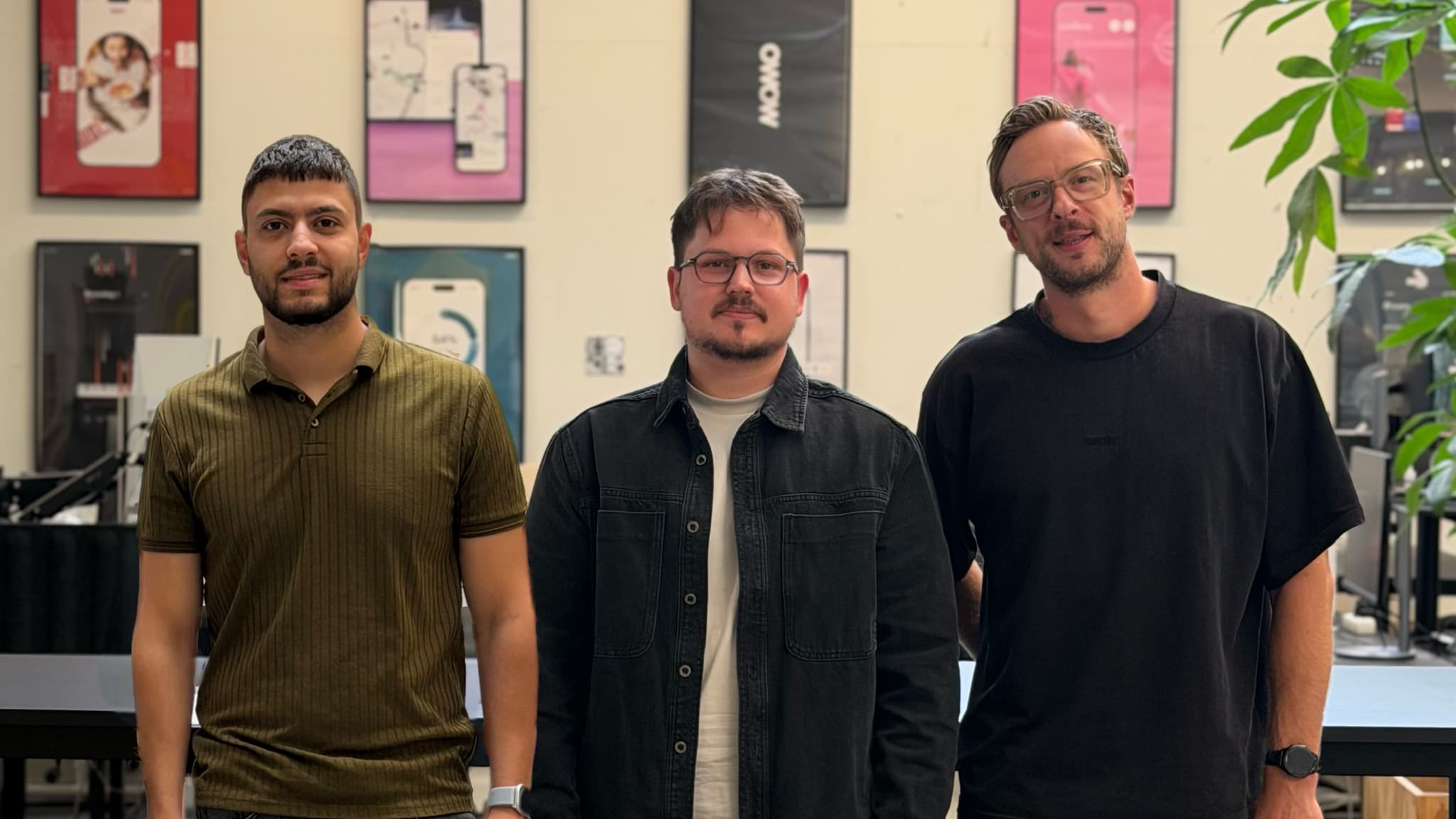
Founders © Synthgen

Bart, co-founder of Media52 and Professor of Journalism oversees IO+, events, and Laio. A journalist at heart, he keeps writing as many stories as possible.
Ahead of the AI Pitch Competition finals on 12 November at the Evoluon in Eindhoven, IO+ continues its deep-dive series into the eight finalists and one wildcard. In this second instalment, Martin Tomov, CTO & Co-founder of Synthgen, discusses how the Brainport startup generates pixel-perfect synthetic data for physical AI, tackling the defects, crop diseases, and weld cracks that are too rare to capture in real life.
When an autonomous agricultural robot scouts a field, an industrial camera scans high-speed pharmaceutical packaging, or an X-ray checks an engine component, the vision system must make instant decisions. Yet the most critical events are precisely the rarest: a tiny hairline fissure on a pill, an early-stage pathogen on a single leaf, or an internal weld flaw that appears only three times a year.
Because collecting thousands of real-world photos of these failures is practically impossible, standard machine learning models routinely miss them. Based in the Brainport Eindhoven ecosystem, startup Synthgen tackles this bottleneck head-on by synthesising and auto-labelling the exact edge-case training data vision systems lack.
Here, Martin Tomov explains the mechanics behind their engine, overcoming deep-seated industrial scepticism, and why synthetic data is essential for European sovereignty in physical AI.
Overcoming the rare-event bottleneck in physical AI
"Physical AI, meaning robots, inspection systems, and machines that see, learns from real-world images," Tomov explains. "The cases that matter most are often the rarest: a crack in a capsule, a disease on a leaf, a weld defect that shows up a few times a year. Nobody can collect enough images of those, so models miss them."
Rather than requiring weeks of manual data gathering or tedious bounding-box annotation, Synthgen generates the missing variations directly from existing client data.
"Synthgen generates them," says Tomov. "Our engine learns what a defect or rare condition looks like from a customer's own images, creates new examples in the variations the model needs, and labels every pixel automatically. We combine 3D scene generation with generative models, and active learning picks which examples the model needs next. Customers keep their cameras and software; we add the data."
The impact on model reliability is measurable and immediate across production environments: "In our runs across eight industries, adding our synthetic data improved accuracy on the hardest class in every case, with gains ranging from 9 to 35 percentage points depending on the dataset. On pharmaceutical pill imprints, for example, accuracy went from 46% to 81%."
Building trust on the factory floor
Because Synthgen’s generative approach works whether an image depicts an industrial component, a medical scan, or a farm furrow, the underlying technology scales smoothly without bespoke re-engineering. However, navigating manufacturing's conservative procurement cycles requires patience.
"The method works the same way whether the images come from a production line, a farm robot, or a medical scanner, so we don't rebuild the product for each customer," Tomov explains. "A new class is generated and labelled at the same time, and the trained models run in a data centre or on a small device at the edge."
"The main challenge is trust," he continues. "Every manufacturer believes their situation is unique, and often they're right. So each customer starts with a four-week Assessment on their own images before committing to more. That makes sales slower than for pure software, but it's how industrial companies buy. The second challenge is that customers guard their data closely, and our infrastructure has to meet their requirements before we can grow into larger accounts."
Rigorous validation: Preventing 'convincing' hallucinations
In visual inspection, a realistic-looking synthetic image is dangerous if it misleads the neural network. Synthgen therefore enforces a strict validation protocol where generated data must prove its worth against held-out real images.
"Synthetic data can look convincing and still teach a model the wrong thing," warns Tomov. "If our defects didn't match reality, a model could pass its tests and then miss real defects on the line. So we check every dataset against real images from the customer that were kept out of training, and the model has to improve there before we deliver anything."
Furthermore, data privacy is non-negotiable for industrial IP: "Bias in our field usually means the rare case is underrepresented. Generating more of it corrects that imbalance. Customer images are never shared, never reused for other customers, and never used to train anything except that customer's own model."
Lowering the barrier for smaller manufacturers
The societal and economic consequences of undetected flaws are substantial: wasted agricultural yield, scrapped metal parts, product recalls, and diagnostic risks in clinical settings.
"Missed defects turn into recalls, wasted food, scrapped parts, and, in medical imaging, risks to patients. Better detection reduces all of them," Tomov notes. "And because we need far fewer real examples, smaller manufacturers and growers who can't afford months of data collection can use AI inspection too."
At the same time, the team is cautious about blind confidence in AI output: "We worry about over-trust, where a model looks good on paper and goes into production without enough scrutiny. We tell customers where synthetic data helps and where it doesn't, and we report results even when the gain is small."
Bypassing Silicon Valley models for European industrial domains
Launching an industrial deep-tech startup comes with a steep credibility threshold, particularly when confronting battle-tested plant engineers.
"Our biggest hurdle was scepticism," Tomov recalls. "Engineers in manufacturing have heard a lot of AI promises, and 'synthetic data' sounds too good to be true to many of them. We got past it by starting small: one hard class, their own images, a measured result."
The team also deliberately tailored its positioning to diverge from mainstream US AI labs: "The large generative models come mostly from the US and are built for internet images, not X-rays, crop rows, or a food production line. European manufacturers, growers, and hospitals need a partner that understands their domain and keeps their data in Europe. So we set out to become the European leader in synthetic data for physical AI, starting where Europe is already strong: high-tech manufacturing and agriculture."
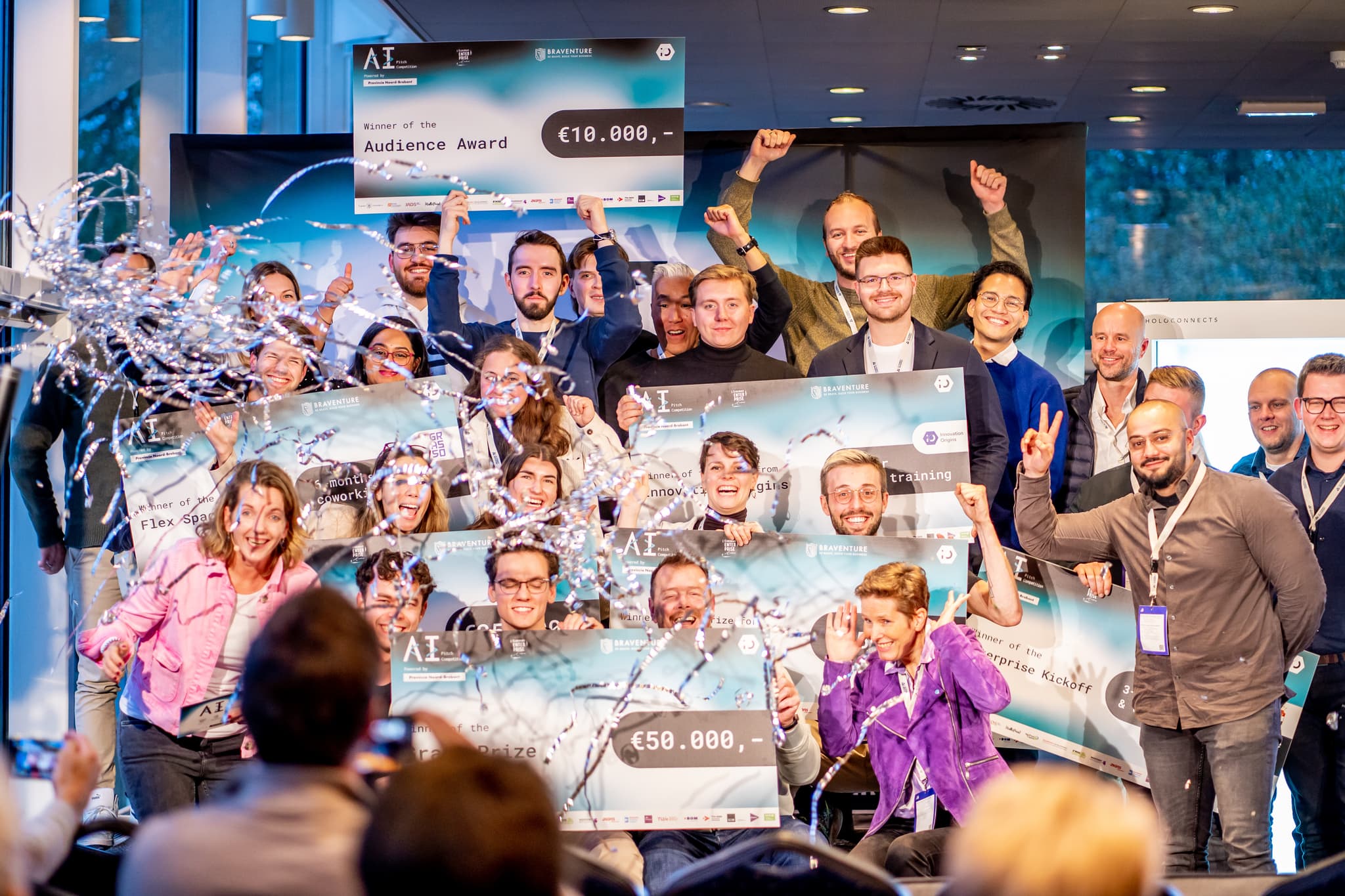
The AI pitch Competition
Read all the articles about the AI Pitch Competition here (also last year's)
Compliance by design under the EU AI Act
Operating in the European Union means meeting strict data sovereignty rules and preparing for the EU AI Act's requirements for high-risk applications.
"Customer data is processed in the EU, stays under the customer's control, and is never shared," states Tomov. "Most of our images show products, crops, and machines, so the privacy risk is lower than in most AI applications. Medical imaging is the exception, and there we follow the stricter rules for patient data."
The traceability inherent in synthetic generation also turns compliance into a feature: "Under the AI Act, high-risk systems, including some medical devices and safety components, must show that their training data is representative and well documented. Every synthetic image we create has a known origin, so we can document the dataset precisely, which helps our customers meet the requirement. Building for these rules from day one is part of what being a European company means to us."
Brainport as a launchpad and the hunt for compute and capital
Backed by OWOW Venture Studio and collaborating with regional partners like Fontys, SPARC, and brabant.ai—alongside an RVO MIT R&D agtech initiative with Luxeed Robotics—Synthgen finds itself at the epicentre of European mechatronics.
"Brainport puts many of our customers within an hour's drive: machine builders, semiconductor and high-tech companies, food and agtech firms, and the integrators who build their vision systems," Tomov points out. "People here will introduce you to the right engineer, fast."
However, Tomov is candid about the structural handicaps European deep-tech startups still face: "What's still missing is early capital for deep-tech B2B companies with long industrial sales cycles, and GPU compute inside Europe at a price startups can afford. If Europe wants its own physical AI companies, both need to be available here."
Physical AI as the next strategic frontier
When asked about the broader societal narrative around artificial intelligence, Tomov strips away the philosophical hyperbole and focuses on functional dependability and autonomy.
"Most of this debate is about general-purpose AI. In physical AI, the question is more concrete: does the system do its job reliably? A vision model on a production line either catches the cracked part or misses it, and you can measure which. The disruption we care about is making AI dependable enough for factories, farms, and hospitals. The risk we see for Europe is depending on others for that capability, especially as the same technology moves into defence and security."
Looking toward the pitch showdown at the Evoluon on 12 November, Tomov is clear on what sets Synthgen apart:
"We solve a problem every inspection team recognises: the rare case they can't collect enough data for. Physical AI will be one of the biggest technology shifts of the next decade, and Europe has much of what it needs: factories, farms, hospitals, and world-class machine builders. What's missing is the data. We're building toward a clear goal: Europe's leading synthetic data company for physical AI, based in Brainport."
Erasmus Enterprise, BOM, and IO+ organise the AI Pitch Competition, with support from the Province of North Brabant. The finals take place during AI Summit Brainport on 12 November at the Evoluon in Eindhoven.