
IO+ Week: Scaling under pressure, from deeptech to infrastructure
Our weekly overview offers an summary of the most interesting stories around key innovations, delivered to you every Sunday.
Published on February 8, 2026
Bart, co-founder of Media52 and Professor of Journalism oversees IO+, events, and Laio. A journalist at heart, he keeps writing as many stories as possible.
This week felt like a reality check for Dutch (and European) innovation ambitions. Not because there is a lack of ideas, quite the opposite: from new deep-tech funds to breakthroughs in healthcare and green chemistry. But the same question keeps coming up everywhere: how do you scale without energy, space, raw materials, regulation, or talent becoming the bottleneck?
In many places, innovation is no longer “a project,” but a chain: science → startup → capital → industry → societal integration. And it is precisely in that final step that friction appears. Our articles show that Europe is mobilizing more growth capital, that new technologies (AI robots, plasma chemistry) are moving closer to real-world application, and that regions around champions like ASML can no longer plan as if they were dealing with an ordinary industrial estate.
The common thread: technological acceleration requires administrative and physical acceleration. Anyone who wants to win in deep tech must also invest in execution—pilots, scaling, permits, infrastructure, and resilience.
Four standout articles
1) ASML is a world city, and that requires proactive urban planning
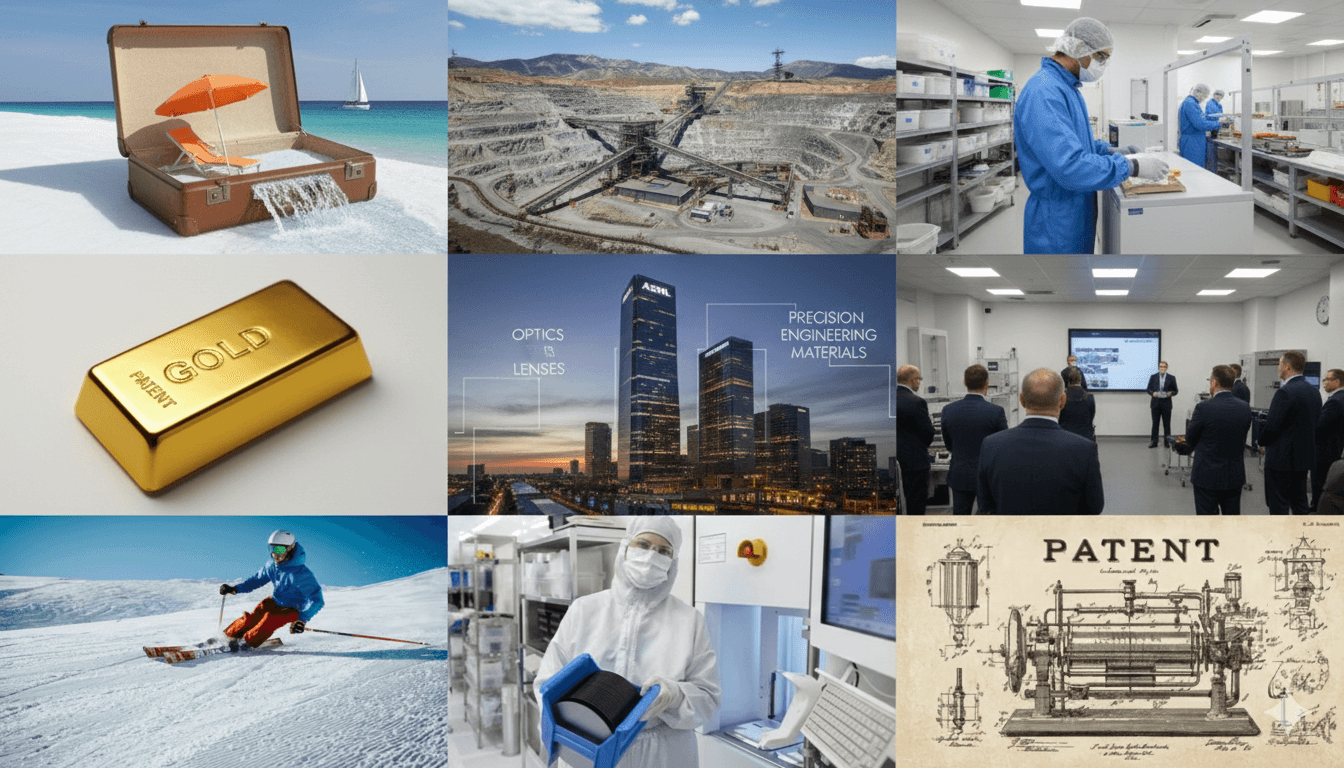
In her column “What if…”, Elcke Vels portrays ASML as a “metropolis” growing so fast that traditional, reactive planning (as once seen in Almere) would lead to traffic congestion, housing shortages, and clogged supply chains. The message: ASML’s order flow is not a peak but a permanent scaling effort, meaning the region must now plan for housing, mobility, public services, and the expansion of thousands of suppliers. Read more here
.png&w=2048&q=75)
2) Europe backs deep tech with a record €750 million fund
A Spanish fund (Kembara/Mundi Ventures) claims, with €750 million, to be Europe’s largest deep-tech fund of its kind, focusing on Series B/C: the very stage where many European startups stall. The capital is intended for around twenty companies in areas such as AI, quantum, clean energy, and space tech, with tickets of up to €100 million per company: a sign that Europe is taking the scale-up gap more seriously. Read more here
3) First AI robot doctor tested in a Dutch hospital
A pilot by the University of Twente and Medisch Spectrum Twente tested a “physical” AI robot (Furhat) that can provide medical information and potentially reduce workload. Particularly interesting is the observation that patients may have greater trust when AI has a tangible, human-like interface, but also that acceptance, reliability, and conversation quality still require significant improvement before it can fully enter clinical practice. Read more here
4) Brand-new startup Thoriant aims to make chemistry CO₂-free with plasma
Thoriant (a spin-off of TNO, Maastricht University, and Ebert HERA) uses plasma technology to convert methane into hydrogen and acetylene - industrial building blocks - without direct CO₂ emissions and powered entirely by green electricity. The core: a working process has been proven at research scale; now a pilot installation must show it can operate reliably and profitably outside the lab. It’s a classic “valley of death” moment: the technology exists, but scaling requires capital and industrial partners. Read more here

© Unsplash
Oh, and the Winter Games have begun. Read here and here for an innovation perspective on what that entails.
What else stood out this week
- Communication without networks: LiveDrop shows why “offline” can sometimes be the safest route for critical infrastructure—also for defense.
- Raw materials bottleneck: Europe risks missing targets for battery and solar materials, slowing both the energy transition and strategic autonomy.
- EV market slowing: January shows a sharp drop in registrations of fully electric cars.
- SMRs on the rise: Small modular reactors are gaining momentum, driven by investments and an upcoming EU strategy.
- Patent law: Reform plans aim to stimulate innovation, but also reshape the rules for (smaller) innovators.
- Why so many good ideas still fail: Innovation Research Brainport: Marc Maas spoke with twelve innovation managers, R&D managers, CTOs, and founders at manufacturing companies.
Want to explore all other articles? You can find them here.
A Daily Podcast
A new episode of our daily podcast is ready for you every weekday at 6:30 AM. In it, our AI colleagues Oliver and Shelby discuss the two most interesting stories of the day. That makes IO+ Daily the perfect way to start your morning with optimistic news from the world of innovation and technology. See you tomorrow.
Our Other Newsletters
Thank you for reading this newsletter. But there’s more. Subscribing is easy — via the options on the IO+ homepage or simply by clicking one of the newsletters below:
- IO+ Daily (1,200 subscribers)
- Mauro’s Green Corner (monthly, 13,800 subscribers)
- Elcke’s Saturday Data Dive (monthly, 20,550 subscribers)
- Elcke en Mauro’s BIO+ Bites (monthly, 29,300 subscribers)
- Bart’s Saturday CHIPS (monthly, 16,300 subscribers)
Enjoy your Sunday — and don’t forget: a new episode of IO+ Daily will be waiting for you tomorrow morning at 6:30. Be prepared before you hop on your bike! 🚲