
First AI robot clinician is tested on skills in Dutch hospital
AI gets a ‘face’ and tests are run to find out whether it can help clinicians alleviate their workload.
Published on February 4, 2026
Masterstudente journalistiek aan de RUG, stagiair bij IO+, schrijft graag over de integratie van AI in het dagelijks leven
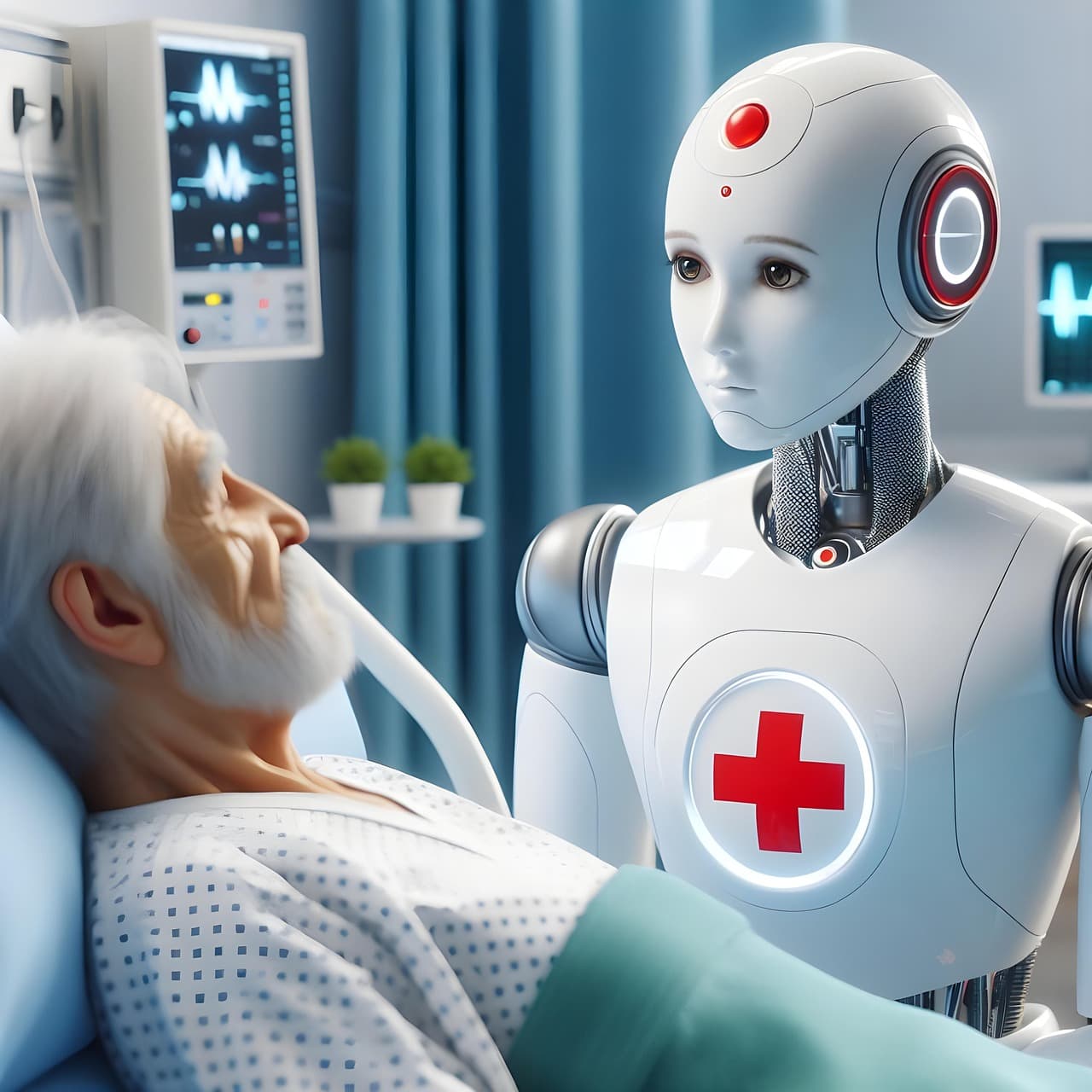
Researchers from a Dutch university and hospital collaborated to test a AI robot's ability to provide patients with medical information and to take on some of the clinicians' workload. A pilot study shows a cautiously optimistic outlook shared by both patients and clinicians, though there remains room for improvement.
Healthcare systems are facing a growing strain. Staff shortages and rising healthcare demand are limiting access to care. Clear and effective communication with patients, especially those with chronic conditions, remains vital. While digital technologies offer support, they also raise concerns about reliability and trust.
AI becomes a tangible and physical being
Initial tests show that patients are more trusting of an AI providing medical information if it is a tangible thing and mimics human behaviour. For this reason, Universiteit Twente and Medisch Spectrum Twente (MST) tested the Swedish 'Furhat' robot, which is equipped with a microphone, speakers, a face that moves when it talks, the ability to look someone in the eye, and the ability to mirror emotions.
The conversation quality is improved by a projector which displays face-like animations onto the inside of a semi-transparent plastic face mask. Additionally, lip-syncing and non-verbal communication can also be provided by the 3D projector.
Trained with pre-approved and clinician-checked websites, the Generative Pre-training Transformer (GPT)-robot with a face was tested on its informative capabilities and acceptance by patients and medical practitioners in MST.
From the lab to the clinic
To bring an idea to life, it must first be tested thoroughly. For Furhat, testing started in the lab with simulation conversations to test its attractiveness, ease of use, dependability, and efficiency. This was done to understand if the robot can be used by everybody, the simulated patients came from various countries.
Once all of the tests were passed, Furhat moved to the hospital. 21 patients with varying stages of osteoarthritis, a bone disease, and seven healthcare professionals interacted with the robot. The study indicates that this physical presence was accepted by both patients and clinicians. Additionally, the information the robot provided was generally found to be both accurate and relevant. On the one hand, patients trusted the information and found the conversation accessible and pleasant. Clinicians like the initial idea and think that the robot can serve an informative role.
On the other hand, there remains room for improvement. Clinicians note that the robot provides a lot of advice in a single sentence and that the pronunciation of medical terms could be worked on. Additionally, moral decisions should remain to be decided by humans. Patients are yet to trust the robot over medical practitioners.
Further research needs collaboration
These results highlight both the potential of AI and robots in healthcare and the areas that need improvement, such as language proficiency and long-term reliability, before they can function as fully autonomous hospital workers.
Cultural factors, care organisation, and digital literacy levels may affect how an AI-enhanced robot is perceived. Future studies should replicate this work across multiple centers and countries to examine how context and location influence acceptance, trust, and effectiveness. Effectiveness should be measured both economically and in terms of communication, such as information retention.