
Brand-new startup Thoriant aims to make chemistry CO₂-free
Thoriant aims to use plasma technology to convert methane into crucial chemicals without direct CO₂ emissions.
Published on February 3, 2026
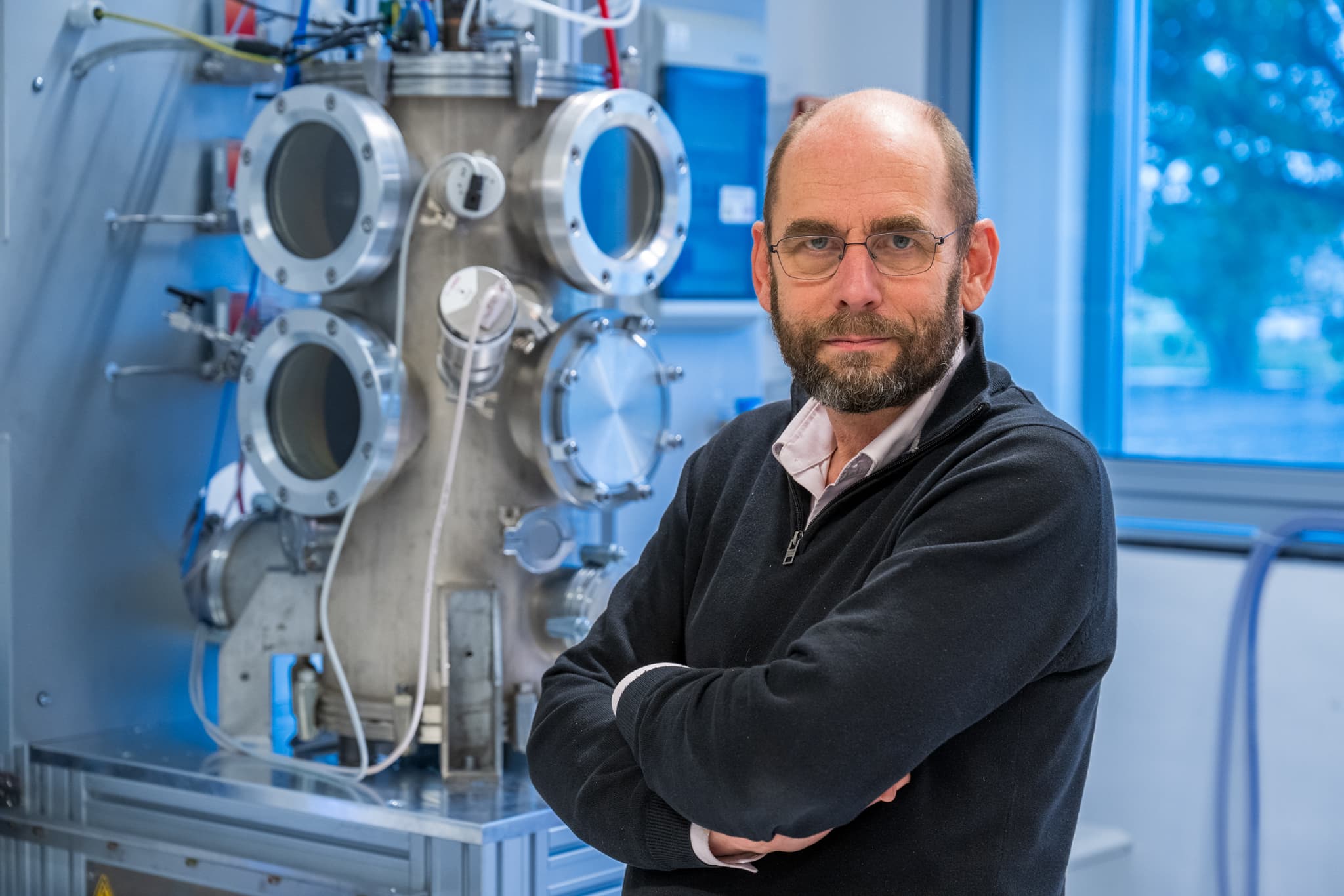
CTO Hans Linden

Team IO+ selects and features the most important news stories on innovation and technology, carefully curated by our editors.
Today, TNO, Maastricht University, and Ebert HERA announce the launch of their joint spin-off, Thoriant. The new startup aims to make the chemical industry less dependent on fossil raw materials. The company focuses on plasma technology to convert methane into hydrogen and acetylene—important building blocks for numerous industrial materials—without direct CO₂ emissions.
Entirely powered by green energy
The technology uses plasma to break strong C-H bonds in methane. The process runs entirely on green energy and can also process industrial waste gases and low-value raw materials into valuable chemicals. According to the company, this offers an emission-free alternative to traditional methods, which often rely heavily on carbon chains.
The technology was developed within the Brightsite Plasmalab, where the parties have been collaborating on new plasma processes in recent years. Brightlands Life Sciences Ventures is involved as a shareholder, through which Maastricht University is committed to marketing scientific knowledge.
Suitable for industrial use
Thoriant wants to scale up the technology and make it suitable for industrial use.
A working process has now been demonstrated on a research scale. The next step is a pilot installation to prove that the technology also functions reliably and profitably outside the lab. Additional investments are needed for that phase.
Joep Huijsmans, CEO of Thoriant: “Today, we are taking an important first step with Thoriant, but our journey is only just beginning.” Hans Linden, CTO: “Together with industrial partners and investors, we want to take our promising technology further: from pilot to industrial scale, to truly transform the chemical industry towards a sustainable future.”
The decision to establish Thoriant as an independent start-up should increase access to capital and accelerate international roll-out. If the upscaling is successful, plasma chemistry could become an alternative to conventional production routes — and thus contribute to the sustainability of a sector that is responsible for a significant proportion of industrial emissions.