
Wennink in Parliament: “Forget autonomy, focus on relevance”
Peter Wennink delivers system-level criticism. On chemicals, capital, energy, the labor market, and a government that holds back innovation.
Published on April 10, 2026
Bart, co-founder of Media52 and Professor of Journalism oversees IO+, events, and Laio. A journalist at heart, he keeps writing as many stories as possible.
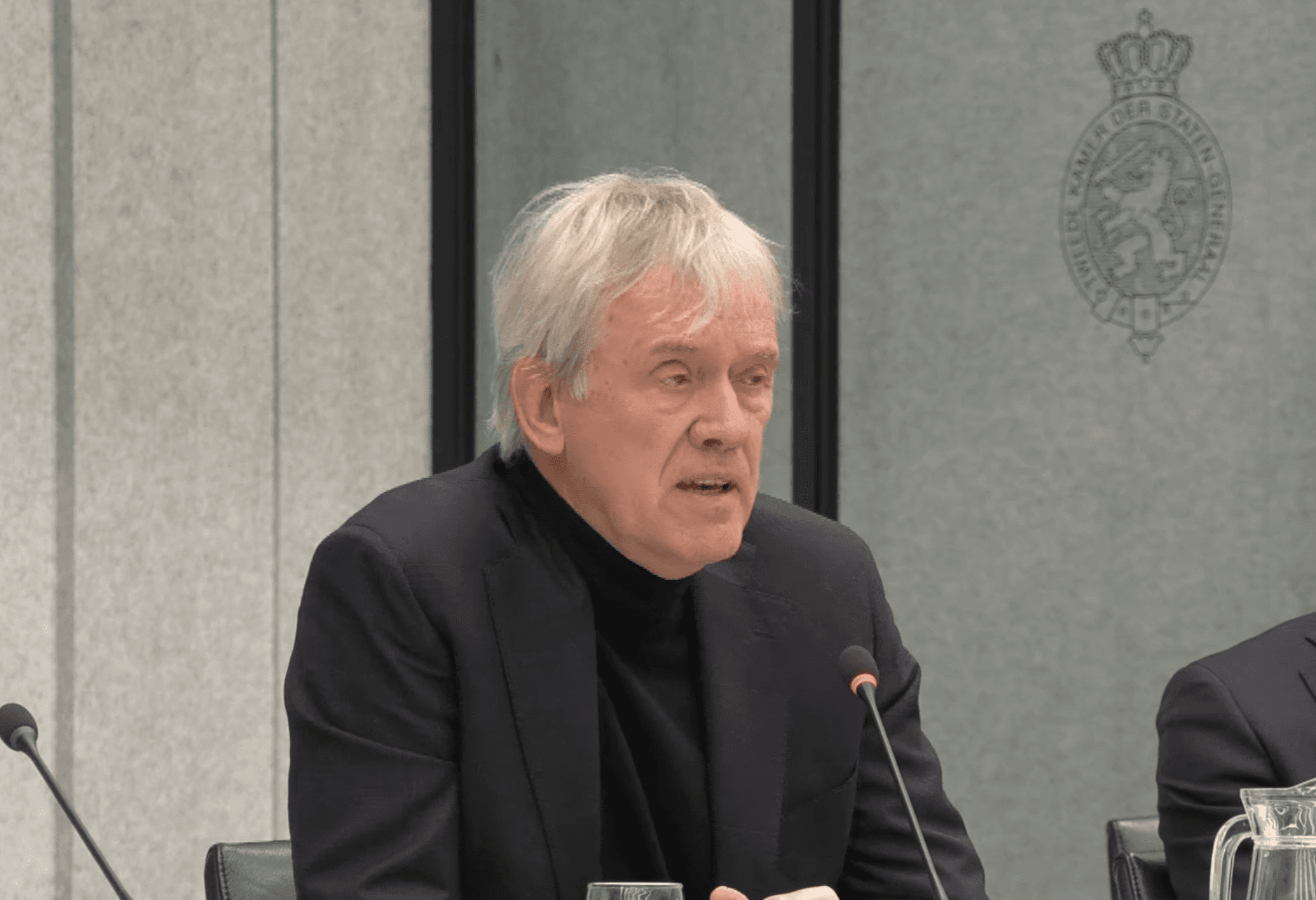
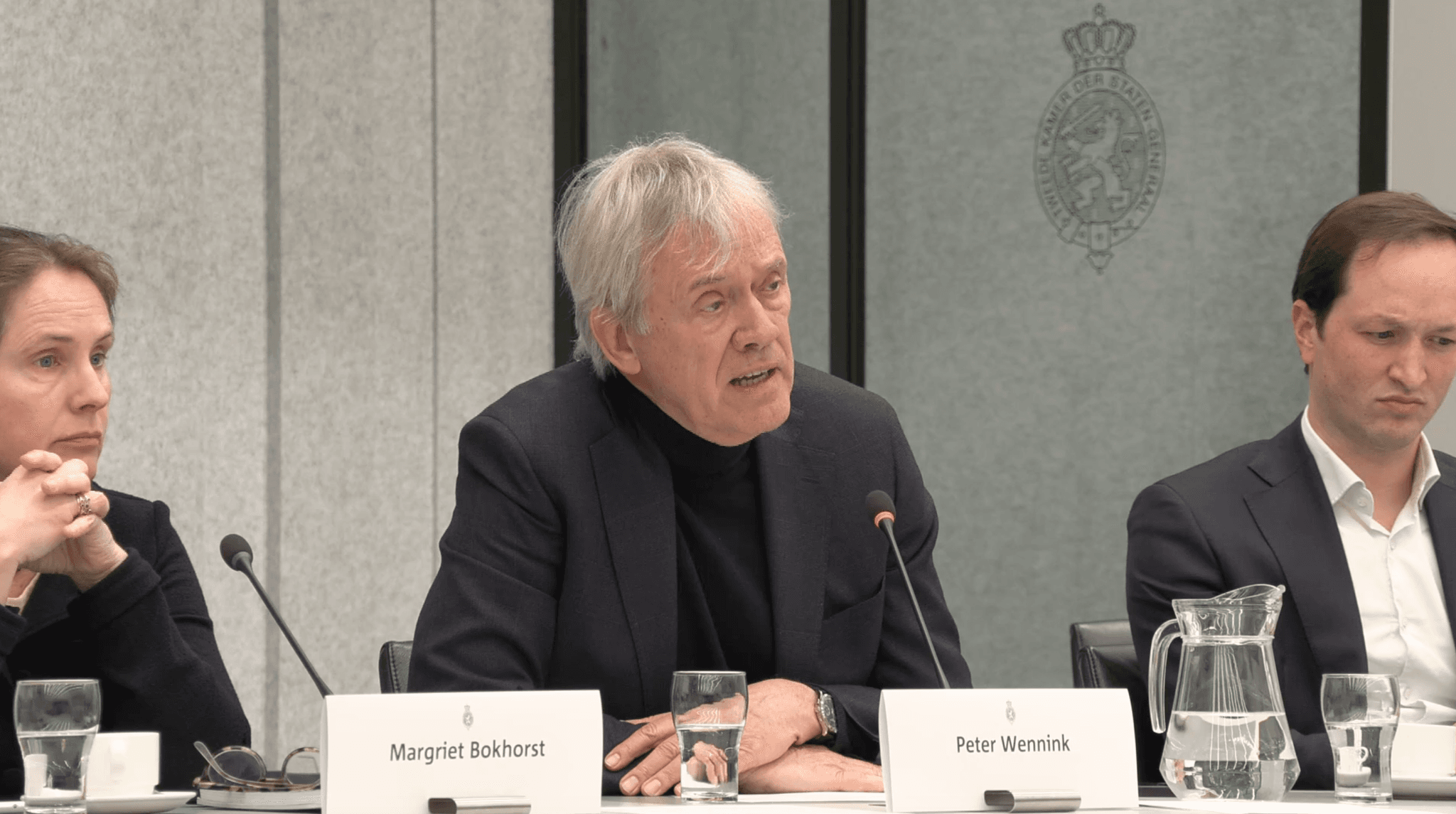
“I refuse to become a voice crying in the wilderness.” With that warning, Peter Wennink concluded his technical briefing in the Tweede Kamer on Tuesday evening. It was a telling sentence. Because while his report De route naar toekomstige welvaart was mainly read late last year as a sharp analysis of the Netherlands’ eroding earning capacity, the discussion in the Thorbeckezaal focused on something else: what, concretely, needs to happen now?
Wennink kept his introduction short. The urgency is well known, he said. What is missing are the preconditions needed to allow the innovations the Netherlands already possesses to truly come to fruition. He reiterated those preconditions: infrastructure, talent, regulation, and capital. Not as an abstract list, but as a coherent system that is now creaking precisely at the points where the future must be built.
The former ASML CEO explicitly referred to the broad foundation underlying his report. It may carry his name, he said, but it is a co-creation of dozens of consortia, knowledge institutions, companies, and governments. “That knowledge and expertise is there,” he emphasized. “Only a number of key preconditions have not been fulfilled.”
What followed was not a repetition of the report presentation, but a political stress test of its core message. Members of parliament questioned him on defense, broad prosperity, chemicals, energy prices, the labor market, and European capital formation. In his answers, it became clear that Wennink has further sharpened his analysis.
Mutual dependencies
Perhaps the most important shift was in his language. Where in The Hague and Brussels people often speak of “strategic autonomy,” Wennink deliberately chooses a different concept: strategic relevance.
Autonomy, he said, suggests that Europe or the Netherlands should be able to do everything itself. According to him, that is neither realistic nor desirable. The future, in his view, lies precisely in mutual dependencies—provided that the Netherlands has something indispensable to offer. “I am a strong proponent of dependencies, but of mutual dependencies.”
With that, he echoed a lesson from his years at ASML. Strategic power does not arise from doing everything yourself, but from others needing you. For the Netherlands, he sees that role primarily in complex systems, including radar, communications, drones, semiconductors, photonics, and system integration. Not a little bit of everything, but targeted investment in those domains where the Netherlands can truly make a difference.
He extended that line of thinking to defense as well. Do not invest money in activities that can be done better elsewhere, he said, but concentrate resources on technologies in which the Netherlands and Europe can strengthen each other. That requires not only vision, but also international coordination. Or, in Wennink’s words: ensure that other countries do not start doing the same thing, but that you make agreements “about who does what.”
It was also striking how sharply he linked economic growth to broad prosperity. One of the recurring criticisms of his report is that it focuses too much on GDP. In parliament, he had the opportunity to nuance that image.
Broad prosperity, according to Wennink, is about a society in which people have jobs, children receive good education, healthcare remains accessible, and safety is guaranteed. Freedom of expression forms the roof over all of that. But all these pillars cost money. And that, he argued again, is the core of his report: without stronger earning capacity, those societal foundations come under pressure.
In doing so, he did not simply repeat that “the pie must grow,” but explained the underlying reasoning more explicitly than before. Growth, for him, is not a goal in itself, but the financial condition for maintaining a decent society.
Chemistry
It was also notable that he highlighted a sector that in public debate is often seen more as a problem than a solution: chemicals. In response to questions from parliament, he defended the chemical industry not as a nostalgic leftover category, but as part of the Dutch knowledge infrastructure. “96% of everything you touch daily is chemistry,” he said.
With that, he touched on a sensitive point. In many discussions about greening and industrial policy, chemicals often appear as a sector of the past. Wennink turned that around. Without basic chemistry and specialty chemicals, he argued, innovation in energy, defense, materials, recycling, and even photonics also weakens. In his narrative, chemicals are not a standalone industry, but a foundational layer beneath nearly all transitions.
That automatically brings him to the energy problem. High energy prices are putting pressure on industry, but according to Wennink, that is not yet a reason to write off the Netherlands. However, politics must stop with fragmented partial solutions. His plea was explicitly systemic: generation, storage, distribution, and end-use must be approached as a single whole. Wind alone, solar alone, or nuclear alone is, in his view, not enough.
Rules
In that context, he again mentioned small modular reactors, storage technologies, and renewable energy. But the core of his argument was broader: the Netherlands has waited too long and is now being “confronted with reality.” That pressure can also become productive, he said, invoking a variation of an old ASML lesson: “Under the right pressure, everything becomes fluid.”
Perhaps the most politically charged part of the briefing concerned regulation. Here, Wennink became very concrete. He called the Dutch tendency toward gold-plating (adding national layers on top of European rules) a thorn in his side. Even sharper was his criticism of state aid rules that, in practice, block young companies.
His example was telling: startups are often treated in subsidy applications as “undertakings in difficulty,” which makes support impossible. “Every startup is an undertaking in difficulty,” he said dryly. “Trust me, money is not sloshing against the baseboards.” According to him, this leads to good innovations being selected, only to get stuck in legal interpretations and implementation rules.
The labor market returned in that same light: not just as a social issue, but as a condition for innovation. Wennink warned that AI and automation will cause major shifts in the labor market over the next five to ten years. Office jobs will disappear, others will take their place—in healthcare, security, industry, and digitalization. That requires large-scale reskilling, with companies taking the lead and supported by government and social partners.
Triple Helix
Toward the end, Brainport was explicitly cited as an example of what is possible when trust, urgency, and cooperation converge. The triple helix, in his view, is not a governance model on paper, but a practice of reciprocity. In Southeast Brabant, that collaboration worked because everyone felt that the alternative was decline.
That may well be the real message of this briefing. Wennink’s report was a wake-up call. But in the House of Representatives, something else resonated above all: the Netherlands does not lack plans, knowledge, or money. It lacks collective execution power, courage, and administrative flexibility.
Or, to quote Wennink one more time: the innovations are already there. “We just need to create the preconditions.” After that, it is up to politics, the market, and society to prove that this report will indeed not end up in a drawer.