
The march to a digital military has to speed up
Submarines take decades. Drones take months. The Netherlands' top defense tech chief says the gap is no longer acceptable.
Published on May 27, 2026
© Nick Bookelaar

Mauro swapped Sardinia for Eindhoven and has been an IO+ editor for 3 years. As a GREEN+ expert, he covers the energy transition with data-driven stories.
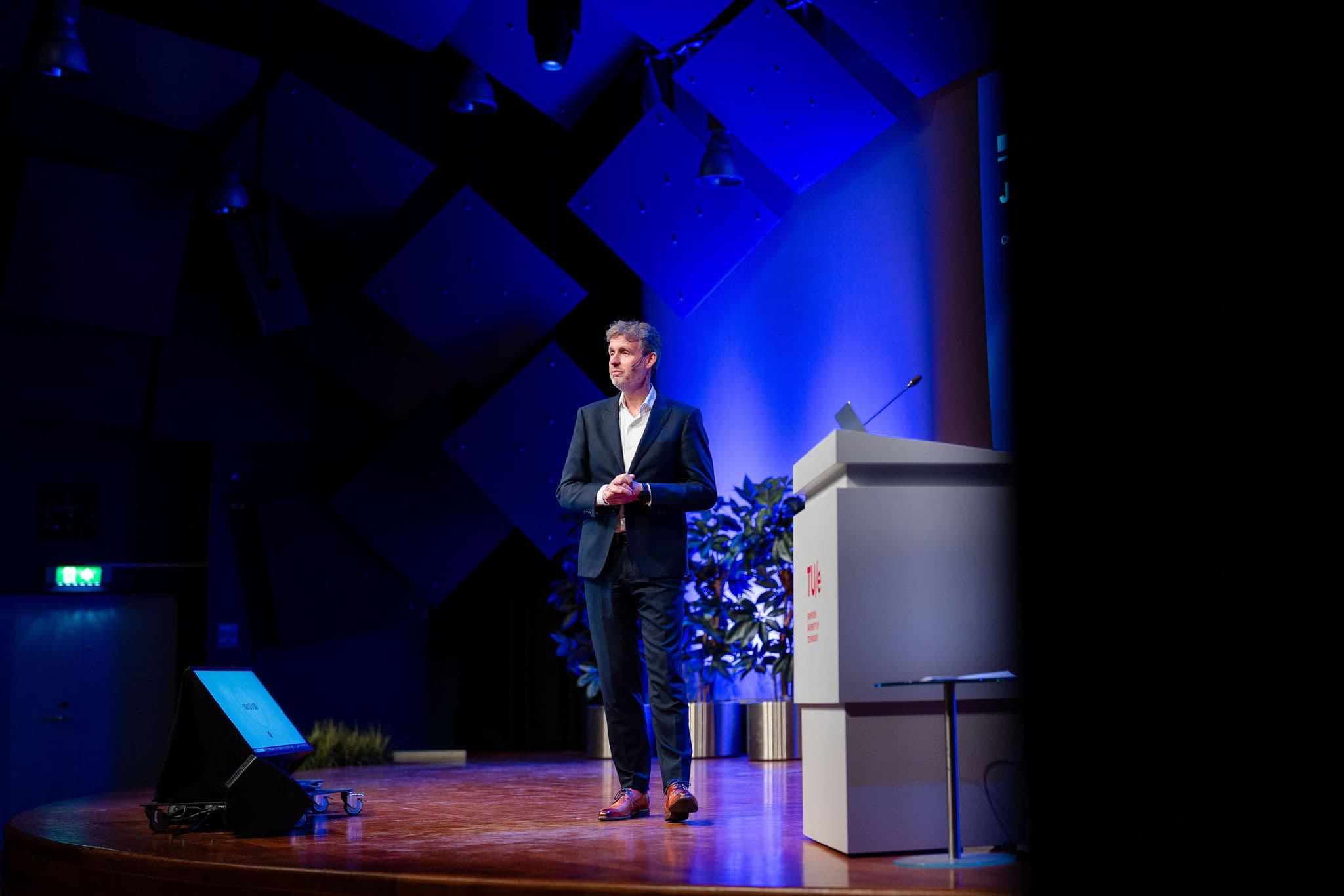
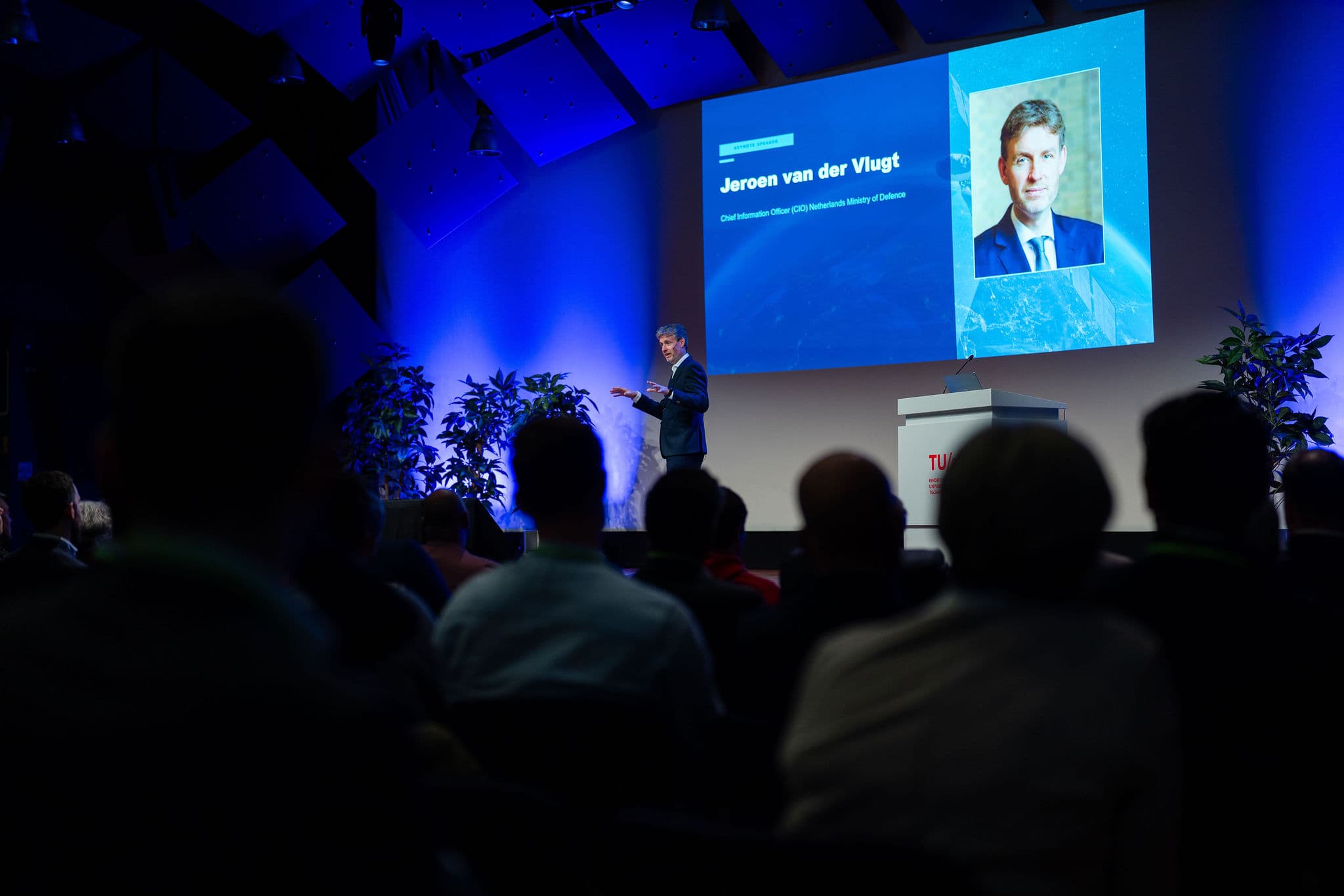
Being the Chief Information Officer (CIO) of the Netherlands Ministry of Defense (MoD) means spending a lot of time defending your decisions, Jeroen van der Vlugt stated. He was one of the keynote speakers during Defense Tech Day 2026.
The event, organized by NATO Dutch and Belgian startup accelerators part of the DIANA network, gathered an audience of innovators, stakeholders, and investors. Van der Vlugt used his time on stage to map the terrain of digital transformation within a NATO member's military, a process that needs to happen fast, given the rising scale of military threats. He touched on the legacy, constraints, political friction, and genuine progress of the transformation.
Two speeds world
The official has served as CIO for six years now. When appointed, his brief was straightforward: bring stability and stop overspending on large enterprise resource planning (ERP) projects – optimizing the MoD resources. However, geopolitics changed the game plan.
The war in Ukraine, he argued, fundamentally reframed what digital readiness means. The headline lesson was not about hardware — it was about software. The ability to update and adapt software rapidly proved as decisive as the platform itself.
He contrasted that with Dutch procurement timescales: the Netherlands' submarine replacement program was ordered years ago, and the first vessel is not expected in harbor until around 2035. "The submarine will be old when it enters the harbor," the CIO said. "It is not a decade of delay; it is a century in technology terms."
There is no other option but going fast
To exemplify the speed of change, Van Der Vlugt brought two examples. One was a colleague's program that delivered torpedo-capable autonomous underwater vehicles for the Australian Navy — from concept to capability in around 13 months.
Fast-moving deployment is also evident in the war in Ukraine. Early commercial drone use in Ukraine required one operator per platform; modern autonomous swarm operations are moving toward ratios of 50 or 100 platforms per operator. "Disposable autonomous systems will make up a large share of future military capability," he said, "and we have to navigate that reality together with allies — we cannot match that scale alone."
To this end, his words echoed those of two other keynote speakers of the day, Lieutenant General Ludy Schmidt and Brigadier General Steven Lauwereys, who underlined that the speed of adoption is increasingly a determining factor in embracing technology on the battlefield.
Build, buy, or own?
Van der Vlugt argued that the old model of heavy customization of any military system — specifying everything, procuring slowly, then modifying during implementation — had to change. "What we're now trying to do is take things off-the-shelf and adapt our ways of working to the system, not the other way around."
But he was equally clear that buying everything off the shelf provides no competitive edge. The key is distinguishing generic capabilities (buy), differentiating ones (build or co-develop), and strategically critical ones that require sovereign control.
He illustrated this with a Dutch company that had been the only European supplier of high-assurance NATO-certified cryptographic products. When its ownership changed in ways that raised strategic concern, the Ministry had to intervene — establishing governance within NATO structures to protect the capability. "It was a rocky ride," he said, "but it showed how important it is to know which parts of your technology stack you cannot afford to lose."
© Nick Bookelaar
The MoD needs startups and vice versa
So how can innovative companies appeal to the MoD and work with it? Van Der Vlugt had some sharp remarks. He recalled a meeting with the CEO of a major European IT firm, who expected a paid assignment before investing in defense AI capabilities. The CIO pushed back: "Did Google or the big US tech companies start with a government assignment? They started with their own money."
In his view, genuine defense tech needs to start ahead of requirements, not just apply for some government tenders. Yet, the Ministry has a role to take on venture risk, stepping in once the technology proves mature.
Surely, even more so in light of the current geopolitical scenario, government and tech companies need to understand each other better. "We have to do more together — to understand what your needs are, and how you can make the most useful solutions for us."