
The IO+ Week: When the money runs out before the market is ready
Every Sunday, our weekly review offers an overview of the most interesting stories around important innovations.
Published on May 31, 2026

Bart, co-founder of Media52 and Professor of Journalism oversees IO+, events, and Laio. A journalist at heart, he keeps writing as many stories as possible.
The startup story is often told in terms of success, adventure, and growth. Founders who pull a brilliant idea out of the lab, achieve technical breakthroughs, win awards, run pilots, and convince investors. But behind that optimistic façade, there is always a harsher truth: innovation needs not only time, talent, and technology, but also money. And sometimes that money runs out before the market truly opens up.
That is exactly the situation SeaO₂ has found itself in. The Delft-based climate startup developed technology to extract CO₂ directly from seawater. The technology works, the first revenues through carbon credits have come in, the pilot is running, and the ambition is big: scaling up to industrial application and ultimately removing millions of tons of CO₂ per year. But between proven technology and a mature market lies a capital gap.
In a remarkably open LinkedIn post, the company sounded the alarm. Not because the technology had failed, SeaO₂ writes, but because the capital did not start moving in time. Private investors waited for public commitments, public parties waited for private financiers, and so everyone stood still. For a startup that has been working for years on a solution to one of the biggest climate challenges of our time, that is a bitter conclusion.
The SeaO₂ story shows the other side of startup life. Not the pitch-deck version, but the reality in which timing, financing, market readiness, and trust are just as decisive as technical excellence. For Europe, this is more than an individual corporate drama. If proven climate technology cannot find growth capital here, it may disappear not only from the Netherlands, but from Europe as well.
There is more...
But of course, there was much more to see on IO+ over the past week. Here are a few highlights, but be sure to check IO+ for the full overview.
.png&w=2048&q=75)
Too many startups, too few scale-ups
Now that we are talking about the viability of startups... The Netherlands is good at starting companies, but less good at helping them grow. A new analysis shows where that paradox comes from: from tailor-made support that hinders scaling, to foreign acquisitions that remove promising companies from the pipeline. The question is not only how we get more startups, but above all how we ensure that the best companies can continue to grow here.
The female body as a blind spot and a business case
At the Fe+male Tech Heroes Conference, it became clear how large the gap in medical research into the female body still is. At the same time, awareness is growing that FemTech is not only a social necessity, but also an economic opportunity. From migraine to hormone-related conditions: the market is large, but it requires much more attention and funding.
© fe+male tech heroes
Researchers out of their bubble
On June 4, the final of the first Tech Transfer Challenge will take place at ASML. Researchers from TU/e will not only be challenged to pitch their technology there, but above all to discover whether their research can form the basis for a company. Sometimes one conversation, one question, or one extra push is enough to really set an idea in motion.
Publishers are less powerless than they think
A German academic study shows that publishers are not only dependent on platforms, but also have bargaining power — especially when it comes to new and emerging AI platforms. High-quality, reliable content remains something platforms need. That gives publishers room to choose their position more strategically.
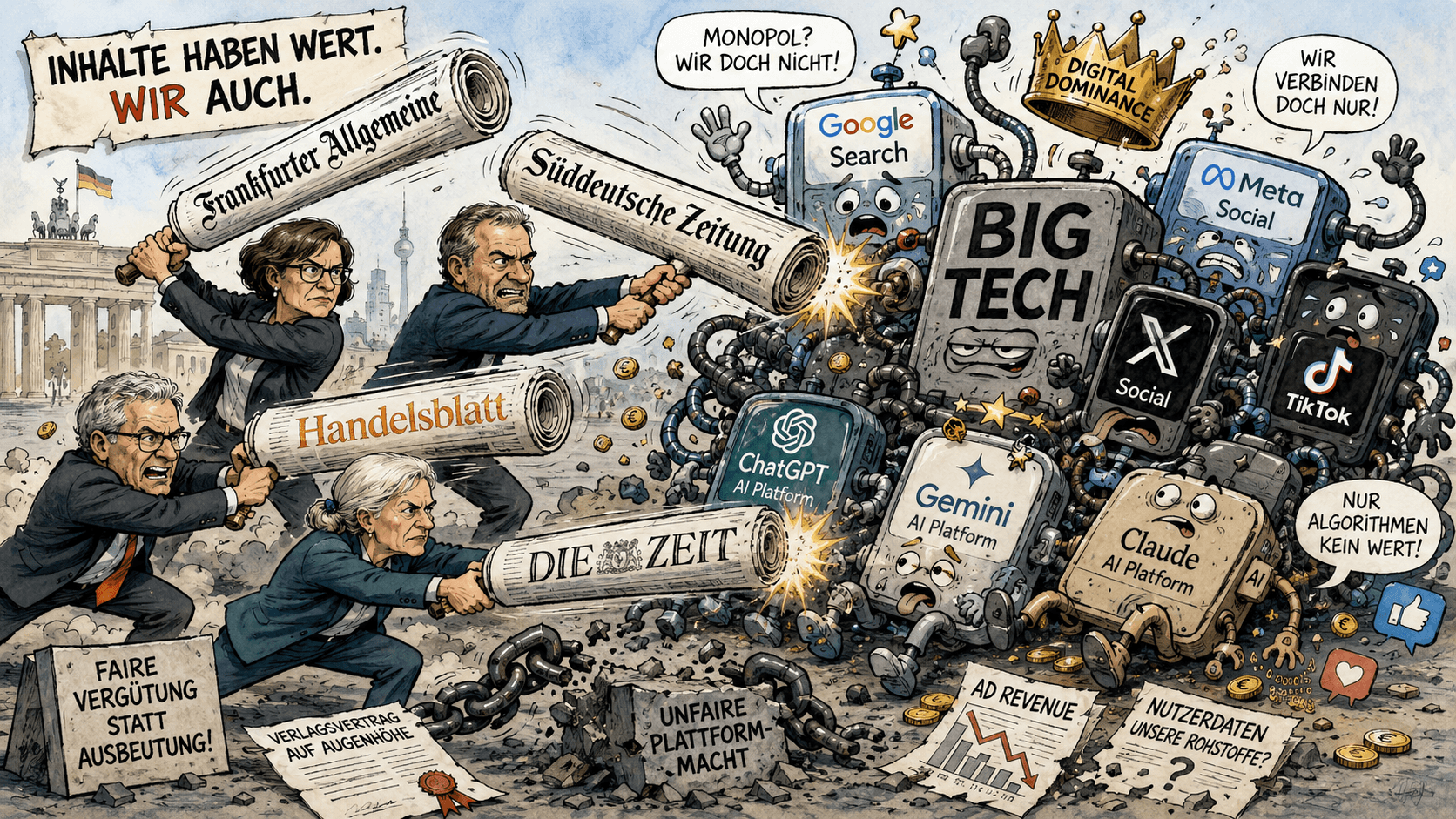
The cartoon was generated using a large language model.
Huawei is looking for a route around ASML
Huawei claims a major breakthrough in chip design. By stacking chips vertically, the company aims to compete with the world’s leading players within five years, without being fully dependent on the most advanced lithography machines. Experts add caveats, but the announcement underlines how hard China is working toward technological independence.
Share this newsletter
IO+ follows the future, step by step, breakthrough by breakthrough.
What this week shows: innovation is not an abstract story. It becomes visible in systems that are changing, from streets to hospitals. And that is exactly where technology makes the difference. In the meantime, help us by sharing this newsletter with colleagues and partners, and stay connected to tomorrow’s ecosystem.
A Daily Podcast
Or do you prefer to listen? A new episode of our daily podcast is ready for you every weekday at 6:30 AM. In it, our AI colleagues Oliver and Shelby discuss the two most interesting stories of the day. That makes IO+ Daily the perfect way to start your morning with optimistic news from the world of innovation and technology. See you tomorrow.
Our Other Newsletters
Thank you for reading this newsletter. But there’s more. Subscribing is easy — via the options on the IO+ homepage or simply by clicking one of the newsletters below:
- IO+ Daily (1,200 subscribers)
- Mauro’s Green Corner (monthly, 13,800 subscribers)
- Elcke’s Saturday Data Dive (monthly, 20,550 subscribers)
- Elcke en Mauro’s BIO+ Bites (monthly, 29,300 subscribers)
- Bart’s Saturday CHIPS (monthly, 16,300 subscribers)
Enjoy your Sunday, and don’t forget: a new episode of IO+ Daily will be waiting for you tomorrow morning at 6:30. Be prepared before you hop on your bike! 🚲
💡 Stay ahead of the innovations shaping tomorrow
Follow IO+ for daily stories on technology, science, entrepreneurship and the systems that shape our future. 👉 https://ioplus.nl/en/posts
Enjoy your week!