
The IO+ Week – LEVEL UP: growth starts with the customer
Every Sunday, our weekly review offers an overview of the most interesting stories around important innovations.
Published on October 4, 2026
Bart, co-founder of Media52 and Professor of Journalism oversees IO+, events, and Laio. A journalist at heart, he keeps writing as many stories as possible.
A customer calling at two in the morning on a Saturday because their chip factory needs to keep running: entrepreneurship rarely gets more concrete than that. Hamed Sadeghian, founder of Nearfield Instruments, used that example at LEVEL UP to show what scaling really means. Those who survive the notorious valley of death, he argued, enter another danger zone: customers depend on you, employees build their futures around your company, and you must keep every promise. At the fifth edition of the annual startup event, held last Monday at Eindhoven’s Evoluon, growth stories received a welcome dose of realism.
That same clear-eyed perspective came through in the contributions of Peter Wennink and Jacqueline van den Ende. The former ASML chief wants to hear within thirty seconds which customer problem an entrepreneur is solving. Europe also needs investors who understand technology well enough to take informed risks, he argued, alongside companies where employees can make mistakes and quickly change course. Van den Ende, founder of Carbon Equity, distilled her experience on both sides of the investment table into ten commandments of fundraising. Her message: raise money when you need it, choose financing that fits your business, and investigate your investor as thoroughly as they investigate you. Plenty of homework, then, for entrepreneurs and their financiers alike.
Imagination
Fortunately, there was also plenty of room for imagination. Haptontech won the LEVEL UP Award with programmable materials designed to make digital content tangible. Think of surfaces that change shape or softness, with potential applications in consumer electronics and dynamic Braille displays. Founder Mert O. Astam earned a ticket to CES in Las Vegas. From investor conversations to lessons on international expansion, LEVEL UP brought together the people and knowledge needed to take such ideas further. This year’s stories reveal just how much needs to happen between a promising invention and a mature business.
Here are all the stories we published about the event
https://ioplus.nl/en/posts/level-up-outlines-the-10-commandments-of-fundraising
https://ioplus.nl/en/posts/hamed-sadeghian-after-the-valley-of-death-another-death-zone
https://ioplus.nl/en/posts/level-up-2026-ranged-from-lessons-learned-to-international-growth
https://ioplus.nl/en/posts/haptontech-wins-levelup-2026-award-touch-in-the-virtual-world
https://ioplus.nl/en/posts/wennink-society-craves-urgency-politics-keeps-looking-inward
But of course, there was much more:
SMART Photonics and GlobalFoundries bridge two chip worlds
Silicon excels at guiding and processing light; indium phosphide enables components such as lasers and optical amplifiers. SMART Photonics and GlobalFoundries are combining these strengths in a new manufacturing service for photonic chips, accessible to external customers. Designers will have less integration work to do themselves, which should accelerate development and reduce costs. The collaboration targets applications including AI data centres and LiDAR, where compact, energy-efficient optical systems are becoming increasingly important. The joint service is expected in the second half of 2027: another step towards making photonics available at greater scale.
https://ioplus.nl/nl/posts/smart-photonics-en-gf-lanceren-unieke-foundry-voor-fotonica
Brainport gains an instrument-making programme built on Leiden’s expertise
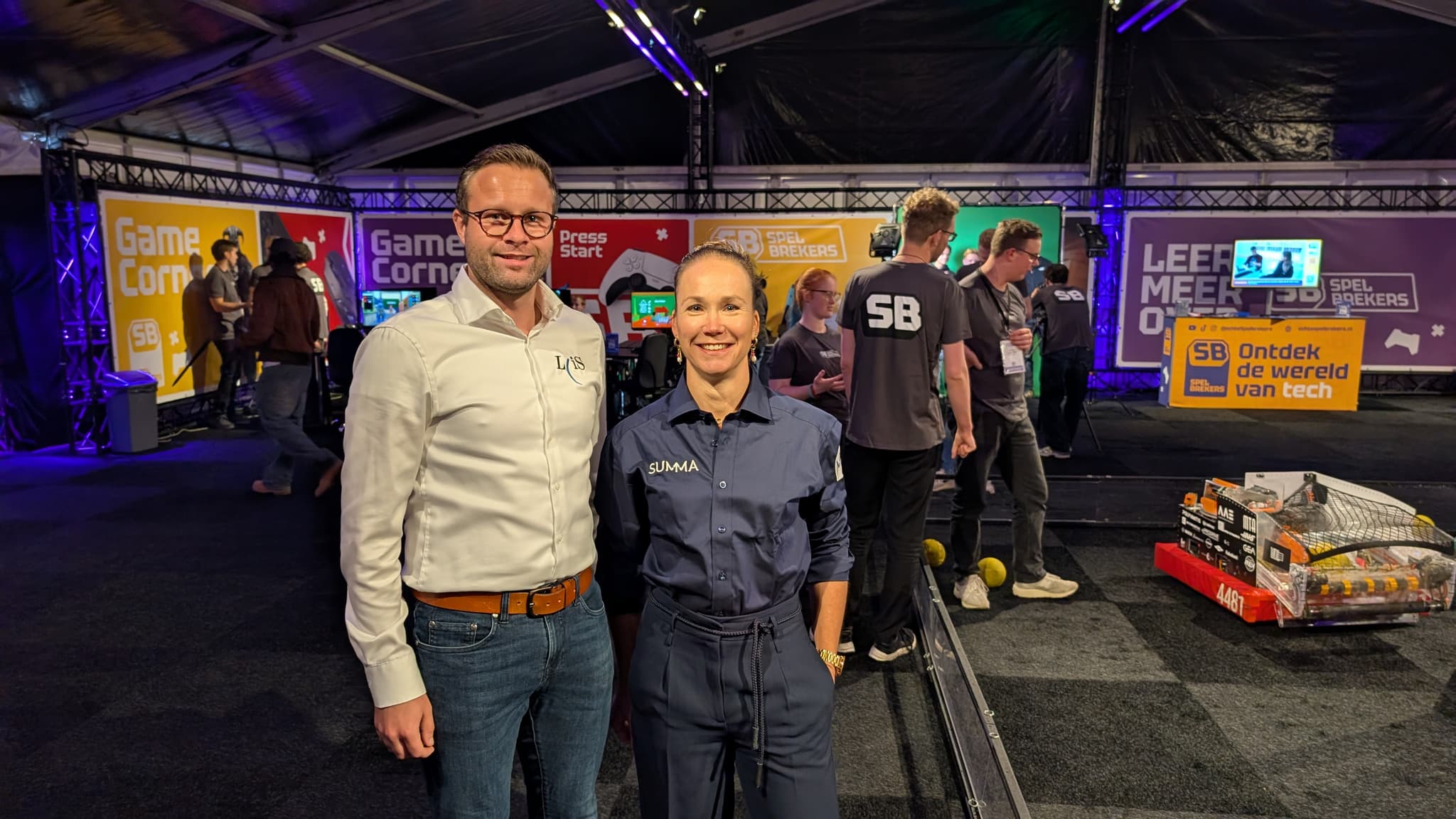
Thijs Pernot (LiS) and Patricia van der Linden (Summa) at the Education Fair in Veldhoven © IO+
Every technological ambition ultimately needs people who can manufacture, measure and assemble components with exceptional precision. That is why the Leidse Instrumentmakers School and Summa are joining forces to bring precision craftsmanship to Brainport. In September 2027, Summa will launch a full Research Instrumentmaker programme, incorporating LiS’s specialist knowledge and quality standards. Industry is helping determine the skills students will need. For Patricia van der Linden and Thijs Pernot, however, the most important measure of success is enrolment: the collaboration must attract additional young people to technology. That will give the high-tech sector’s growth a stronger foundation on the shop floor, too.
https://ioplus.nl/nl/posts/lis-en-summa-schalen-het-precisievakmanschap-op-naar-brainport
Brabant looks to AI for its next economic strength
Where can Brabant excel ten, twenty or thirty years from now? For BOM CEO Brigit van Dijk-van de Reijt, an important part of the answer lies with AI startups that connect with strong sectors such as semiconductors, automotive and medical technology. The AI Pitch Competition, whose final takes place on 12 November, aims to help forge those connections. Eight finalists and wildcard Alzheimer.App demonstrate how diverse the applications have become, from cybersecurity to dementia care. The platform offers opportunities to attract capital, knowledge and talent, but the ambition goes further: helping new companies grow and strengthen the region’s future earning capacity.
https://ioplus.nl/nl/posts/ai-startups-als-fundament-voor-de-brabantse-economie-
A hedgehog in the dark reveals what innovation can mean
A young woman tried an early prototype of Luna’s night-vision glasses and saw a hedgehog in the grass for the first time. She burst into tears. That small moment says a great deal about the Arnhem-based startup’s purpose: giving people with night blindness greater freedom to go out independently. Founder Karst Hoogsteen, who has an inherited retinal condition himself, developed glasses that process camera images and display them to the wearer through transparent lenses. After delivering the first fifty pairs, Luna is working on further miniaturisation and another production run. The challenge is as human as it is technical: creating an aid that people are happy to wear in everyday life.
https://ioplus.nl/nl/posts/slimme-bril-van-luna-laat-nachtblinden-zien-in-het-donker
A mini-heart runs a marathon in the laboratory
Exercise is healthy, but what happens to the heart during extreme endurance activity? Researchers at Radboudumc and the University of Twente developed the Micro-Athlete: human heart tissue on a chip, put to work using electrical pulses. This allows them to simulate prolonged exertion and investigate why some people may be more susceptible to heart damage. Early results show responses that resemble those seen in people exercising intensively. The model remains a simplified version of a real heart, but could eventually support more personalised training and treatment advice, as well as research involving fewer animal experiments.
https://ioplus.nl/nl/posts/kan-te-veel-sporten-je-hart-schaden-minihart-moet-het-uitwijzen
Sometimes engineering begins by taking something away
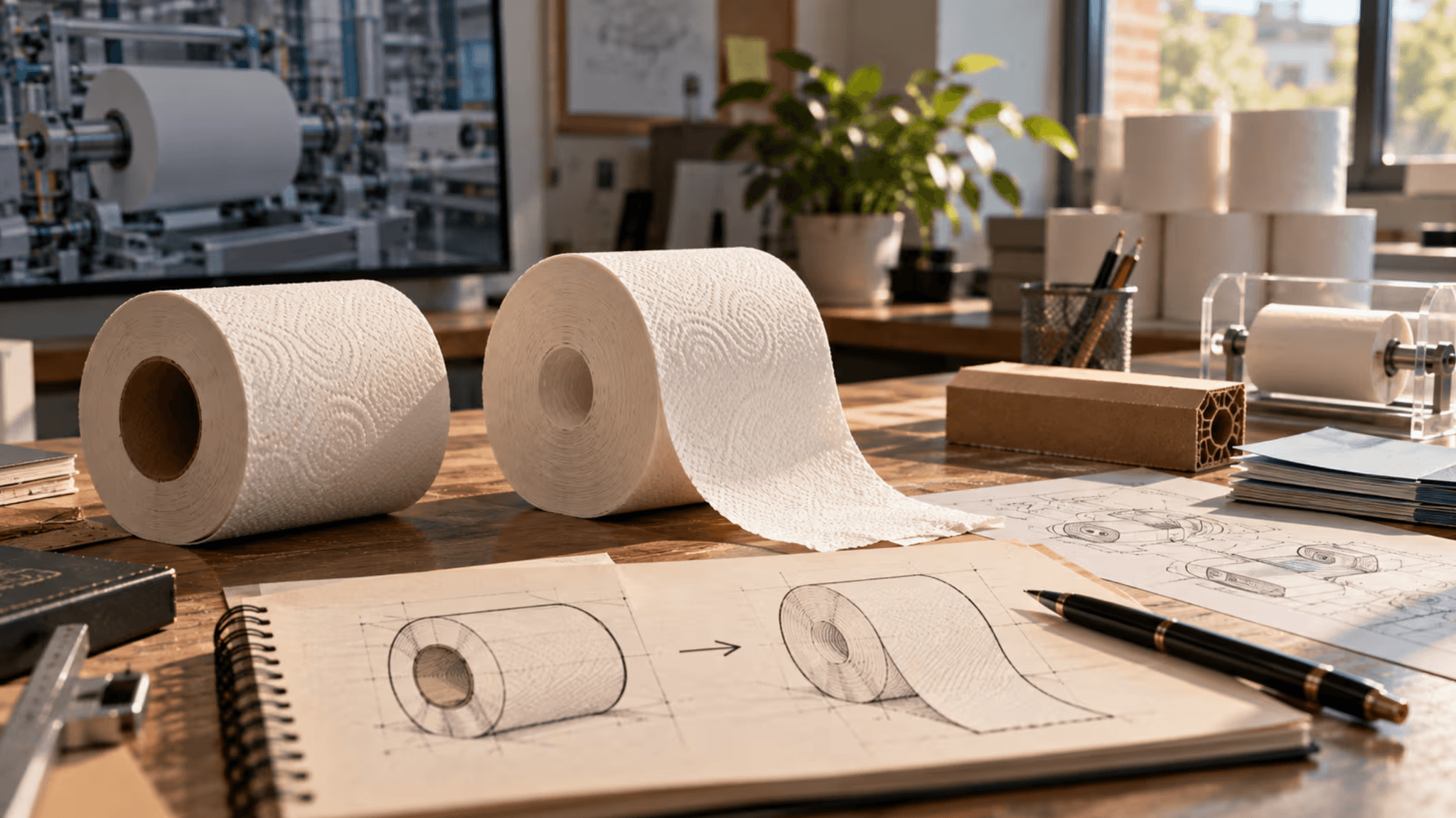
After all the chips, AI and medical technology, we end this week with the toilet roll. Marco Coolen explains why removing its cardboard core requires a surprising amount of engineering. That tube keeps the roll intact during production, transport and use; without it, the paper itself must provide the strength. Winding techniques, material structure and adhesive bonds suddenly become crucial. Protection, too, often lies in a connected set of patents covering these practical solutions. It is a wonderful example of how a seemingly simple improvement can take years to develop — and how much innovation is hidden in products we barely give a second glance.
https://ioplus.nl/nl/posts/de-kunst-van-innovatie-zit-soms-in-wat-je-weglaat
Our Other Newsletters
Thank you for reading this newsletter. But there’s more. Subscribing is easy — via the options on the IO+ homepage or simply by clicking one of the newsletters below:
- IO+ Daily (1,200 subscribers)
- Mauro’s Green Corner (monthly, 13,800 subscribers)
- Elcke’s Saturday Data Dive (monthly, 20,550 subscribers)
- Elcke en Mauro’s BIO+ Bites (monthly, 29,300 subscribers)
- Bart’s Saturday CHIPS (monthly, 16,300 subscribers)
Rather listen?
Here's a small selection of last week's highlights in a half-hour podcast:
External Content
This content is from spotify. To protect your privacy, it'ts not loaded until you accept.
Enjoy your Sunday!