
The app that remembers what your doctor said
Ditto is an app allowing patients to get an accurate summary of their conversation with doctors.
Published on June 9, 2026
© Ditto
Mauro swapped Sardinia for Eindhoven and has been an IO+ editor for 3 years. As a GREEN+ expert, he covers the energy transition with data-driven stories.
It has happened to all of us: you leave the doctor’s office, walk to your car or bike, and by the time you get home, half of the conversation is gone. On top of that, you might have misunderstood part of what stuck with you. According to research, patients retain less than 25% of what has been said during a medical consultation — without factoring in anxiety, jargon, and the high information density of a complex diagnosis.
Bart Voorn, co-founder and COO of Ditto, knows this first-hand. Diagnosed with Type 1 diabetes, turning 30, he was discharged from the hospital with handwritten notes, a lesson in injecting insulin using an orange, and the expectation that he'd manage on his own. That evening, his blood sugar crashed. His partner couldn't find the notes. He brought him an apple. "We were so overwhelmed by the diagnosis," Voorn recalls, "that almost none of the information from the hospital actually stayed with us."
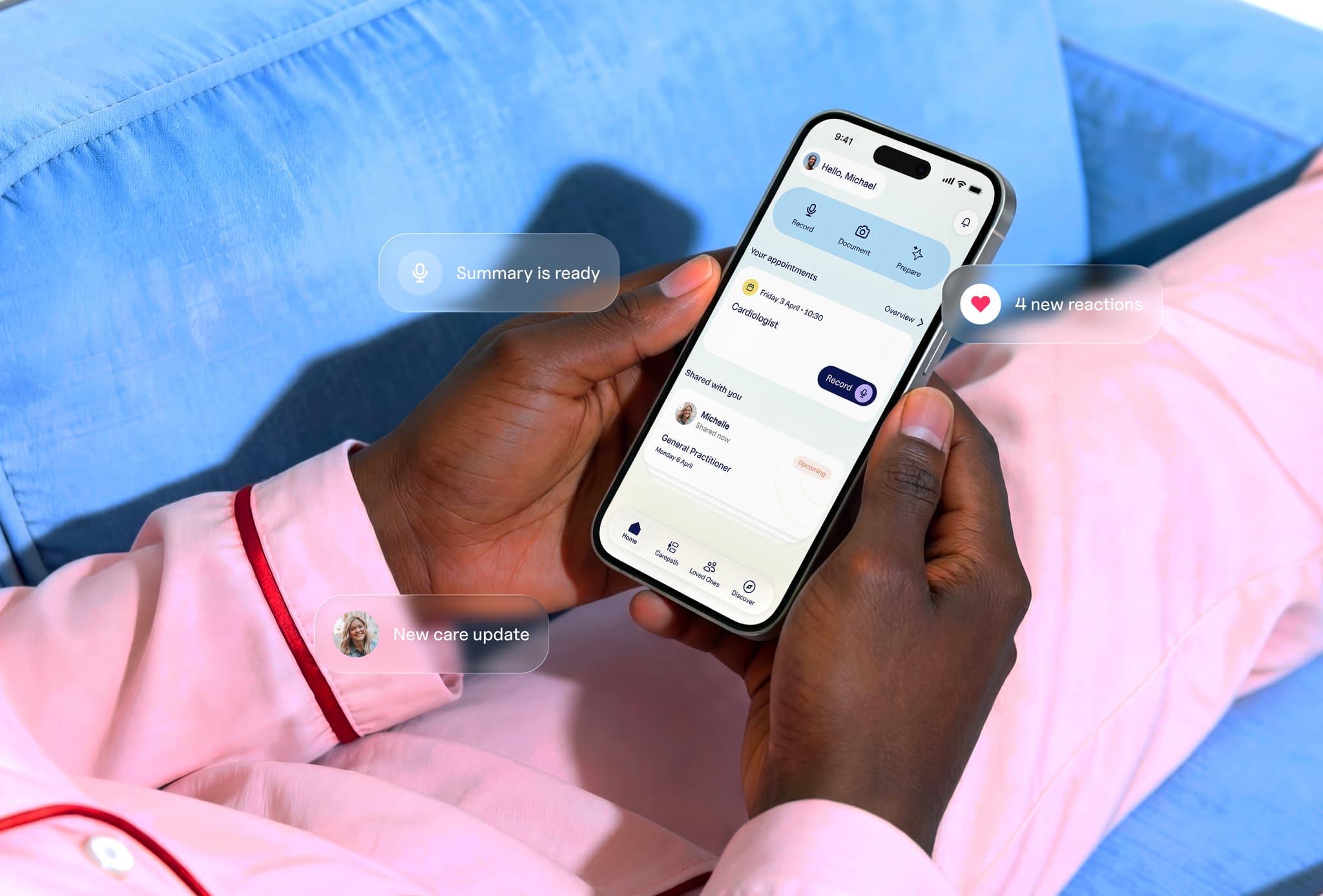
Ditto was founded two years ago to change this paradigm. The startup developed an app that allows users to record conversations with healthcare professionals – recording a consultation with a doctor is allowed in the Netherlands. The chat is then summarized in plain language — the app currently supports Dutch, English, Arabic, and Turkish. Then, one can also share the summary with close ones. So far, 100,000 people have downloaded the app, with thousands of them being regular users.
.png&w=2048&q=75)
Investment of the month
Each month, we interview a startup or company that has recently received an investment.
The comprehension gap
A similar story occurred in the life of another co-founder, Tobias Polak. He used to accompany a close friend through cancer treatment visits. When walking out of consultations, the two seemed to have attended two different medical visits.
“The same pattern recurred,” says Voorn. "People are having the most important conversations of their lives at the most critical moments — and they're unable to grasp them fully."
In addition to recording conversations, users can upload documents to help them understand what a complex specialist letter means. Overall, Ditto is built with ease of use at the core. “My dad is 81," says Voorn. "He needs to be able to use it."
Involving close ones in the care process
An aspect that Ditto founders valued from the very beginning is involving a patient’s loved ones in the care journey. The other co-founder, Merlijn van Breugel, who used to follow his grandmother in a cancer care path, had to call tens of family members and close ones to keep everyone up to date. Hence, the choice to create groups on the app to share information with the patient’s close circle.
The value of it is explained by Voorn, who used Ditto himself to track his diabetes journey and share consultation details with his loved ones — including his co-founders. “One day, while having a cup of coffee at the office, Merlijn (Van Breugel, the other Ditto co-founder, ed.) said: ’Are you drinking that coffee? From what your doctor said, you shouldn’t.’ So he went and bought me a filter coffee machine, because that’s what the doctor recommended.”
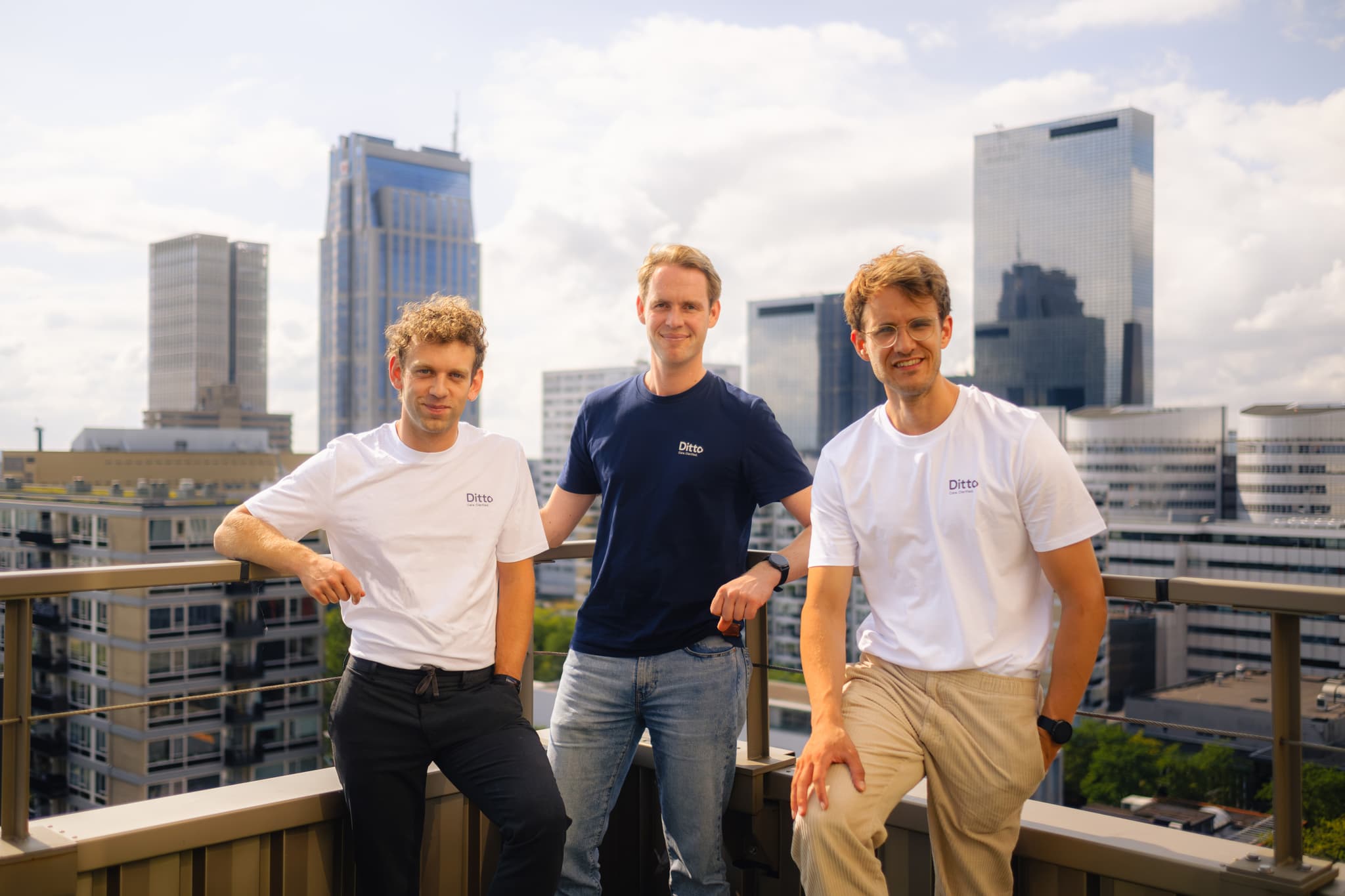
Ditto's founding team. From left to right: Tobias Polak, Bart Voorn, and Merlijn Van Breugel - © Ditto
Privacy and accuracy
While other apps for transcribing and summarizing conversations exist, Ditto sets itself apart by focusing on medical language. In doing so, it builds a medical history of the users. Furthermore, the app uses AI models running on European infrastructure. With the founders having a background in privacy software, the app is designed to process information on the device without sharing it externally.
To maintain the quality of its analysis, Ditto built a pipeline to check each summary. “If we can't guarantee that a summary is clear and correct, we don't return it to the user. They can still listen back to the original recording, or press a button to get help from one of the doctors we employ — who will manually summarize the transcript,” explains Voorn.
More clarity, better care
Ditto is free to download on Android’s Google Play Store and IOS’ App Store. The company is currently exploring different business pathways. In the Netherlands, the startup is partnering with insurance companies to secure reimbursement for the service. For insurers and doctors, getting a good understanding after a consultation makes a difference.
“If people have more clarity on their care, they call back less, therapy adherence increases, and people take their medication better. It has a significant impact. Involving the patient's social circle — family and friends — is also quite impactful,” underlines Voorn.
Always patient first
In May, Ditto announced it had raised €7.6 million in a new funding round. Central to this funding is the intention to expand into the UK, Germany, and Spain. Entering new markets is challenging, particularly to get the nuances of each care system. At the same time, fully integrating into the healthcare system is not straightforward.
Each care center has its own digital portal, making it harder for those who are receiving treatment at different institutions. These systems are often hard to navigate and not designed for patients.
“Flipping this story is what we are all about. We have been focused on patients since day one, but we are often asked to integrate with hospital systems. Integration can take us years, and we are a young startup with limited resources. Maintaining our focus on patients, staying fast and relevant, while possibly pulling data from other systems is our current struggle,” says Voorn.
Looking ahead, the co-founder hopes for Ditto to become the go-to patient empowerment app in Europe, guiding users throughout their healthcare journey. “That's the dream — built on strong European privacy principles. A European patient portal that truly puts the patient first,” he concludes.