
Small frustrations can lead to big inventions
In a series of blog posts, Marco Coolen offers a glimpse into his work as a Dutch and European patent attorney at AOMB.
Published on March 22, 2026

Marco, a patent attorney at AOMB since 2013, shares his expertise on IO+ about patents—how they work, why they matter, and when they lose their value.
Innovation is often associated with major breakthroughs. New medicines. Self-driving cars. Space exploration. But sometimes, the real value lies in something much smaller: solving an everyday annoyance.
The USB-C connector may be one of the best examples of this.

Marco Coolen, photo © Bart van Overbeeke
Everyone knows the moment. You try to plug in a cable. It doesn’t fit. You flip it around. Try again. Only on the second attempt does it finally slide in.
No defect. No clumsiness. Just a design that frustrates people.
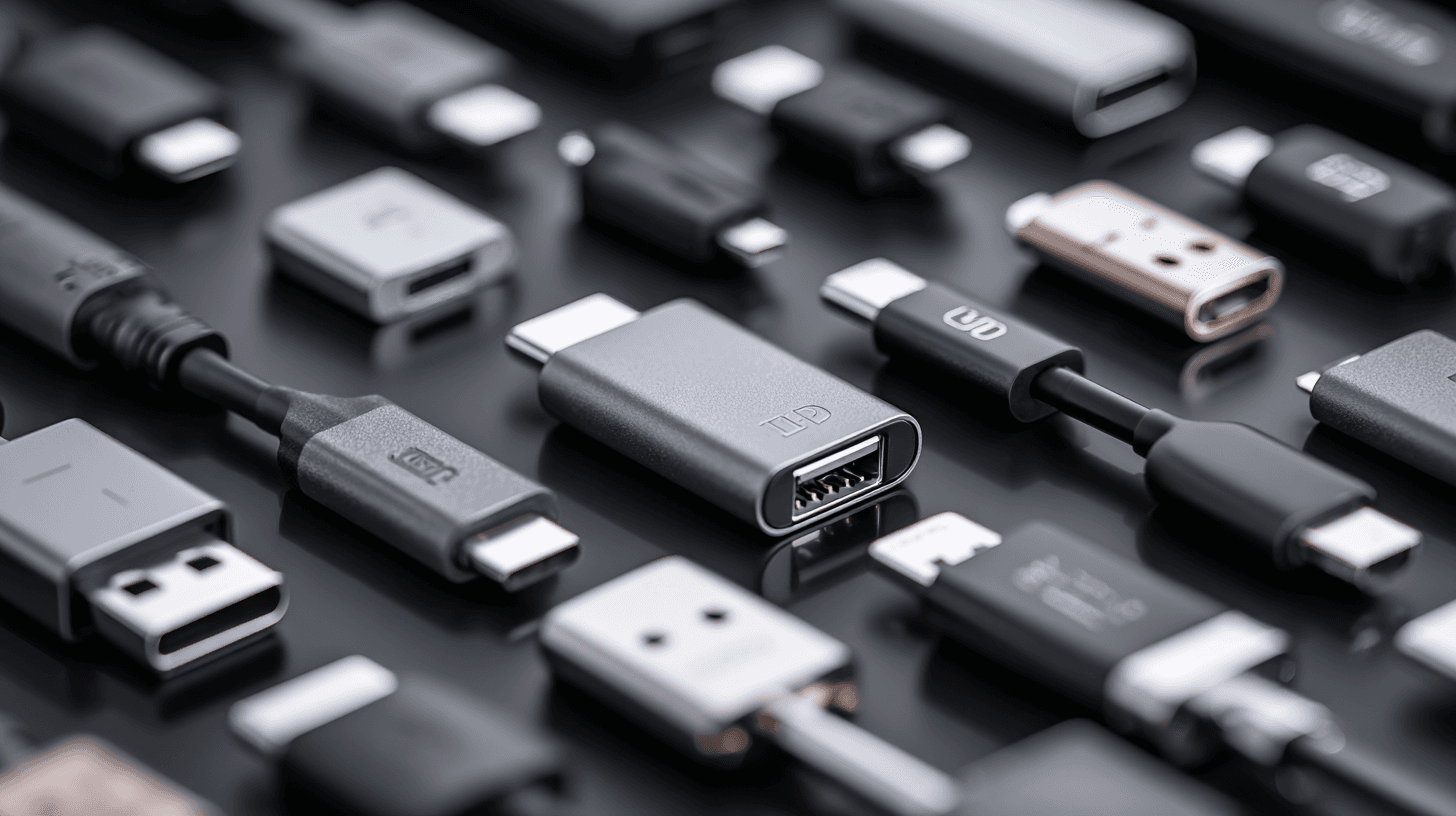
And it didn’t stop there. For years, the world of cables resembled a small jungle. Lightning, Mini-USB, Micro-USB, various Nokia chargers, and BlackBerry plugs. Every manufacturer had its own solution. Borrowing a cable from a colleague? Only if you were lucky.
Growing demands
Meanwhile, the demands kept increasing. Phones became more powerful. Laptops need to be charged via the same cable. Tablets required faster data processing. Video, audio, power: everything ran through an ever-growing range of ports.
Each new USB generation tried to solve part of the problem.
- USB-A worked almost everywhere, but only if you inserted it the right way.
- USB-B was robust, but large and impractical.
- Mini-USB became smaller, but remained fragile.
- Micro-USB became a global standard, but wore out relatively quickly and remained frustratingly one-sided.
Then came USB-C. At first glance, it seemed like a small change. But technically, something fundamental had shifted.
The connector became reversible. No more fumbling with top and bottom. Power delivery increased. A single cable could now charge laptops. Data speeds rose dramatically. And suddenly, the same port could handle charging, data, video, and audio all at once.
The technology made sense. And the benefit was immediately obvious.
A small frustration
That’s exactly where good innovation often begins: with a small frustration experienced daily by millions of people. It’s an important insight for entrepreneurs. Innovation doesn’t always have to be spectacular. It doesn’t always need to create an entirely new industry.
Sometimes, it’s enough to make something just a bit easier, faster, or more reliable. Many successful patents emerge precisely at that intersection. Not because they invent something entirely new, but because they clearly improve an existing system.
A better screw profile. A more efficient airflow. A smarter connection between two components. These are often small technical adjustments with major practical impact.
The World of Patents
Every Sunday, Marco Coolen offers a glimpse into his work as a patent attorney.
USB-C also shows how important it is for an innovation to have visible value. The advantage must be immediately clear. As soon as someone uses the cable, they understand why it’s better. That may well be the most important test for an invention: does someone feel the difference right away?
If the answer is yes, you probably have something valuable in your hands.
So innovation doesn’t always have to be big. But if you solve a daily irritation, the impact can be enormous. Sometimes, the best invention is simply a plug that finally works the first time.