
No heartbeat, no invention
In a series of blog posts, Marco Coolen gives a glimpse into his work as a Dutch and European patent attorney at AOMB.
Published on December 21, 2025

Marco, a patent attorney at AOMB since 2013, shares his expertise on IO+ about patents—how they work, why they matter, and when they lose their value.
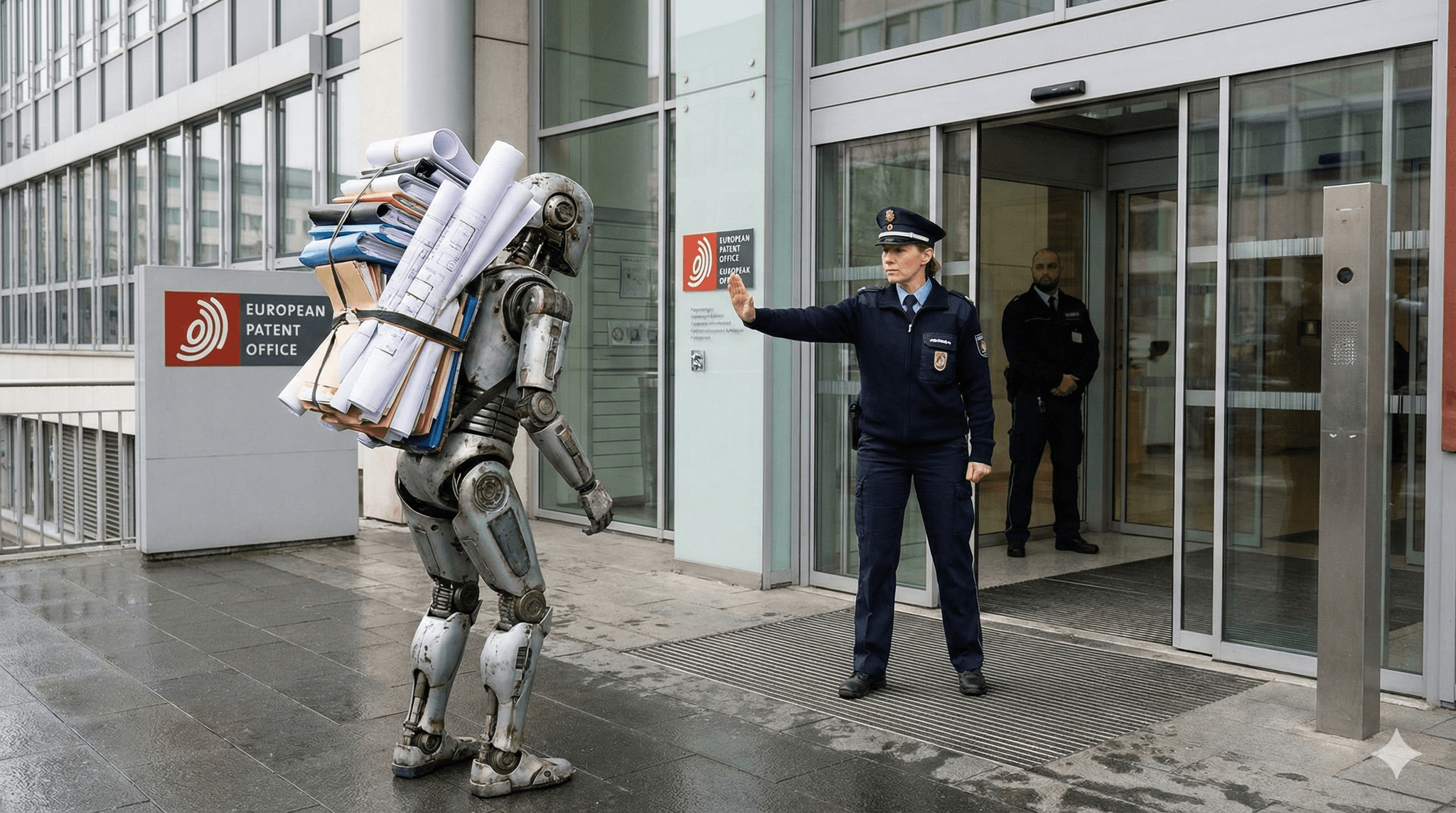
No heartbeat, no invention.
It might sound a bit philosophical, but in the world of patents, it is a complex reality. From a legal perspective, only humans can be inventors. No AI, no algorithm, no black box that predicts text or generates drawings. An invention only comes to life when there is a human of flesh and blood behind it.
That principle is firmly anchored in patent law worldwide. The United States states it literally: “The inventor must be a natural person.” The European Patent Office leaves no doubt about it either. In 2022, it rejected the application for DABUS, an AI system that had devised a new food container. The reason: no human inventor was designated. Period.

Marco Coolen, photo © Bart van Overbeeke
Who then is the inventor?
This naturally raises questions. Because what if AI does the work? What if the model proposes solutions, makes suggestions, or even seems to ‘devise’ something? Then the law looks at the person controlling the AI: the prompter. The one asking questions, giving direction, selecting, and assessing. Someone who knows what they are looking for, and who decides what is usable and what is not.
AI is a powerful tool. It accelerates processes, synthesizes insights, and sometimes surprises us with suggestions we hadn't considered. But it lacks a fundamental element: intention. AI doesn't know why it does something. It doesn't determine whether a solution is practical, ethical, or commercially viable. Let alone explain why something works. Human judgment is needed for that, and that is precisely where the role of the inventor lies.
Even with AI, it starts with a human
You see it across sectors: from engineering to pharmacy, from software to product design. AI is increasingly being used in innovation. And rightly so: it is a powerful tool for developing faster, broader, and more innovative solutions.
But make no mistake. The person who controls the technology is the real source of the innovation. That person bears responsibility, makes choices, and steers the process. And that is precisely what the law recognizes: you can only get a patent if human creativity and control are involved.
The World of Patents
Every Sunday, Marco Coolen shares his insights from the world of patents. Read the entire series here.
What does this mean for you?
Do you use AI in your development process? Fine. But in the meantime, keep good track of who is taking the initiative. Document your choices, your prompts, and your decisions. This way, you are building not only your innovation but also your legal position as an inventor.
And if someone asks you who the inventor is, what would you say? Just think back to that one little phrase: No heartbeat, no invention. It is your idea, your direction, and your responsibility. Therefore, your name will also appear on the patent.