
Luper is all in to free the skies from industrial pollution
This week, we spotlight the winners of the G&A Award 2026. Today: Luper.
Published on July 6, 2026
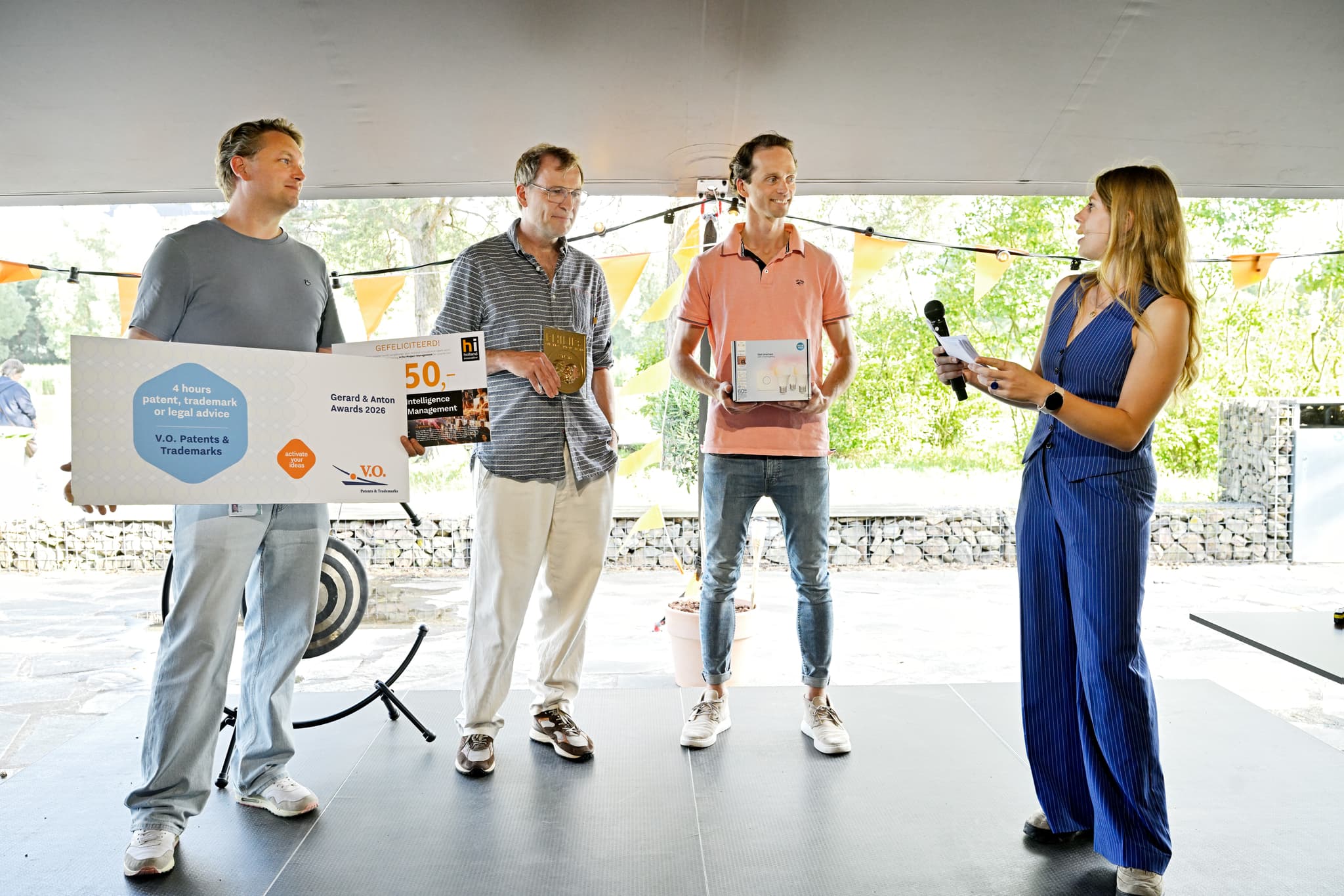
© Bart van Overbeeke Fotografie

Mauro swapped Sardinia for Eindhoven and has been an IO+ editor for 3 years. As a GREEN+ expert, he covers the energy transition with data-driven stories.
The World Health Organization estimates that around 7 million deaths per year can be attributed to air pollution. A significant share of the pollutants that contaminate the skies comes from industrial plants. Luper is on a mission to help industrial facilities manage these emissions more effectively.
The startup developed the AirShield One, an end-of-pipe system that breaks down toxic gases. The technology can be used in wastewater treatment plants, factories, and industrial facilities. “Our work helps achieve reliable emissions control, improve working conditions, and meet environmental standards, ” says Maarten Kieft, CEO of Luper.
About Luper
Leveraging the detergents of the atmosphere
At the core of Luper’s solution is gas-phase advanced oxidation, a cleaning process invented by Matthew Johnson, a professor of atmospheric chemistry at the University of Copenhagen. The process removes toxic and odorous gases in the same way as the atmosphere cleans itself, by means of molecules called hydroxyl radicals.
They are often referred to as the “detergent of the atmosphere”, since they initiate the degradation of greenhouse gases. In Luper’s cases, these molecules are created in the polluted air stream of an industrial exhaust, for instance. There, they neutralize polluting gases.
“Once neutralized, these gases become sticky and are consequently driven to form particles,” explains Kieft. “These particles are then filtered from the air, leaving clean air behind.”
An active approach to clean airflows
Compared with other industrial air-cleaning technologies, Luper actively cleans air streams. Exhaust gases result from a mixture of processes. To this extent, gas concentrations may vary, and the ability to manage them makes a difference.
“Most conventional technologies are passive: the air is guided through a biofilter, air scrubber, or an activated carbon system. These technologies are unable to respond to dynamic airflows and fluctuating pollution loads. The AirShield takes a different approach by actively cleaning the polluted air and adapting its cleaning power to the incoming pollution load,” clarifies the CEO.

G&A Awards 2026
Every year, we award 10 rising startups based in the Brainport region. In this series, you can get to know this year's winners better.
Growth moment
Luper’s systems are already in the field. Currently, the startup has installed two of its units — with more in the pipeline. The cleaning system is effectively a box, three meters long and three meters tall, that sits right on gas exhaust pipes. Selling and installing the first unit has been the startup’s biggest success so far, according to Kieft.
The CEO wants the ball to keep rolling. “We are currently looking for a business developer to join our team to accelerate market rollout,” he states.
Meanwhile, the team is active on several fronts. In addition to closing additional deals, the startup is conducting research and developing a larger air-cleaning system, the AirShield Large. As a team of five people, Luper is looking to expand its headcount in order to keep its growing momentum going.
The mission as a driver
As a spinoff of the HighTechXL venture builder program, the company has been immersed in the Brainport ecosystem from day one, particularly with the High Tech Campus one.
“The support from like-minded entrepreneurs and companies helped us shape our focus and strategy. In addition, we have a strong supplier base that helped us develop our products,” underlines Kieft.
With an already deployed technology and a larger system to come, Luper is building the infrastructure for a cleaner industrial future. Addressing air pollution is an enormous challenge and one that costs millions of lives every year and disrupts entire ecosystems. By acting right at the emissions source, Luper is committed to making its maximum impact.