
How a Dutch startup makes industrial energy assets smarter
Dutch startup Helin is working to transform the way large corporations manage industrial assets, improving their operations.
Published on February 12, 2026
© Helin

Mauro swapped Sardinia for Eindhoven and has been an IO+ editor for 3 years. As a GREEN+ expert, he covers the energy transition with data-driven stories.
Dutch startup Helin is transforming how industries manage remote energy assets. It was founded by engineers with a background in the oil and gas industry who saw a gap in remote energy asset management. Through their platform, customers can better operate solar panels, wind turbines, and oil rigs.
“Many companies with remote assets were and are struggling to centralize data about industrial assets,” explains Martijn Handels, co-founder and Chief Product and Technology Officer (CPTO) of Helin. “We can offer them a platform to gather all this information in one place and turn it into real-time insights.”
.png&w=2048&q=75)
Investment of the month
Each month, we interview a startup or company that has recently received an investment.
How does Helin technology work?
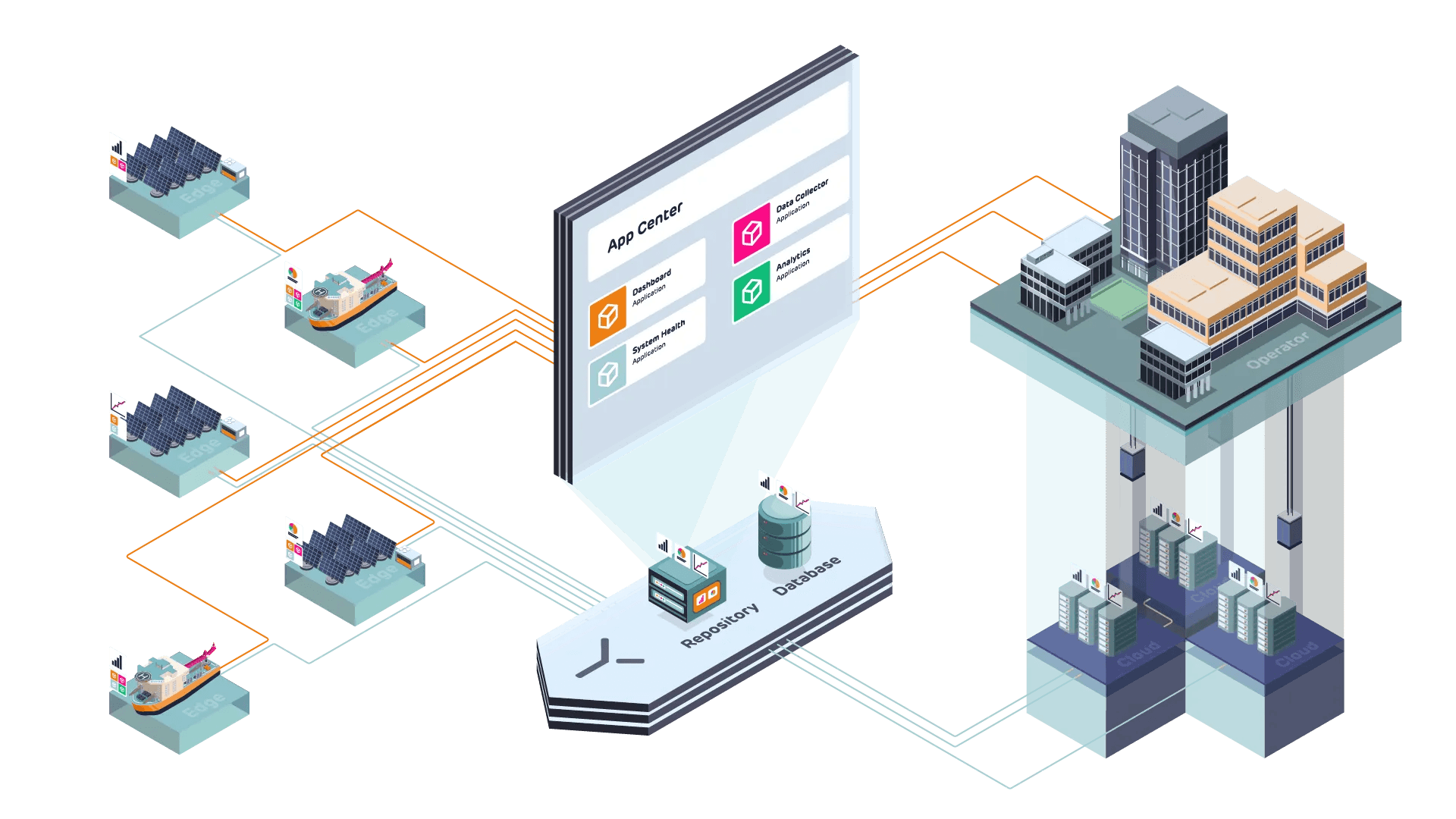
Helin’s technology is built on two main components: a local computer system (like a mini cloud) near the asset, and a cloud platform that enables companies to manage everything remotely. The local system acts as a smart hub—it runs applications for safety, efficiency, and maintenance, such as AI-powered worker monitoring on an offshore drilling rig or energy-use optimization on a solar farm. Because the data is processed locally, there’s less delay, lower risk of cyberattacks, and less need for expensive internet connections.
The platform is also designed to be flexible and secure. It can run on anything from a small computer board such as a Raspberry Pi to a powerful GPU cluster, and it supports a wide range of industrial languages and protocols. This means companies can use Helin to connect different types of equipment, automate tasks, and even update software remotely—all while keeping their data safe and under control. In short, Helin turns “dumb” industrial assets into smart, connected, and efficient ones.
Using data to prevent and act
Customers are using the Helin platform in different ways. Handels: “Some of our customers deploy our platform as a safety layer on offshore rigs, monitoring activity on the drill floor,” explained Handels. “Through one of the systems we built, they can detect if workers are in an area where they shouldn’t be, making the alarm go off.”
In addition, solar park managers can, when electricity prices are negative, curtail production–in other words, shut down solar panels. But they can further manage energy. “Instead of simply turning them down, we saw that some of our customers reroute the electricity they don’t put into the market to storage systems, or offer their employees free charging for their electric cars,” the CPTO added.
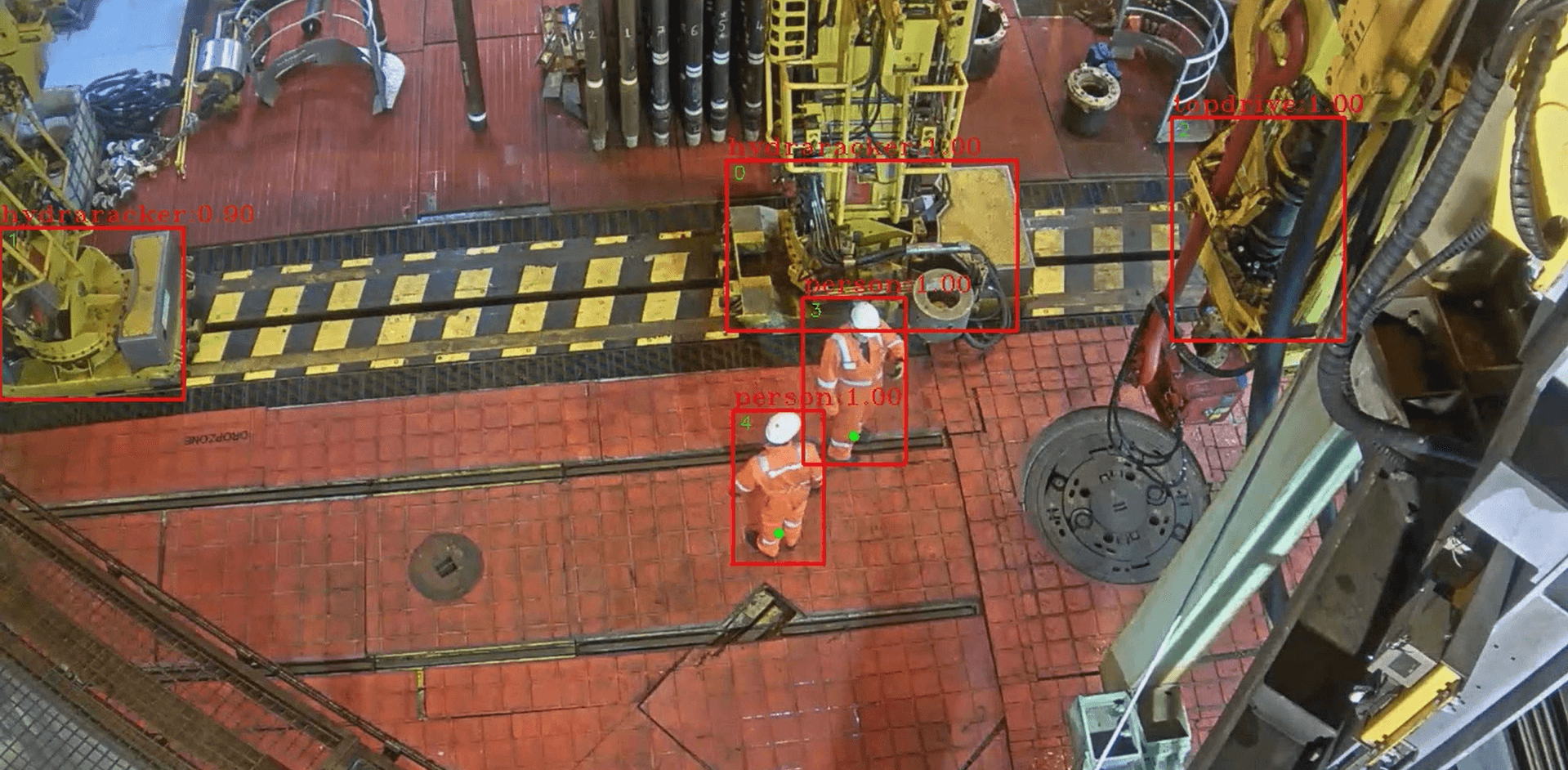
The people detection use case - © Helin
Getting valuable insights from cameras
As the monitoring workers use case suggests, the startup, headquartered in Rijswijk, has a strong emphasis on vision technology, combining cameras and AI to turn visual data into actionable insights. In their vision, cameras serve as advanced sensors for extracting time-series data. As the cofounder puts it: “We like the camera, but we like the pixel better.” This wealth of information can enhance safety, efficiency, and decision-making in industrial environments.
Helin’s platform can process video streams with low latency. This capability enables industries to respond instantly to on-site conditions, reducing risk and improving productivity. By combining vision AI with other data streams, it can create a more complete picture of industrial operations.
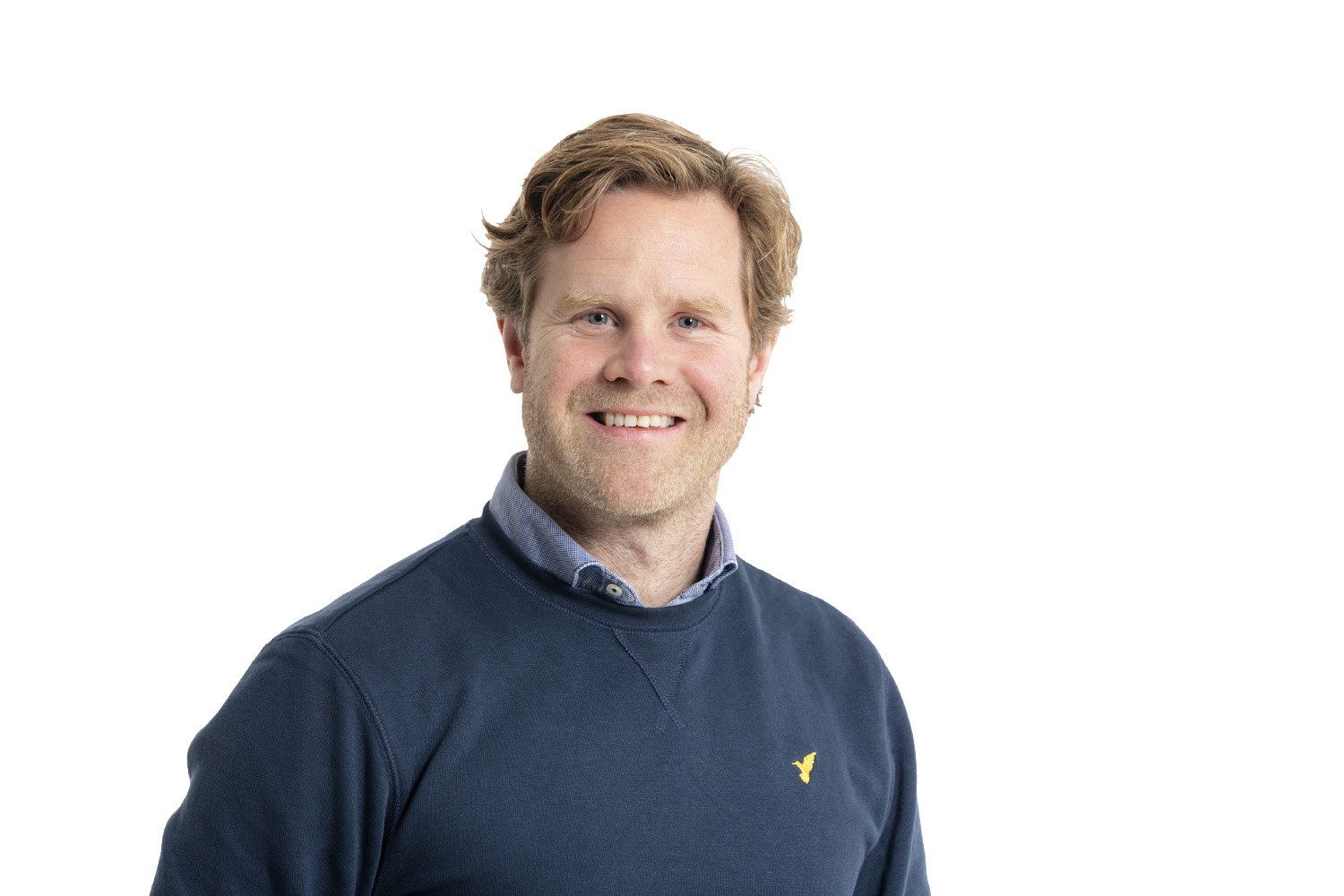
Martijn Handels
CPTO at Helin
Having a past in the oil and gas industry, he co-founded Helin, combining his domain knowledge with tech.
Catering to large companies
Among Helin’s customer roster are companies like Shell, BP, Sunrock, and Boskalis. But how could a small startup deliver a product suitable for such large organizations? Investing in certifications such as ISO and cyber automation has been instrumental in securing backing from large firms, the cofounder underscored.
Handels offers a word of caution to startups targeting large corporations: “Come prepared. You can’t just say you’re going to disrupt everything. You need to understand their processes and show empathy for their challenges.”
Yet he also emphasized that approaching such large organizations is not mandatory. In his view, taking this step is advisable only if it aligns with the company’s strategy and market positioning.
Becoming an industry standard
In January 2026, Helin secured a €10 million growth investment led by FORWARD.one, bringing its total funding to over €13 million. The company, now employing 80 people, plans to further expand its international sales team and engage with industrial organisations seeking to run its AI applications securely and locally.
The startup is now gearing up for growth and further expansion in the coming years, wishing to become the go-to platform for industrial application development.