
Four defense startups turning battlefield data into decisions
Commanders have more data than ever — the problem is turning it into decisions. Meet four startups fixing that gap.
Published on July 29, 2026
© Matthew Hintz - Pexels

Mauro swapped Sardinia for Eindhoven and has been an IO+ editor for 3 years. As a GREEN+ expert, he covers the energy transition with data-driven stories.
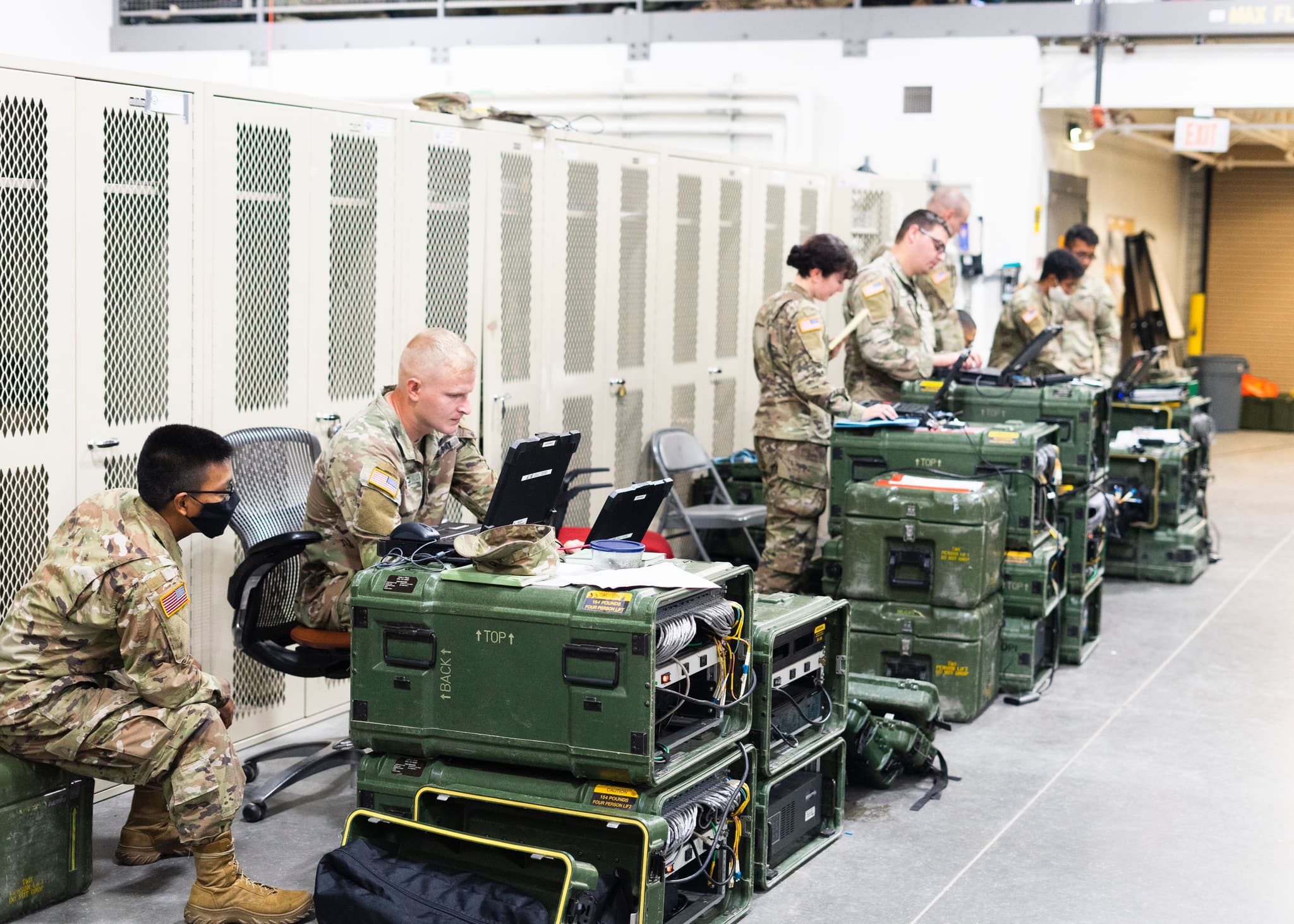
We now have more information than ever. However, this abundance of data poses another problem: how to make the best use of it. Military commanders have the same issue, spending more time analyzing data rather than acting on it.
During NATO DIANA (Defense Innovation Accelerator for the North Atlantic)’s Defense Tech Day 2026, four companies presented their innovative solutions to turn raw feeds, such as video, radar, and drone footage, into valuable insights. In other words, the four companies – all graduates of the Belgian and Dutch DIANA cohorts — are turning sensor data into information to make better-informed decisions.
XRF: one picture from every system
XRF, a Spanish company known as X Reality Factory, tackles the issue of having data scattered across too many screens. Every NATO nation runs its own command-and-control (C2) system. When operating together, officials end up piecing together dozens of disconnected feeds – air, land, and sea, for instance – in real time, under pressure.
XRF built a software layer on top of the national systems, pulling data from each and creating a single picture, ensuring the different systems talk to one another without countries giving up their infrastructure. The platform has already been used by the Spanish and Dutch armies and demonstrated through virtual-reality training and mission-planning tools with Spanish special forces in Germany.
C2GRID: turning raw drone footage into a real-time picture of the battlefield
C2GRID is tackling a problem that's become impossible to ignore in modern warfare. At any given moment, there are 10,000 drones flying over Ukraine, each streaming footage back to command centers. As a result, military analysts are overwhelmed by this immense flow of footage, which they often analyze manually – failing to keep up.
The Estonian startup automates this process by fusing footage from many drones at once, creating a 3D picture of the battlefield, rather than letting a human reconstruct it mentally. Operators can then spot changes over time, verify enemy positions, and measure distances on the model. The technology has been shaped by wartime experience, as it has been tested and deployed during the war in Ukraine.
InovecTech: turning existing cameras into AI sensors
Most of the cameras used for security, monitoring, and industrial use aren’t being watched by AI. InovecTech estimates 80% of them. Rather than asking customers to buy new hardware, the company built AI for computer vision, turning the infrastructure already in place into what the company calls virtual sensors. Already installed cameras can thus detect, count, and flag things automatically instead of simply recording.
The Czech firm says it has been running the technology in industrial settings for six years and is confident the same approach is applicable to the military domain. The existing cameras would thus be guardians. To enable AI-powered monitoring, new infrastructure isn’t a must-have; rather, what makes the difference is the software layer on top.
Exentech: throwable 360° intelligence
Operating in the battlefield often involves many dangerous situations: cleaning rooms, inspecting buildings, or scouting an area before troops or rescuers go in themselves. Exentech makes a compact, rugged sensor device designed to act as a stand-in for a person in situations that require direct entry. Instead of risking a person to find out what’s behind the corner, one can throw the device in first, and it becomes one’s eyes and ears.
The device provides a full 360-degree view of its surroundings, returning a steady view of the ambiance after being thrown, and thermal imaging to help it see in low-visibility scenarios. Exentech says the device plugs into existing sensor networks, rather than being a standalone platform. The device suits military scenarios as well as civilian search-and-rescue operations, the kind of dual-use capability the DIANA program looks for.
Data is an actual advantage when it becomes an actionable insight
Sensors or data aren’t a constraint anymore — time is, though. These four companies are racing to close the gap between what has just happened and what has to be done about it. As technology adoption speeds up battlefield operations, that gap keeps shrinking, and it might end up mattering as much as any weapon system on the field.