
Holst Centre’s next 20 years: judged by the industries it creates
Jo De Boeck, Heleen Herbert, Matthias Diependaele, Tjark Tjin -A -Tsoi and Luc Van den hove discuss 20 years of Dutch-Flemish collaboration.
Published on June 27, 2026
Jo De Boeck, Heleen Herbert, Matthias Diependaele, Luc Van den hove, Tjark Tjin -A -Tsoi. © Bram Saeys
Bart, co-founder of Media52 and Professor of Journalism oversees IO+, events, and Laio. A journalist at heart, he keeps writing as many stories as possible.
At Holst Centre Innovation Day, political and research leaders from the Netherlands and Flanders agreed on a blunt conclusion: Europe has no shortage of knowledge. Its real test is whether it can turn that knowledge into companies, markets and industrial power.
Twenty years after Holst Centre began as a cross-border experiment between imec and TNO, the anniversary discussion at Eindhoven’s Evoluon was less about looking back than about what must happen next. The central question was not whether the region can produce excellent science. It clearly can. The harder question is whether it can turn that science into businesses that scale, create strategic value and compete globally.
Jo De Boeck, imec’s EVP and Chief Strategy Officer, set the tone even before the panel began. “Don’t reflect too much,” he said. “Reflect on where you are and what the situation is today. The only thing to do is learn from that and move forward.” It was a fitting invitation for a panel that brought together Dutch economic affairs minister Heleen Herbert, Flemish Minister-President Matthias Diependaele, TNO CEO Tjark Tjin-A-Tsoi and imec chairman Luc Van den hove.
For Tjin-A-Tsoi, the next phase should be defined by a much sharper obsession with outcomes. “It’s not science for the sake of science,” he said of the work at Holst Centre. “It’s really bringing science to the market, creating new industries.” That may sound obvious, but it goes directly to a persistent European weakness: a remarkable ability to generate ideas, followed by a much less convincing record in turning them into market leaders.
Commercialisation happens elsewhere
The Netherlands, Tjin-A-Tsoi argued, remains exceptionally strong in fundamental research. But too often, the commercialisation happens elsewhere. “It’s kind of a Dutch problem that we have, and we have to overcome,” he said. “We have to make sure that our innovations actually get to market, create new industries and grow very quickly.” The metric should therefore change. Rather than celebrating another research programme or another technical milestone, he said, the ambition should be to create “more unicorns, more companies that are successful internationally, that become global champions like ASML.”
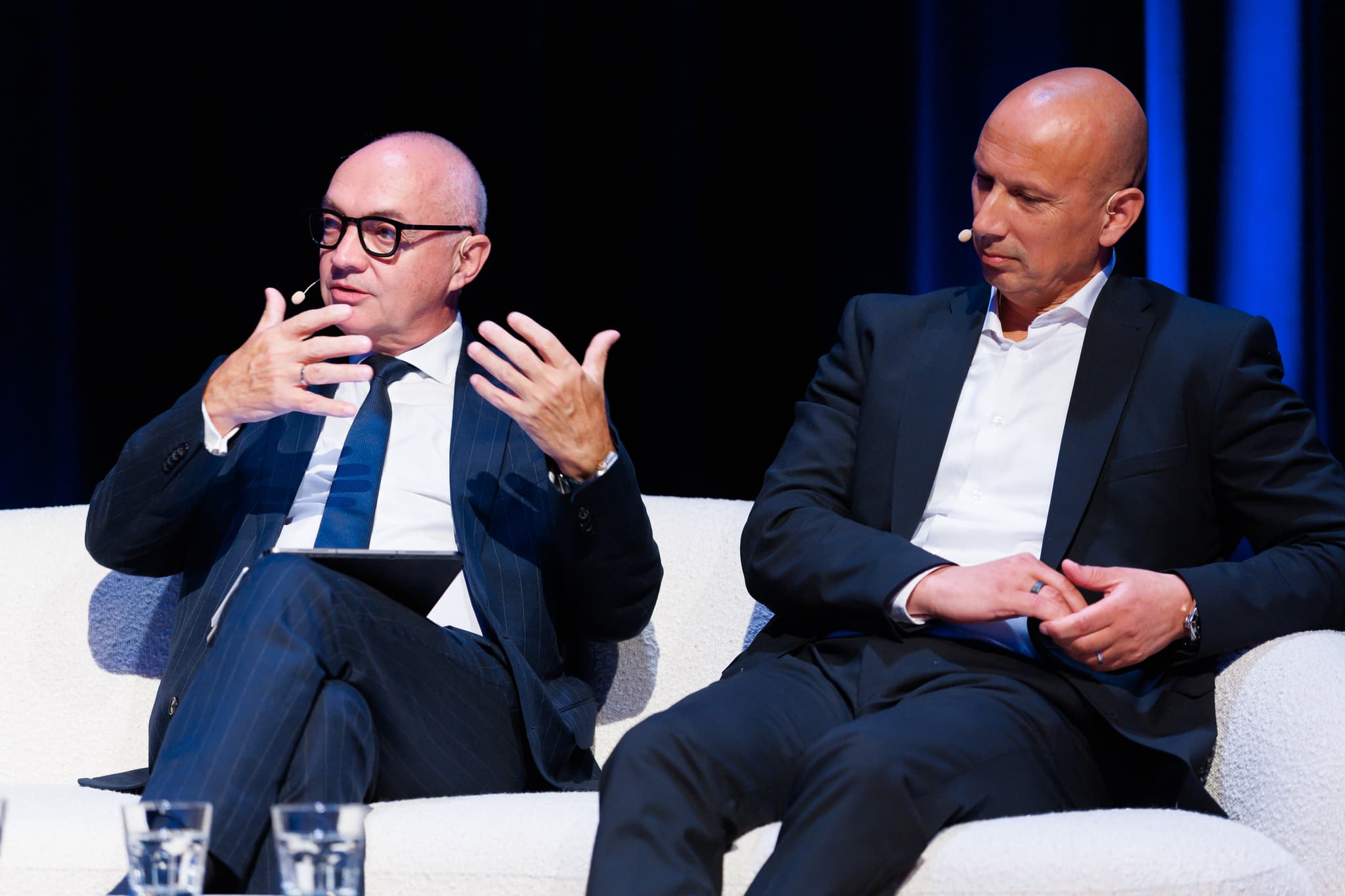
Luc Van den hove, Tjark Tjin -A -Tsoi, © Bram Saeys
That argument gave the anniversary a useful sense of urgency. Holst Centre’s history demonstrates that patient, cross-border collaboration can create a distinctive innovation environment. Van den hove pointed to the long-term character of the partnership between imec and TNO as its real foundation. “It was not just set up as a single project,” he said. “It was set up as a long-term vision, building on the complementarity between the two organisations.”
That complementarity remains important today. imec brings deep semiconductor expertise and global scale; TNO has a broader systems and application perspective. Together, that combination can connect components and chips to health, photonics, robotics, AI, defence and other application domains where Europe has a chance to build positions that are difficult to replicate elsewhere.
A marathon
But Van den hove also warned that success is never the product of a short-term funding cycle. “If you want to become the best, it is the result of a marathon, not a sprint,” he said. “You need long-term continuity in policies, funding, vision, patience and commitment.” Fragmented funding instruments and different national rules still complicate the longer-term investment plans that cross-border innovation needs.
Herbert placed the challenge even more directly at the point where promising technology meets the market. “The biggest challenge is the gap between a brilliant idea and a first application,” she said. “After that, there’s another big one: the bridge between the first application and a successful market.” That journey is full of technical, financial and organisational risks. Businesses should lead it, she argued, but they cannot do so alone. Research institutes need to provide knowledge and infrastructure, while governments need to make the route less obstructed.
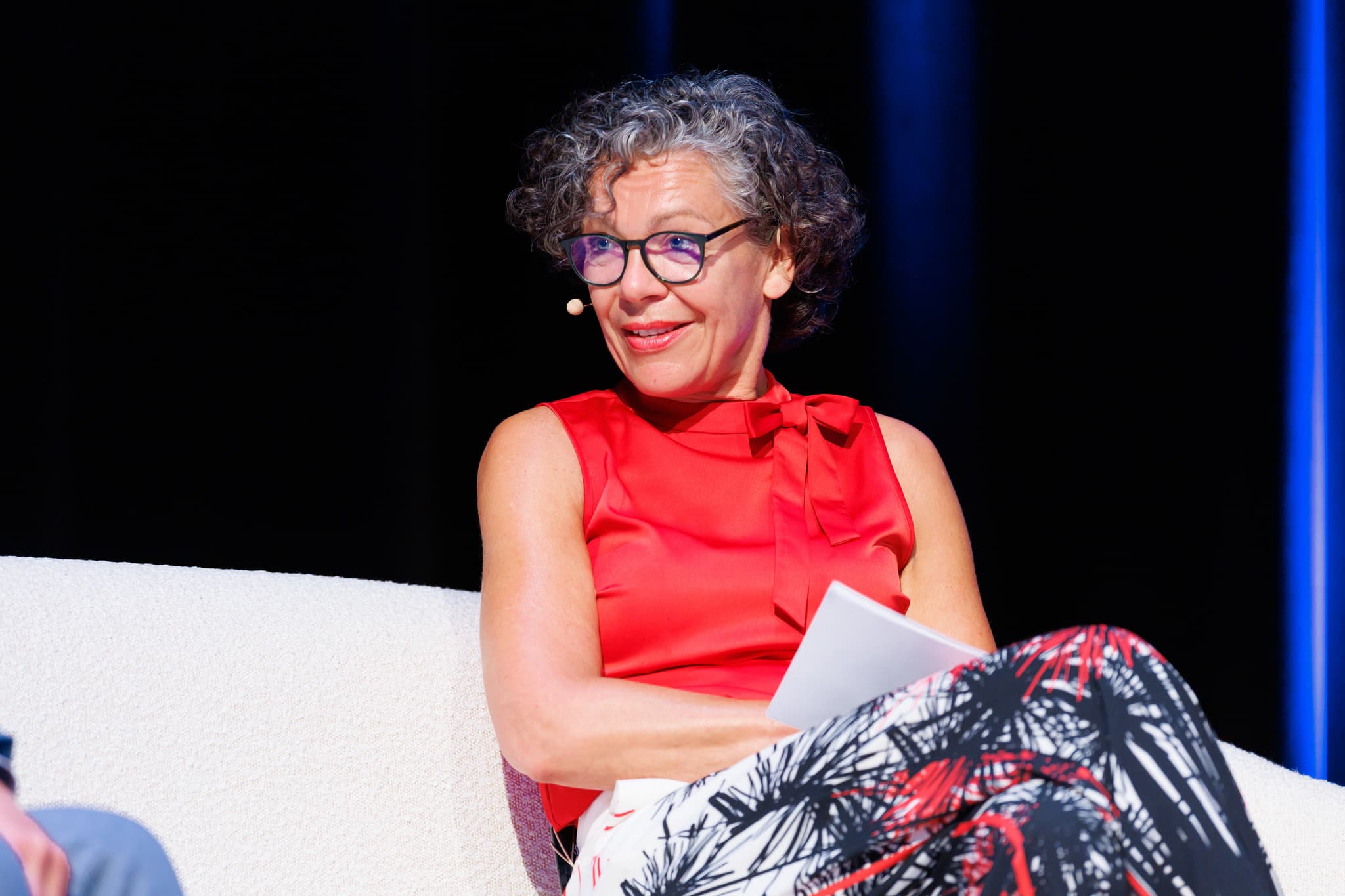
Heleen Herbert, © Bram Saeys
That means cutting regulations that do not add value, creating physical and organisational space for ecosystems, and finally treating the European internal market as an industrial asset rather than an unfinished political project. “We have to work together, we have to create the internal market in Europe,” Herbert said. “It is not only because there is a chance in it. It is also to become more resilient to the world as it is right now.”
Pension assets
The most pressing obstacle, however, may be capital. Tjin-A-Tsoi noted that the Netherlands has substantial pension assets, but that only a very small share is available for the high-risk, long-term investments that deep-tech scale-ups require. Start-ups matter, he said, but the real funding gap often arrives later, when a company needs serious capital to industrialise, build teams, enter global markets and withstand the years before profitability.
Government can play a role by helping to reduce early risk for private investors, Tjin-A-Tsoi argued. But the wider goal is to release more private capital for industrial renewal. “Industrial renewal comes, in part, from new companies that start from nothing, like ASML, and then grow and become the new champions,” he said.
Diependaele recognised the same challenge in Flanders. The region has made progress in creating start-ups, he said, but too many still leave Europe once they need to scale. He called for a functioning European capital markets union and a more ambitious attitude towards growth. “Failure is part of entrepreneurship. Failure is part of innovation. Failure is part of ambition,” he said. “We have to accept that a lot more. It's something that we as policymakers can't control or regulate, but we do have to take it in our political speech.”
His broader political message was equally clear: Flanders and the Netherlands will never win by being the world's largest economies. They can, however, decide to become the best in strategic fields. “We will never be the biggest, never be the strongest,” Diependaele said. “But we can make a very clear political choice in becoming the best in some strategic points.”
Beyond the walls
That is precisely where Holst Centre can make a difference beyond its own walls. Its value is not simply that it brings scientists together across the border. It offers a working model for what a more integrated Dutch-Flemish industrial strategy might look like: complementary expertise, shared facilities, long-term public backing, industrial partners at the table, and enough trust to keep bureaucracy from consuming the collaboration.
Tjin-A-Tsoi put it provocatively. Were the Netherlands, Flanders and perhaps part of Germany able to think more strategically as one economic area, he suggested, they could begin to act like a special economic zone: attracting investors, changing restrictive rules and concentrating resources around globally relevant strengths.
That may remain an idea for another day. But the panel’s message was unmistakable. Europe does not need another catalogue of technological promises. It needs the stamina, funding, policy alignment and entrepreneurial courage to turn those promises into factories, scale-ups and global champions.
As Tjin-A-Tsoi put it in the closing moments: “You can innovate all you want. If you don’t translate it into industry, it’s not worth so much.”