
Astrape brings photonics connectivity into data centers
This week, we spotlight the winners of the G&A Award 2026. Today: Astrape Networks.
Published on July 10, 2026
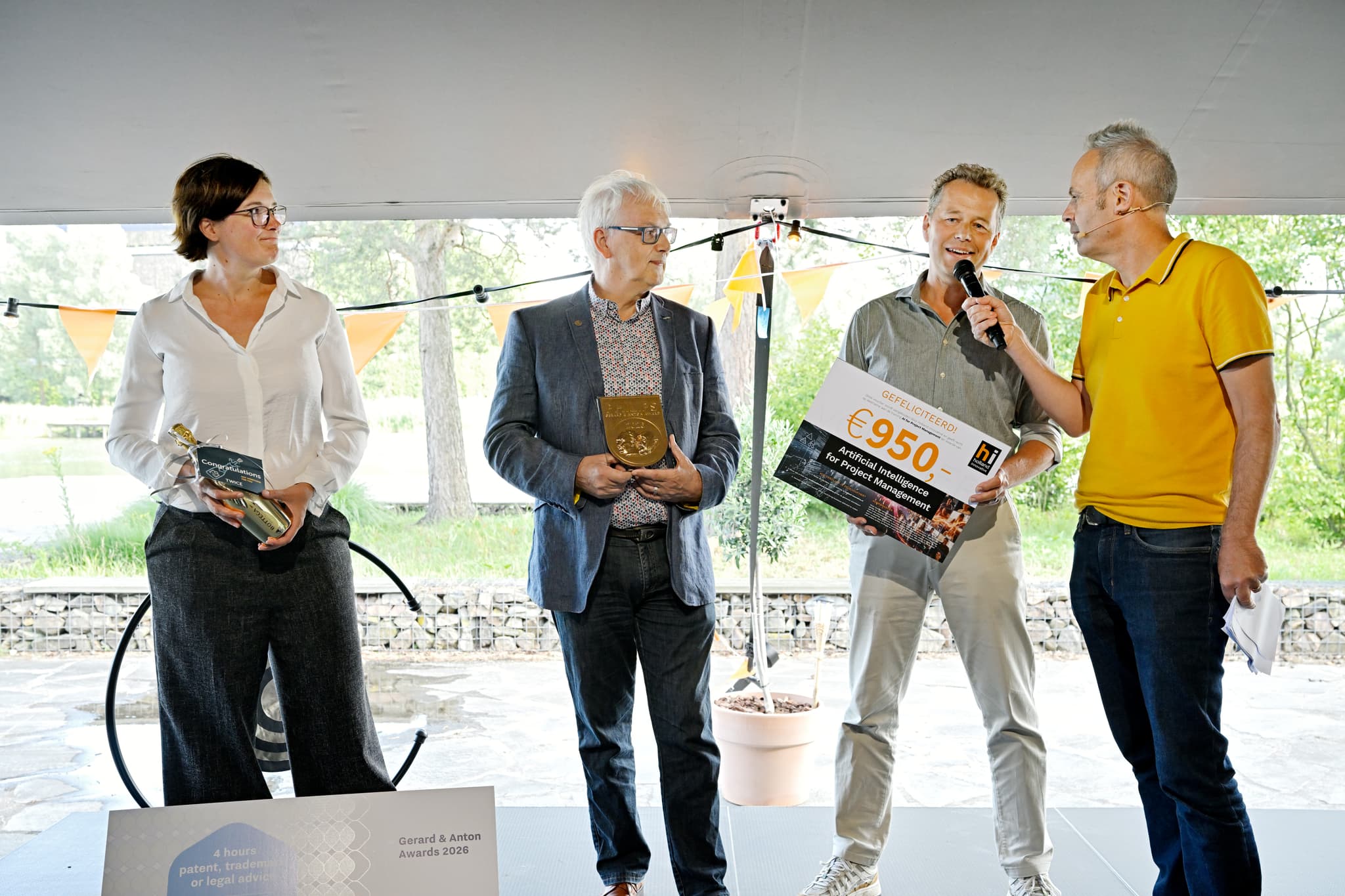
© Bart van Overbeeke Fotografie

Mauro swapped Sardinia for Eindhoven and has been an IO+ editor for 3 years. As a GREEN+ expert, he covers the energy transition with data-driven stories.
Inside an AI data center, multiple connection networks run in parallel. Keeping these connections stable and smooth is as key as having powerful chips. Astrape Networks is tackling this often overlooked issue: the connections among computing power, storage, and systems. At the core of its solution is the idea of leveraging optical networks and integrating them into existing network solutions with minimal disruption.
“AI clusters today require three or four parallel networks because no single fabric is fast and flexible enough to handle them. EFFINITI, our solution, collapses those networks into one adaptive fabric that adjusts wavelengths and switching primitives — a method to move data from one point to another in a network ed. — per flow at microsecond speed,” says Peter Janssen, Astrape’s CFO.
About Astrape Networks
A flawless network
The multiple connections running inside an AI cluster include packet connections to break down data, connections between different graphics processing units (GPUs), and often more. Each of these comes with its own vendor stack and management layer – operations across the different fabrics are complicated.
Astrape’s technology collapses these different fabrics into an adaptive one that, for every flow of traffic, decides what kind of switching it deserves at any given time. Physically, EFFINITI is a chassis with four to eight slots, each accepting a different switching module: electronic packet, electronic circuit, Microelectromechanical Systems (MEMS), photonic integrated circuit, or pure optical. The control plane monitors every flow and routes it to the right module in real time.
“What results is a network with the speed and energy efficiency of optical, the flexibility of packet networking, and a workload profile that matches what modern AI throws at it,” says Janssen. The startup claims that EFFINITI can reduce energy consumption at the fabric layer by 90%, 50 to 70% cost savings compared to the current AI networking model, and twice the processing units (xPU) utilization.
Co-developing
Moreover, the technology promises near-zero network hops for elephant flows – meaning that the big data transfers take the most direct possible path, reducing latency, energy waste, and congestion. The technology is a drop-in addition to existing data center networks. Bringing the advantages of optical connectivity to data centers without rehauling existing infrastructure was the goal from the beginning.
In line with this philosophy, Astrape has a different approach. “We treat photonic switching vendors as suppliers and co-developers, never as competitors," notes Janssen. Any module that meets the company's published socket specification can plug into the chassis.

G&A Awards 2026
Every year, we award 10 rising startups based in the Brainport region. In this series, you can get to know this year's winners better.
Four startups in one
In thirty months since its inception, Astrape created a fully functioning product. “Building a system rather than just a component is a much bigger undertaking. It means combining photonics, electronics, switching architecture, and host-side software into one product that works end-to-end,” underlines Janssen.
The company works at the intersection of photonics, electronics, networking, and systems software. This positioning posed a challenge at the beginning, both in educating investors and potential team members. “We had to invest at a depth of four startups in one company,” states Janssen.
EFFINITI is currently in a pre-commercial phase. On June 29, the company opened its Astrape Demo Center, where multiple pilots will be running. In the third quarter of 2026, the first product generation, the EFFINITI-100, will reach the customers.
Janssen identifies deployment at scale as one of the keys to further expansion. “That deployment becomes the visible reference customer the next wave of buyers needs to see. It also opens the doors to the North American market, where reference-led adoption is the norm,” he says. In addition, further capital will also help move forward.
Brabant as a launchpad
Astrape's story begins in the venture-building program at HighTechXL. Nicola Calabretta had spent years working on photonics and optical networks, and the question he kept running into was why none of it had properly made its way into real data centers. Joining forces with Francesco Pessolano and WillemJan Withagen, the three set out to build the foundations of the company, investing another year of work in it.
The company’s roots remain in Brabant. The local Brabant Development Agency (BOM), PhotonVentures, the Brabant Startup Fonds, and PhotonDelta all provided support at different stages. “Beyond capital, the ecosystem has given us photonic-integrated-circuit talent that this region has been building for decades, supplier relationships rooted in that same expertise and proximity to the Eindhoven University of Technology and the wider regional research community,” concludes the CFO.