
AI vs. red tape: cutting the wait for Dutch building permits
Startup Struck helps fast tracking building permits through its AI-powered platform.
Published on January 16, 2026
© Struck

Mauro swapped Sardinia for Eindhoven and has been an IO+ editor for 3 years. As a GREEN+ expert, he covers the energy transition with data-driven stories.
The housing crisis is once again a priority for the new Dutch government. According to an ABN AMRO analysis conducted in 2025, there is a shortage of approximately 400,000 homes. How can construction project compliance be fast-tracked? The answer, as with many other problems these days, is AI.
Amsterdam-based Struck AI is precisely doing that. The startup has developed technology that helps builders, architects, and municipalities navigate the complex web of zoning, environmental, and technical regulations that dwellings must comply with today. To be legal, construction projects must comply with plenty of municipal, national, and international building codes. This compliance process takes months, if not years.
Architects, builders, and employees of government bodies currently manually sift through lengthy regulatory documents. Struck AI digitizes and organizes building codes, zoning plans, and permit rules into a searchable library. Drawing from this information database, the AI model can answer users' queries. “We always display the source of the regulation,” explains CEO and co-founder Max van Riel. “This allows users to verify the information and understand the context, which is crucial for compliance.”
A tool to navigate the maze of regulations
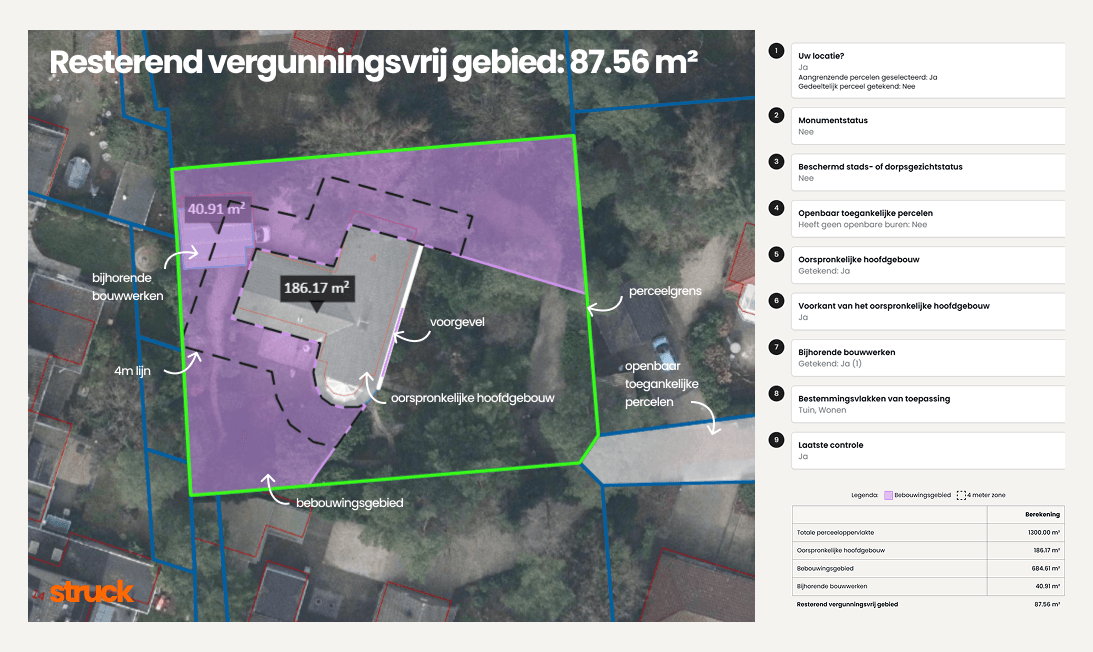
Struck AI has developed different products, which the founder calls “blueprints”, automated workflows to optimize compliance processes. For instance, one of them helps users determine how many square meters can be built in a backyard without a permit.
By entering an address, the system promptly provides a two-page report outlining what can or cannot be done on that plot. “These regulations are quite complicated in the Netherlands, to the point that we found customers in several municipalities. Using Struck, they could catch up on their extensive backlog of permit requests, speeding up the evaluation of each application,” the CEO underlines.
The technology is proving to be effective. Van Riel cites the example of an architect whose permit-free plot application was initially rejected. “However, the same municipality, double-checking the report Struck had attached by the architect, gave its green light. The officials recognize that the request was supported by a correct calculation,” he explains.
Factual-based rule application
Van Riel also notes that bodies like municipalities struggle to find people knowledgeable about all applicable norms and regulations. “At the same time, our tool also helps them take out some ambiguity in interpreting a given norm,” adds the founder.
Struck AI’s system is optimized to apply rules in its assessments in the most factually-based way. Yet, the application of norms can vary greatly, depending on a plot’s accessibility to a public road, for example. The AI model is also optimized to calculate the application based on these spatial parameters.
Not only does the system reference every exact source of regulation, but if a municipal regulation conflicts with a national standard, the platform flags both rules and presents them side by side, clarifying which takes precedence under the legal hierarchy.
Struck is now also offering an AI-driven review of a ready design, assessing whether the project complies with all applicable regulations.
Making building compliance predictive
Van Riel spent the early part of his career at ING and was involved in the launch of Payconiq, a mobile payment system. Later, as the marketing director at the video surveillance company Eagle Eye Networks, he entered the smart building industry. And there, he realized a crucial gap.
“Whereas there was a lot of talk about building thousands more houses in the Netherlands, there was no technology to streamline construction processes,” he underlines. He decided to join Antler’s founder program and met his cofounder, Nikhil Nagaraj.
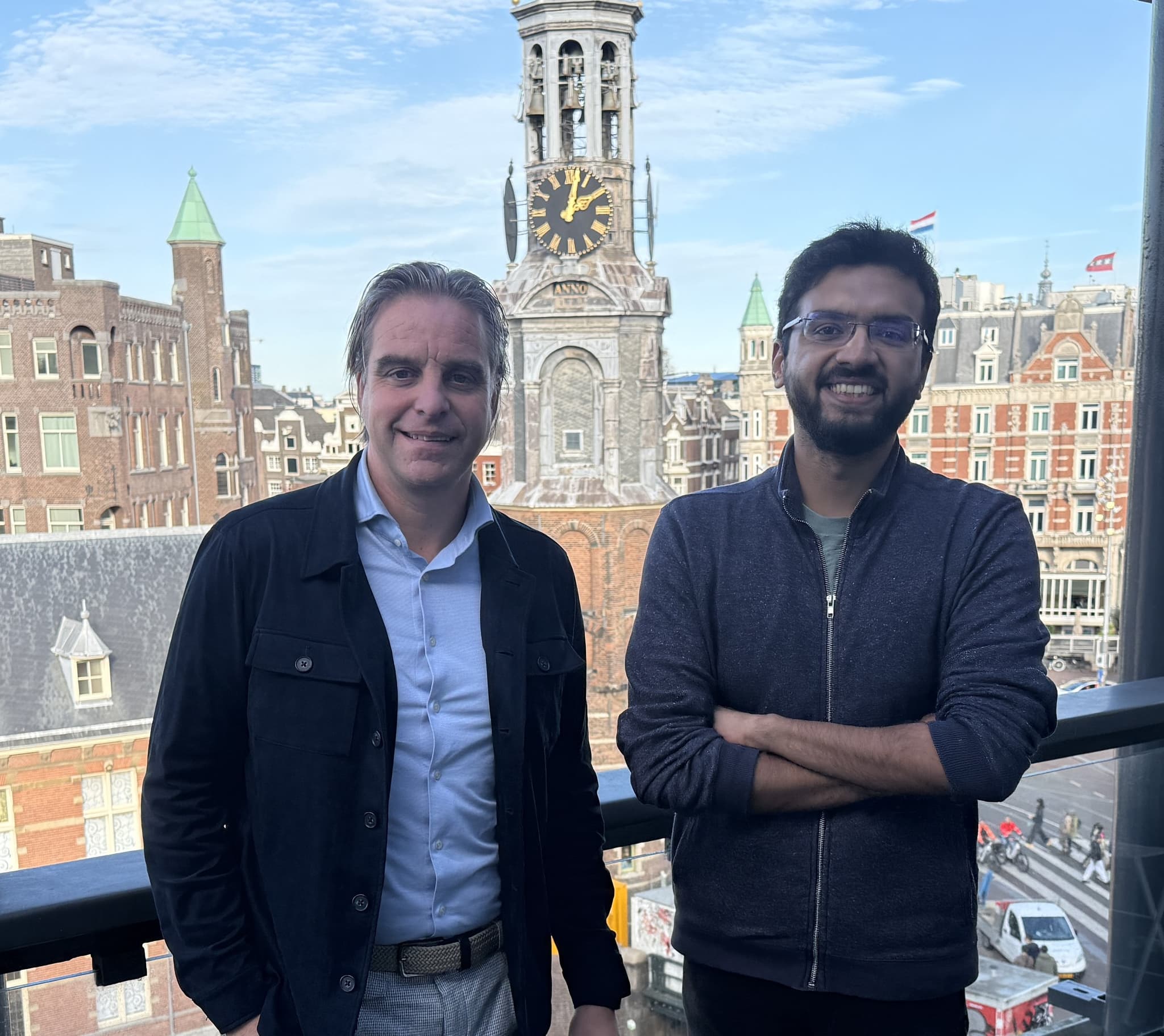
Struck's founders Max van Riel and Nikhil Nagaraj - © Struck
The startup now has a 10-person team. Thanks to a €2 million funding round closed in November, it plans to expand its team and continue developing its technology. In the future, the company also plans to expand internationally.
“Our goal is to make compliance predictive rather than reactive,” says Van Riel. “As European regulations evolve, our platform can help construction teams stay ahead of changes and avoid costly delays.”