
5 Dutch innovators to watch at CES 2026
CES 2026 is in full swing. A cohort of Dutch companies is also joining, and here 5 of them you should know about.
Published on January 7, 2026
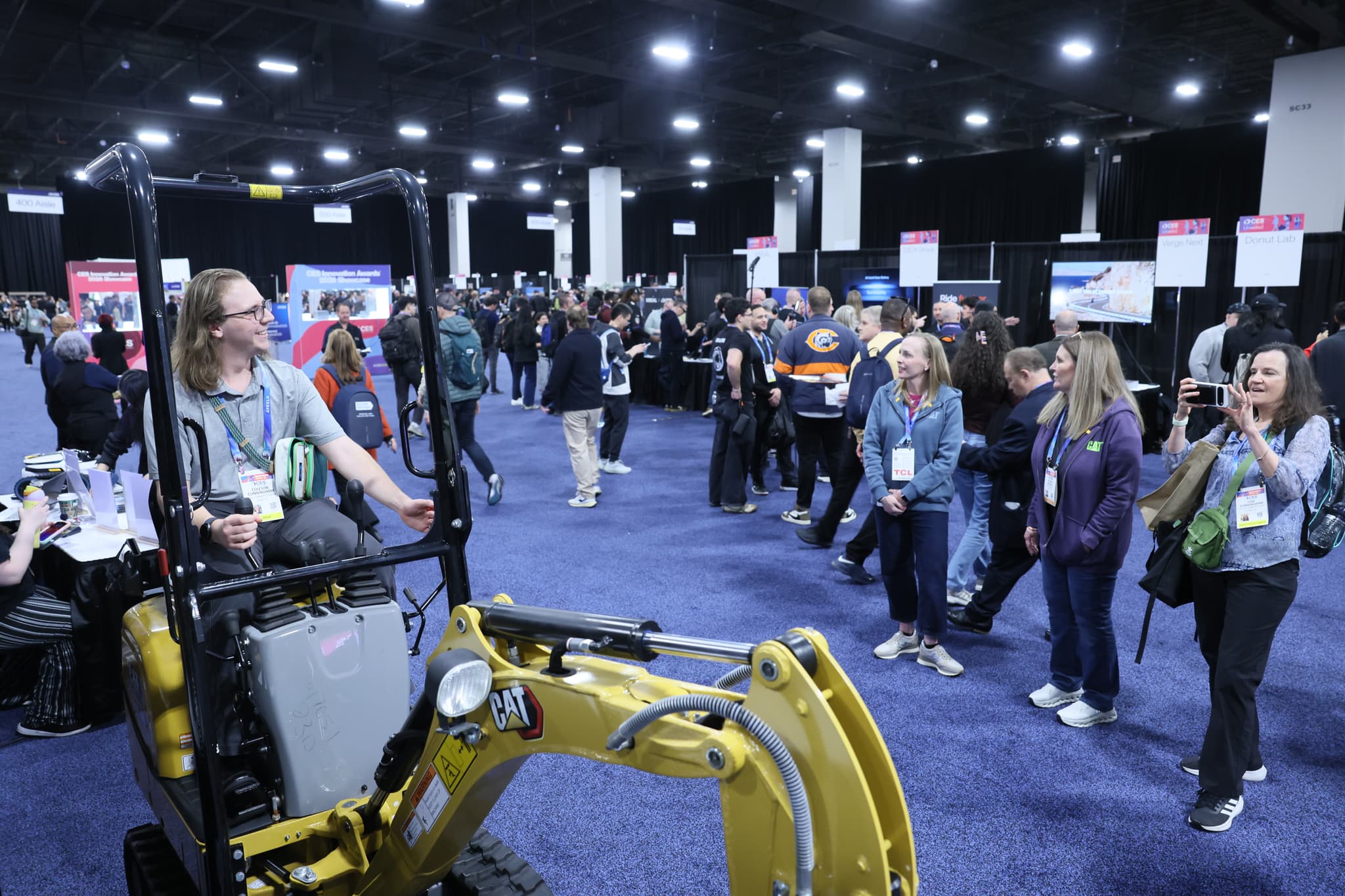
© Consumer Technology Association (CTA)®

Team IO+ selects and features the most important news stories on innovation and technology, carefully curated by our editors.
The Consumer Electronics Show (CES) is one of the world’s largest and most influential tech events. Held in Las Vegas from January 6 to 9, it brings together tech companies worldwide. From major companies like Samsung and Intel, which, during the event, reveal some of their latest gadgets to startups aspiring to be the next champions, there is plenty to see on the exhibition floor.
The Netherlands is represented at CES 2026 by 45 companies, showcasing their innovation. From processors built for AI to secure drone navigation, the Dutch delegation is showcasing technologies to address some of the world’s current challenges. Here are five of the most interesting ones.
Axelera AI edge AI chips
Axelera AI, the Dutch company working on chips for AI applications, is also exhibiting. The organization develops edge AI processors enabling breakthrough applications in robotics, manufacturing, and healthcare.
The firm has rapidly emerged as a leading company in the space and, over the past few years, has secured over €200 million and launched several products. Their first-generation product, the Metis™ AI platform, is a hardware-and-software solution for Edge AI inference that delivers high performance at a fraction of the cost of alternatives.
A chip for real-time material classification
MantiSpectra is once again joining CES 2026. The company, headquartered at Eindhoven’s High Tech Campus, has developed a hyperspectral sensor that enables real-time material classification. In other words, its tiny chip can measure the chemical composition of materials.
Whereas these capabilities once required bulky, expensive equipment, MantiSpectra has miniaturized them into a 4 x 4 mm form factor. Given this small size, biomaterial measurement can now happen in wearables, new smart functions can be unlocked in home appliances, and quality control can be improved in industrial settings.
GPS-independent navigation
In areas where GPS satellites cannot reach a receiver, traditional systems leave drones, aircraft, and vehicles stranded—and vulnerable. That is why Vydar replaces conventional satellite navigation with onboard intelligence.
Their technology uses AI to analyze camera footage, from a drone, for instance, to recognize the ground beneath, matching those features with pre-processed maps stored offline. This information, fine-tuned and fused with other data, allows the vehicle to compute an accurate coordinate. Vydar’s hardware, a 50×50 mm box, is modular to support different defense applications.
A bee-inspired sound recognition system
Beephonix, a spin-off of Radboud University Nijmegen, also made it to Las Vegas. The company works on acoustic recognition systems. It exhibits at CES in partnership with Absolute Audio Labs, offering microphones to help people with hearing impairments follow conversations more effectively.
The sensing units developed by Beephonix contain 151 microphones to detect sound. It is a dynamic hearing system that mimics the one in bees' ears. Using real-time beamforming, AI signal processing, and classification algorithms to detect sound. In addition to applying this technology to individuals with hearing impairments, the company has identified a use case in battlefield drone detection.
Groundbreaking battery anodes
Smartphones, cars, and laptops: batteries power them all and many more. Inside them is the anode, a key component that strongly influences energy density and overall performance. LeydenJar is developing silicon anodes that can boost energy density while enabling lighter, more compact batteries.
The Silyte™ can increase energy density by 50% compared to standard graphite-based products. It can reach an energy density of up to 1350 Wh/L at the stack level. Last year, the company raised €23 million to build a factory in Eindhoven. Thanks to the new batteries, new products are now possible, from AI-driven wearables to longer-range cars.
Impactful innovation at CES 2026
While CES is best known for headline-grabbing gadgets, the Dutch exhibitors present a different side of innovation—one rooted in deep tech and practical impact. Whether improving battery performance, enabling GPS-free navigation, or bringing intelligence to the edge, these companies demonstrate how Dutch technology is finding its place on the global stage.