
Zandvoort becomes F1's lab for fighting microplastics
During the F1 race in Zandvoort, the FIA tested an innovative technology to filter microplastics.
Published on August 24, 2026
© Marc Kleen - Unsplash

Team IO+ selects and features the most important news stories on innovation and technology, carefully curated by our editors.
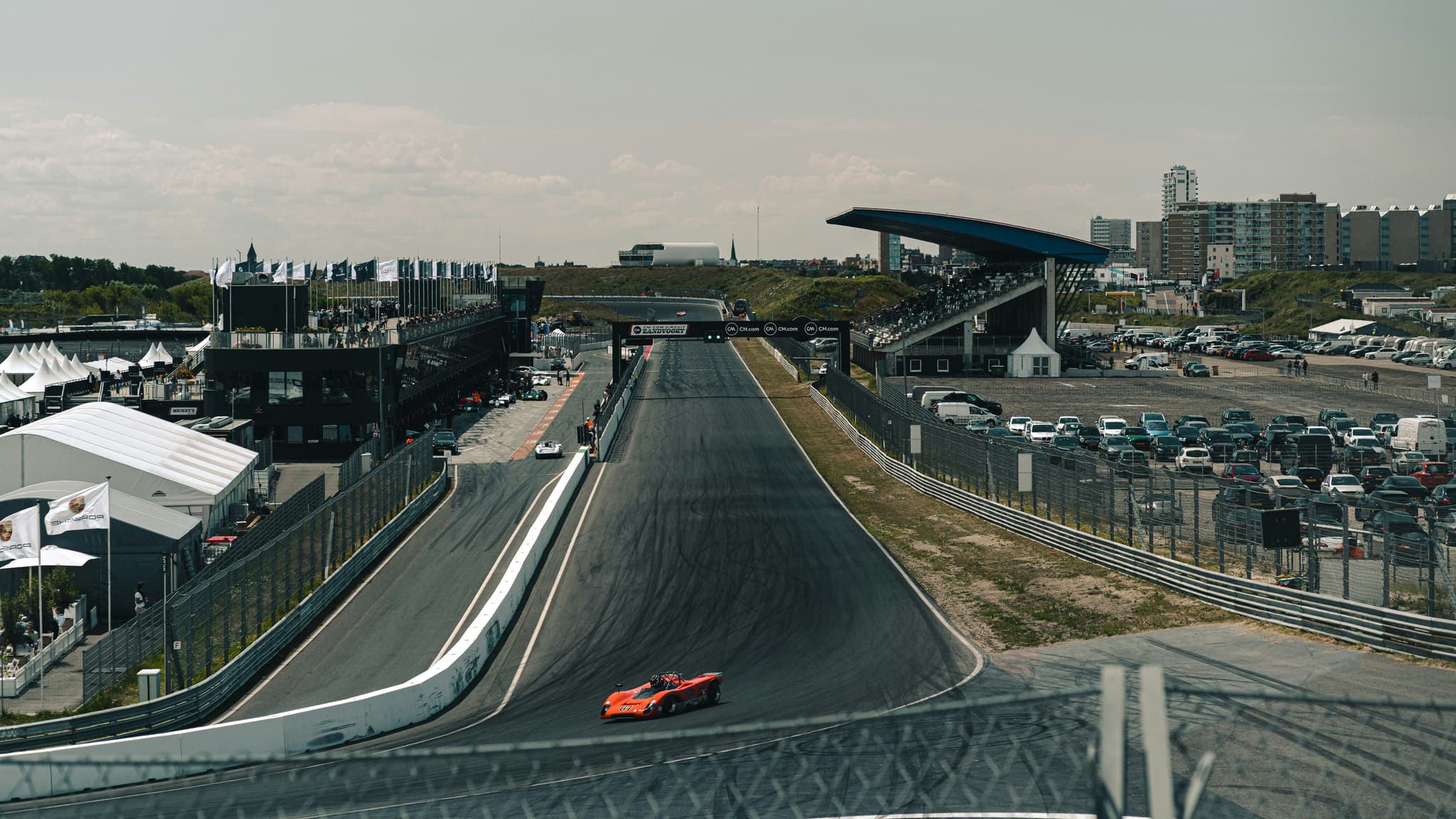
This weekend, the pit lane at Circuit Zandvoort was doing double duty as an environmental research site. Buried beneath the track's drainage network, prototype filters quietly captured tyre wear particles and microplastics from stormwater runoff — a discreet FIA experiment that could end up shaping how cities protect their waterways.
The system was developed in partnership with the Technical University of Berlin and German start-up Urbanfilter. Two prototype units were built directly into Zandvoort's drainage network, covering roughly 3,300 square metres around the pit lane and the circuit's iconic Tarzanbocht at Turn 1 — among the highest-traffic, highest-wear areas of the track.
According to Nicolas Aubourg, the FIA's Head of Research and Development, laboratory testing has already produced strong results. The filters captured up to 99% of particles in water passing through the system, with an expected maintenance interval of around a year. What remained untested, he said, was how the technology holds up under real racing conditions — hence the move to Zandvoort. "It's a pretty smart system," Aubourg said. "What we now need to establish is how a prototype performs in real conditions at a circuit."
A bigger problem than racing
The FIA has been careful to note that Formula 1 itself is not a major contributor to the world's microplastic problem — a single grand prix weekend involves just 22 cars running on a closed circuit. The scale of the issue lies elsewhere: a 2024 OECD report estimated that 2.7 million tonnes of microplastics entered the environment in 2020 alone, a figure projected to roughly double by 2040. Separately, a University of Portsmouth-led study found that tyre wear particles account for around 28% of all microplastics entering the environment worldwide.
That gap between motorsport's tiny footprint and the vast scale of road-traffic pollution is precisely the point of the Zandvoort trial. Rather than treating F1 as the target of the fix, the FIA is using the sport's controlled, closely monitored environment to validate a technology intended for city streets.
The project moved unusually fast by motorsport R&D standards. Sample collection at the circuit, filter design, and prototype manufacturing were all completed in just over twelve months. Zandvoort's location on the Dutch coast made it a fitting choice for the technology's first real-world deployment, given the direct route from local drainage systems into sensitive coastal waters.
"We designed the filter and, one year later, we are here in Zandvoort with prototypes," Aubourg said.
Looking beyond the racetrack
If the Zandvoort data holds up, the FIA's ambition is to take the concept well beyond Formula 1. Aubourg suggested the governing body hopes to begin conversations with other circuit promoters — particularly those running street circuits — about installing similar filtration systems for race weekends, then leaving the hardware in place afterward for everyday road traffic.
"If we do convince the promoters of other street circuits that we could install these filters, we can race with fewer particles leaving the site and leave the filters behind afterwards for everyday road traffic," Aubourg said. "That would represent a significant quantity of particles that do not go into the environment."
He added that other circuits have already expressed interest in the concept, pending confirmation that the Zandvoort trial performs as well in practice as it did in the lab.
For now, the filters remain in place at Zandvoort, quietly doing their work beneath one of the calendar's most demanding and popular grands prix — a small-scale experiment with a considerably larger environmental ambition behind it.