
World's first circular aromatic plant gets green light
Chemical technology company BioBTX announced it will build the world's first circular aromatics plant.
Published on July 23, 2026
© BioBTX

Team IO+ selects and features the most important news stories on innovation and technology, carefully curated by our editors.
Dutch chemical technology company BioBTX has taken a positive Final Investment Decision (FID) for its PETRA project, clearing the way for construction of what it calls the world's first commercial-scale plant to convert plastic waste directly into renewable aromatics. The decision marks the shift from more than a decade of development toward full commercial execution, with the plant expected to start up in mid-2028.
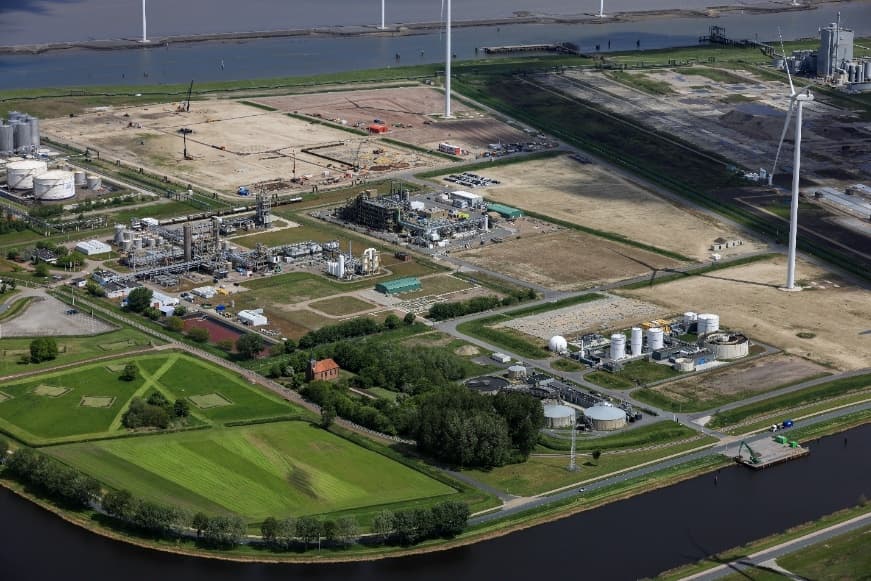
The facility, to be built at the Chemical Park in Delfzijl, will be the first dedicated greenfield plant of its kind anywhere in the world. Once operational, it is expected to produce around 10,000 tonnes of renewable aromatic oil per year, alongside 8,000 tonnes of sustainable by-products. The aromatic oil will consist of benzene, toluene and xylenes — collectively known as BTX — chemical building blocks used across industries including pharmaceuticals, coatings, adhesives and performance materials.
"Reaching this key milestone in the development of BioBTX marks an important step in our journey towards our mission of making circular chemistry possible," said Ton Vries, co-founder and CEO of BioBTX. "We are going to build the world's first fully sustainable aromatic plant."
Cracking the code on sustainable aromatics
BTX is currently made almost exclusively from fossil oil and accounts for roughly 40% of chemicals derived from crude oil, according to the company. BioBTX's proprietary technology, called the Integrated Catalytic Cracking Process (ICCP), offers a way to produce chemically identical, drop-in substitutes from waste instead. The process works in two stages: plastic waste is first thermally broken down in the absence of oxygen, after which the resulting gases are catalytically upgraded into BTX. Keeping the two stages separate, the company says, allows for better control of reaction conditions, longer catalyst lifetimes, and the ability to handle mixed and contaminated waste streams that conventional recycling methods struggle with.
Founded in 2012, BioBTX has spent 14 years moving the technology from an initial idea through lab and pilot-scale testing — including a demonstration plant at Zernike Campus in Groningen — to this commercial milestone. The company says the first plant is expected to deliver a 70–80% reduction in lifecycle greenhouse gas emissions compared with fossil-based production, with further reductions targeted over time.
Scaling the output and the technology
With permits approved and engineering and financing agreements now in place, manufacturing of the plant's process equipment modules has already begun. On-site construction is set to begin in early 2027. The project is expected to create around 35 jobs, phased in over the coming year, and will add to the growing green chemistry cluster developed by Groningen Seaports and the Province of Groningen at Delfzijl.
Financing for the roughly multi-million-euro project — the company raised €80 million last year toward the effort — comes from a mix of shareholders and public and private lenders, including Invest-NL, Infinity Recycling, Covestro, NOM and Carduso Capital, together with debt funding from Colesco Capital, the FEAS fund (financed by Nij Begun) and the Province of Groningen, plus a DEI+ subsidy from the Netherlands Enterprise Agency (RVO).
Beyond Delfzijl, BioBTX says it intends to license the ICCP technology internationally and eventually apply it to other feedstocks, including biomass, as it looks to scale circular aromatics production well beyond its first commercial plant.