
Wind turbine without blades and 3 other radical designs
The wind sector is on the verge of a revolution. From flying kites to turbines in the garden: an overview of four innovations.
Published on February 4, 2026
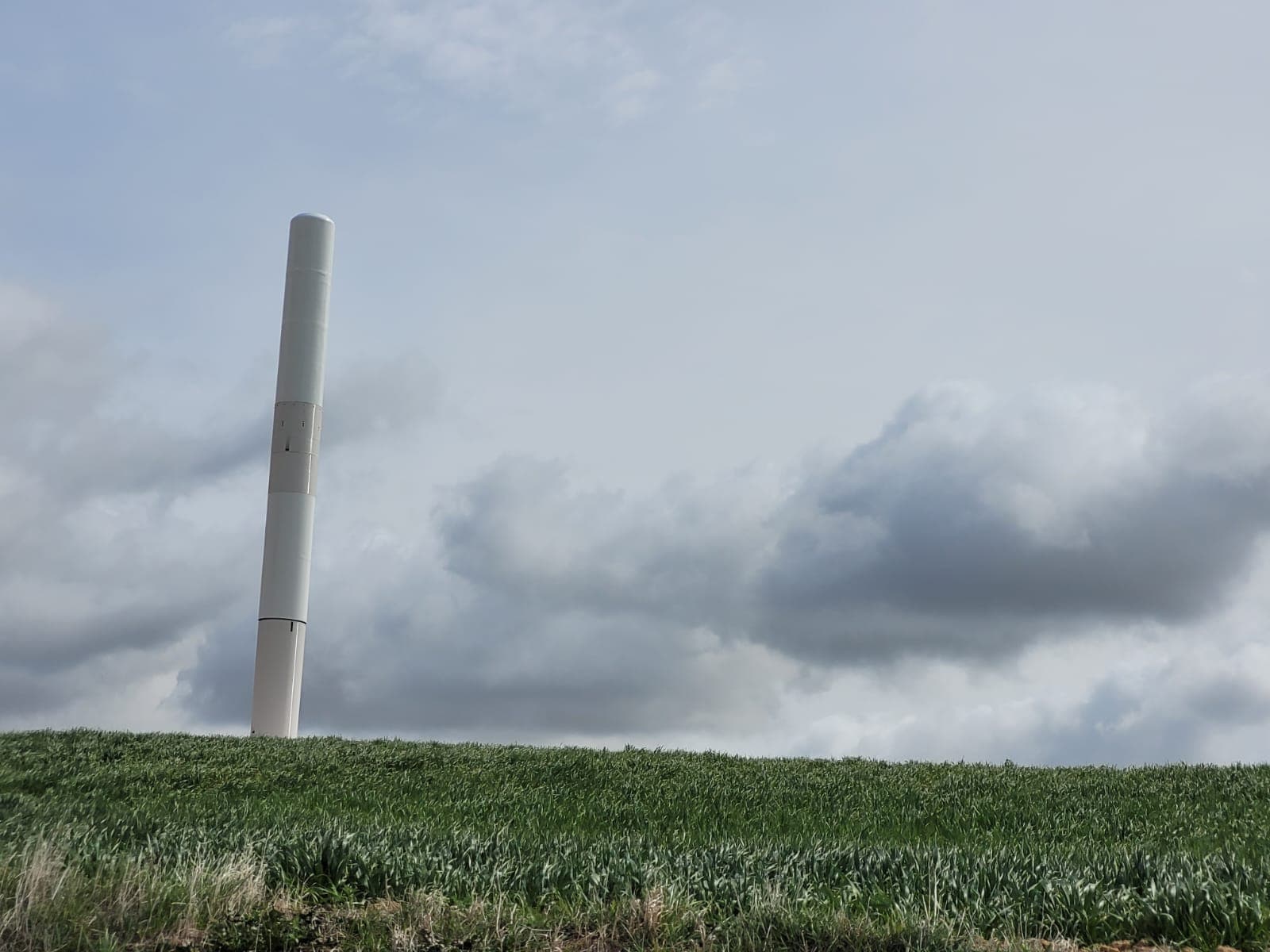
Wind turbine without blades from Vortex Bladeless

Team IO+ selects and features the most important news stories on innovation and technology, carefully curated by our editors.
When you think of wind energy, you immediately picture the familiar image: a tall, white mast with three enormous blades. This design has dominated our skyline for decades. However, this classic model cannot be used everywhere. In deep oceans, the foundation is too expensive. In densely populated cities, there is no space. And for individual households, they are simply too large. Engineers from Europe are working on radical alternatives. Some designs seem to come straight out of a science fiction movie. Others claim to defy the laws of physics.
Small turbine for consumers
We start with a striking Dutch invention: ‘The Blade’. This device is specifically aimed at the consumer market. It was developed by Cell Technologies from Etten-Leur. The design is completely different from the standard. It is a compact column only 1.40 meters high and 60 centimeters in diameter. The company claims that this small turbine can generate 2,500 to 3,000 kilowatt hours of electricity per year.
The pole without blades
Some innovations eliminate the most recognizable parts. The Spanish start-up Vortex Bladeless made the news with a wind turbine without blades. It looks like an upright pole that wobbles slightly in the wind. Technically speaking, it uses ‘vortex shedding’. The wind creates vortices around the pole. This causes the structure to resonate and move back and forth. This movement is converted into electricity. It sounds inefficient, and it often is, compared to a traditional turbine. Nevertheless, the concept has its merits. The biggest advantage is the lack of moving and rotating parts. There are no gears that need to be lubricated, which reduces maintenance costs. In addition, they are quiet and safe for birds, making them interesting for specific locations such as nature reserves or urban environments where noise pollution is a problem.
Single-blade turbines
TouchWind, also from the Netherlands, develops wind turbines that are clearly different from conventional models. Instead of three separate blades, they use a single-piece, angular rotor that points downwards and automatically tilts in strong winds. This unique configuration makes the turbine simpler mechanically, more storm-resistant, and more efficient: it can continue to operate even at wind speeds of up to around 70 m/s, while conventional turbines are shut down in strong winds to prevent damage. Thanks to the tilted rotor, it can reduce wake effects, allowing turbines to be placed closer together in a wind farm and delivering more energy per unit area than traditional designs.
Floating turbines
There are floating wind turbines that have been specially developed for deep water, where traditional fixed foundations cannot be installed. One example is SeaTwirl, a Swedish company that is conducting a demonstration of a 2 MW floating wind turbine with support from the EU's Horizon Europe program. This system has a vertical axis and a floating structure that allows the turbine to move flexibly with sea conditions, simplifying installation and maintenance and potentially reducing costs compared to conventional semi-submersible designs. SeaTwirl started with smaller prototypes (such as a 30 kW turbine), but the 2 MW demonstrator aims to prove that the concept can deliver larger, commercially viable floating turbines — suitable for generating renewable energy in locations with strong, constant sea winds.