
What Avendar’s AI can find in a 900-page case file
Marijn van Aerle's was invited for a keynote at the AI Summit Brainport's AI Implementation Track, organised by AI Innovation Center.
Published on November 15, 2026
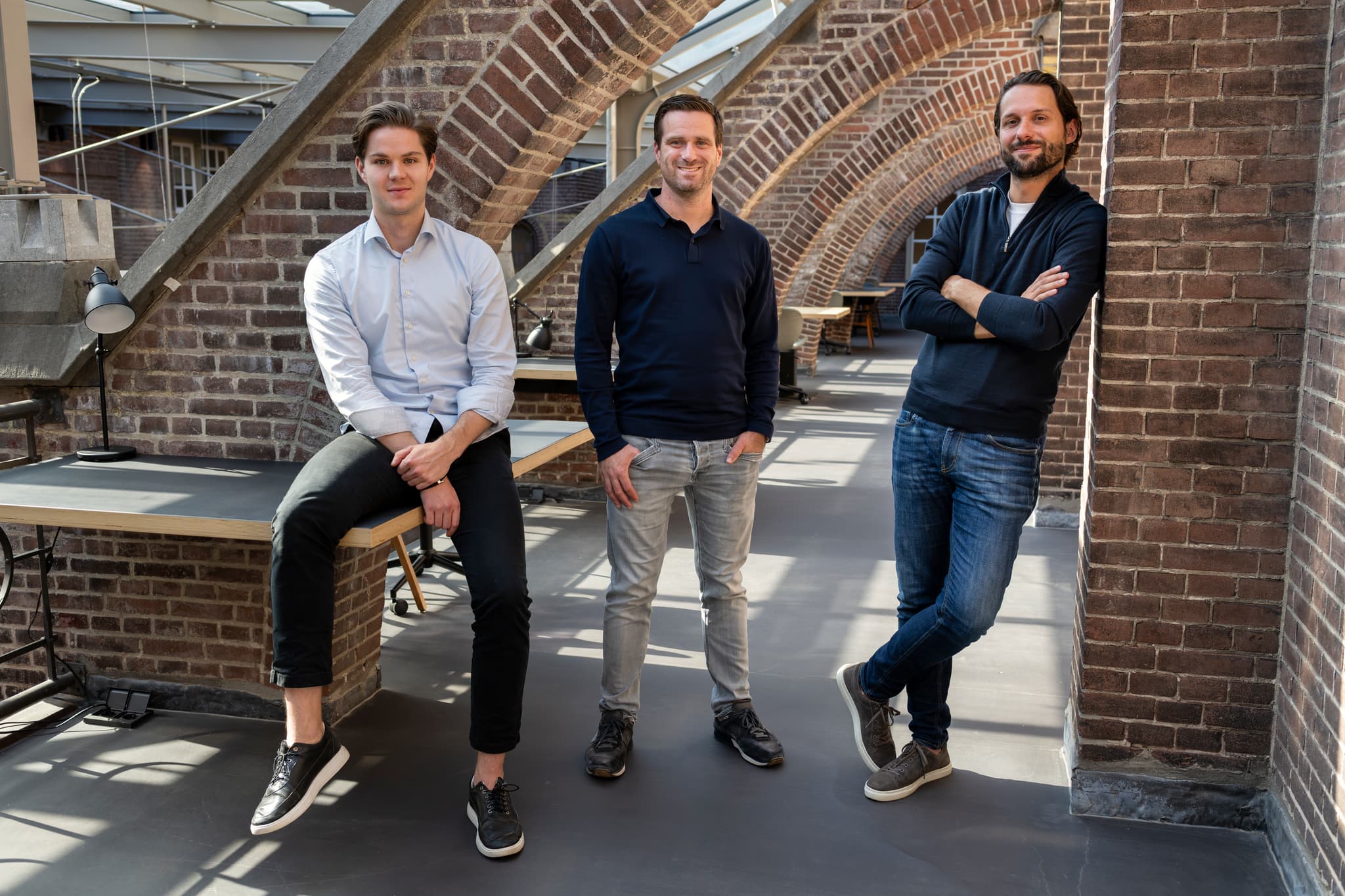
Team Avendar, © Hoeke Fotografie

Bart, co-founder of Media52 and Professor of Journalism oversees IO+, events, and Laio. A journalist at heart, he keeps writing as many stories as possible.
At the AI Summit Brainport, Avendar CEO Marijn van Aerle used a phone repair shop to show how AI can help public investigators follow a lead all the way back to the document that prompted it.
The phone repair shop on the screen didn’t exist. The investigation behind it did, Marijn van Aerle told the audience at the Evoluon in Eindhoven. A change of ownership had left municipal investigators with 109 documents and nearly 900 pages to review. Somewhere in the tax filings, loan applications and bank statements was a trail of money that, according to Van Aerle, led through several layers to a drug cartel laundering its proceeds.
One of the demo’s leads was a much smaller detail. The shareholder listed in a notarial document differed from the one in the trade register. To see the discrepancy, an investigator first had to know where to look in two separate records. That is the kind of work Van Aerle wants Avendar’s software to take on.
The Dutch startup’s CEO presented the case on November 12 during the AI Implementation Track, organised by High Tech Campus Eindhoven’s AI Innovation Center. Avendar won a Gerard & Anton award last summer.
The Implementation Track
Organised by the AI Innovation Center, the Implementation Track at the AI Summit Brainport explored one of the central questions of this year’s summit: AI at work. Use it or lose it? As AI becomes increasingly embedded in our organisations and daily work, how do we move from experimentation to implementation? How can humans and AI collaborate effectively, and what does this mean for productivity, trust, and the future of work?
A filename can only tell you so much
“I can upload a file that says annual accounts, but it can be a photo of my cat,” Van Aerle said. Someone still has to open it, check what it contains and establish which company it belongs to. Avendar uses language and vision models to help identify documents and extract details from them. Its software can then connect those details with information from other records and registers.
In the phone-shop demo, that process surfaced a passage in a document that appeared to have been altered. It also brought bank transfers into view that coincided with the takeover. An investigator could follow the signal back to the precise passage or transaction that prompted it.
The timing of an overseas payment might justify asking who funded the takeover and why. The answer could be perfectly ordinary. The same applies to conflicting shareholder records. A discrepancy gives the investigator something specific to check, and the original documents give them somewhere to start.
Give the model a smaller job
When someone in the audience asked how Avendar sets its guardrails, Van Aerle drew a distinction between extracting information and flagging risk. In the screening process he demonstrated, AI helps gather and connect information. Avendar uses explicit rules to flag patterns for review. He said the company had encoded some 500 to 600 patterns drawn from government practice and that compliance teams can inspect those rules. Surnames and nationalities, he added, are excluded from the rules he described.
“You want them to make small decisions, not big decisions,” Van Aerle said of open-weight models. Ask a model to pull numbers out of a document and an investigator can compare what it extracted with the original. Ask it who committed a crime and it becomes much harder to tell how the model arrived at its answer or what biases shaped it. That difference matters when the evidence informs a public decision that could be challenged in court.
Who runs the system?
Van Aerle said he and a colleague underwent police screening so they could deploy the software on police premises in an environment isolated from the internet. He also described private-cloud deployments and the option to run the software in a Dutch data centre operated on the customer’s behalf. For a public institution weighing those options, the questions extend from where the data sits to who operates the system and what network access the model has.
Avendar says it started in early 2025 with the Dutch National Police and the Ministry of Justice and Security as its first customers, working on how detectives handle tips from the public. It later applied the software to integrity screening for permits and subsidies. In May, the company raised €2.2 million in seed funding in a round led by LUMO Labs and the Brabant Development Agency (BOM). Van Aerle told the summit that the team had grown to 12 and was exploring opportunities in Spain, Germany and France.
Van Aerle saved the network diagram for the end of the demo. It showed the people, companies and transactions linked across the dossier, but he said he found the individual signals more useful in practice. For the investigator working through those 900 pages, the next step might be as simple as opening two records side by side and asking why they name different shareholders.