
Wennink’s criticism: Cabinet blocks the future with budget policy
Peter Wennink, former CEO of ASML, calls Dutch budget policy ‘medieval’ and warns that the country risks falling behind economically.
Published on August 30, 2026

Team IO+ selects and features the most important news stories on innovation and technology, carefully curated by our editors.
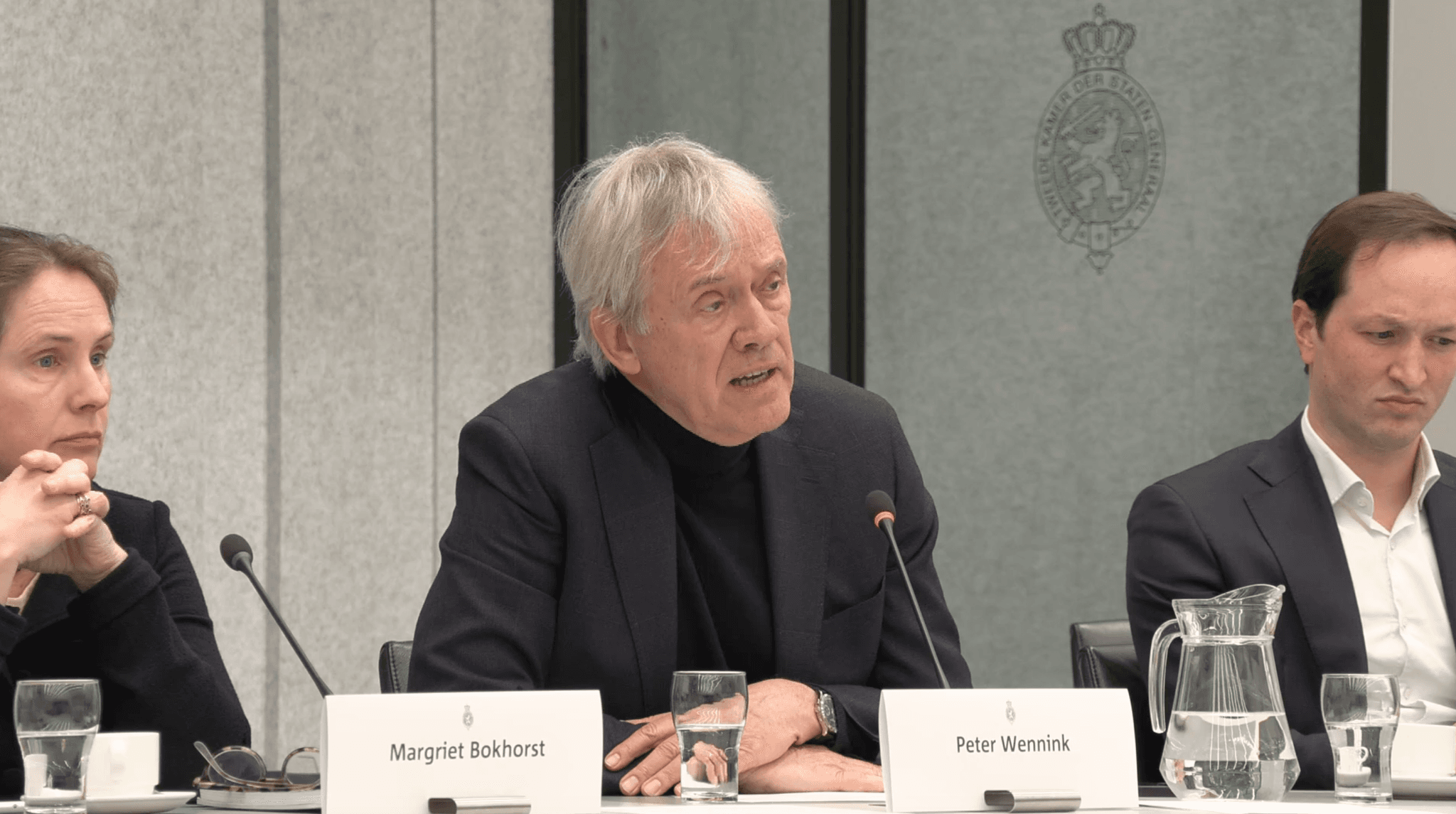
The Dutch government is sticking to a budget policy that Peter Wennink, former CEO of ASML, describes as ‘medieval’. His criticism is that the government makes no distinction between one-off expenditure and investments that generate long-term returns.
According to Wennink, such an approach would have bankrupted ASML. He believes it is now putting the Netherlands at a disadvantage compared with competitors that do strategically invest in technology and innovation. He made these comments in an interview with Vrij Nederland.
No room for future-oriented investment
Under the Dutch central government’s current cash accounting system, all expenditure is recorded immediately as a cost, without taking future returns into account. Wennink argues that this discourages investment in scientific research, infrastructure, and innovation because costs and benefits are not spread over several years.
He advocates switching to an accrual accounting system, similar to the accounting methods used by companies and municipalities. Under such a system, investments are spread over time, and assets are recorded on a balance sheet, much like purchasing a home with a mortgage. According to Wennink, the current system not only disregards future returns but also fails to reveal the costs of deferred maintenance, including work on roads and bridges.
Historical lesson forgotten
Wennink refers to an old Amsterdam saying: ‘De cost gaet voor de baet uyt’ – roughly, ‘You have to spend money before you can reap the benefits.’ According to Wennink, this principle, already understood in the 17th century, appears to have been forgotten in the 21st century. He stresses that the government has left too much to the market in recent decades, even though ASML benefited from government subsidies for technological innovation during its early years.
He regards the planned National Investment Bank as a positive development, but says it will be insufficient as long as the budget rules remain unchanged. Finance Minister Eelco Heinen of the liberal-conservative VVD party is unconvinced by Wennink’s argument, saying that a different accounting method does not create additional money: ‘You can only spend a euro once.’
Billions in investment needed to safeguard prosperity
In his report The Road to Future Prosperity, Wennink calculates that the Netherlands should invest between €151 billion and €187 billion over the next ten years in areas including knowledge, technology, and innovation. The government should finance approximately a quarter of this amount to help mobilise private investment.
The necessary investments focus on four strategic domains: digitalisation and AI, life sciences and biotechnology, security and resilience, and energy and climate technology. According to the report, without these investments, the Netherlands risks losing its exceptional strengths, including its talent and capacity for innovation, due to fragmented governance and deferred maintenance.
Obstacles at the Ministry of Finance
Wennink identifies the Ministry of Finance, and Minister Heinen in particular, as the main obstacle to adopting a different budget system. Former finance minister Jeroen Dijsselbloem, also speaking to Vrij Nederland, says he understands the ministry’s reluctance. Civil servants fear that politicians would use any additional budgetary room for other expenditure rather than investment.
The debate about switching to accrual accounting has been ongoing for 20 years. In 2008, Finance Minister Wouter Bos abandoned plans for a nationwide transition to the system because of the high costs and administrative burden. In 2017, the Advisory Committee on Central Government Accounting Systems recommended gradually making greater use of accrual-based information.
Europe falls behind as the US accelerates
Wennink’s report warns that the Netherlands is structurally failing to keep pace with economic and technological developments amid geopolitical tensions, accelerating technological change, and growing pressure on public services. Over the past seven years, the investment gap between Europe and the US has increased from 36% to 76%, equivalent to an annual difference of approximately €700 billion.
Between now and 2035, the Netherlands must achieve economic growth of at least 1.5% per year to prevent a decline in purchasing power. On the current growth trajectory, an average household is estimated to lose €1,700 a year by 2035. With lower growth, that loss could exceed €7,000.
Solutions: a commissioner, a bank, and an agency
To make the necessary investments possible, Wennink proposes a more decisive system of governance. He advocates appointing a Government Commissioner for Future Prosperity to act as an independent implementation authority. The commissioner would be given powers to accelerate strategic projects, overcome interdepartmental obstacles, and strengthen public-private cooperation.
He also recommends establishing a National Investment Bank with working capital of at least €10 billion and a National Agency for Breakthrough Innovation with an annual budget of €2 billion. These institutions would facilitate long-term investment and remove administrative barriers.