
Watt Matters in AI: Radical rethinking in an energy-hungry AI era
Eindhoven conference brings global experts together to push for paradigm shifts in AI efficiency
Published on December 6, 2025
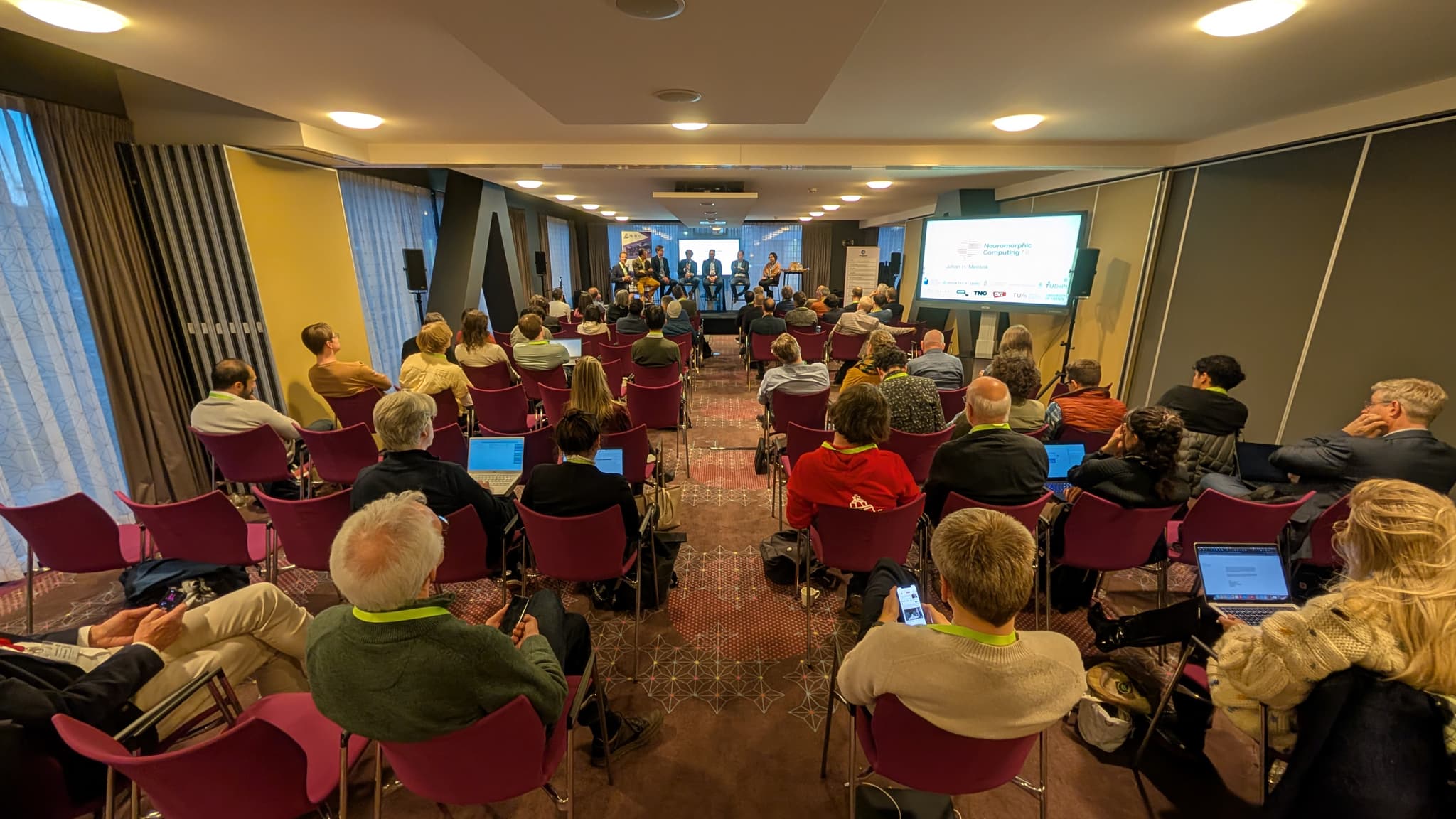
Watt Matters in AI 2025
Bart, co-founder of Media52 and Professor of Journalism oversees IO+, events, and Laio. A journalist at heart, he keeps writing as many stories as possible.
Artificial Intelligence promises solutions to some of humanity’s most significant challenges. From accelerating the energy transition to improving mobility, health, and industry, AI can help achieve global development goals faster than ever before. Yet the paradox is now impossible to ignore: the massive growth of AI is itself becoming a major energy challenge.
That tension, and how to resolve it, was the central theme of Watt Matters in AI, held recently in Eindhoven. The conference gathered leading thinkers in semiconductors, photonics, neuromorphic computing, policy, and high-performance computing. Their shared mission: to rethink every layer of the AI stack, from hardware to regulation, and to explore radical new paradigms that can deliver orders-of-magnitude improvements in energy efficiency.
“We need paradigm shifts, not incremental fixes”
Chair of the program committee Hans Hilgenkamp set the tone from the very start. “Today is all about paradigm shifts,” he told the packed room. “Over the past 50 or 60 years, the semiconductor industry has given us extraordinary capabilities by scaling down devices. But energy has become at least as important as size, if not more important.”
Hilgenkamp highlighted a striking graph showing the explosion of global compute-related electricity use. Despite increasingly efficient transistors, total energy consumption keeps rising. “We already use a few percent of global electricity for computing,” he noted. “And that line is still going up.”
To address this, Dutch universities formed Mission 10X, a national academic platform focused on radical innovations in energy-efficient computing. The conference was one of its flagship activities. “I invite everyone to collaborate with us,” Hilgenkamp said. “This is a societal challenge no one can solve alone.”
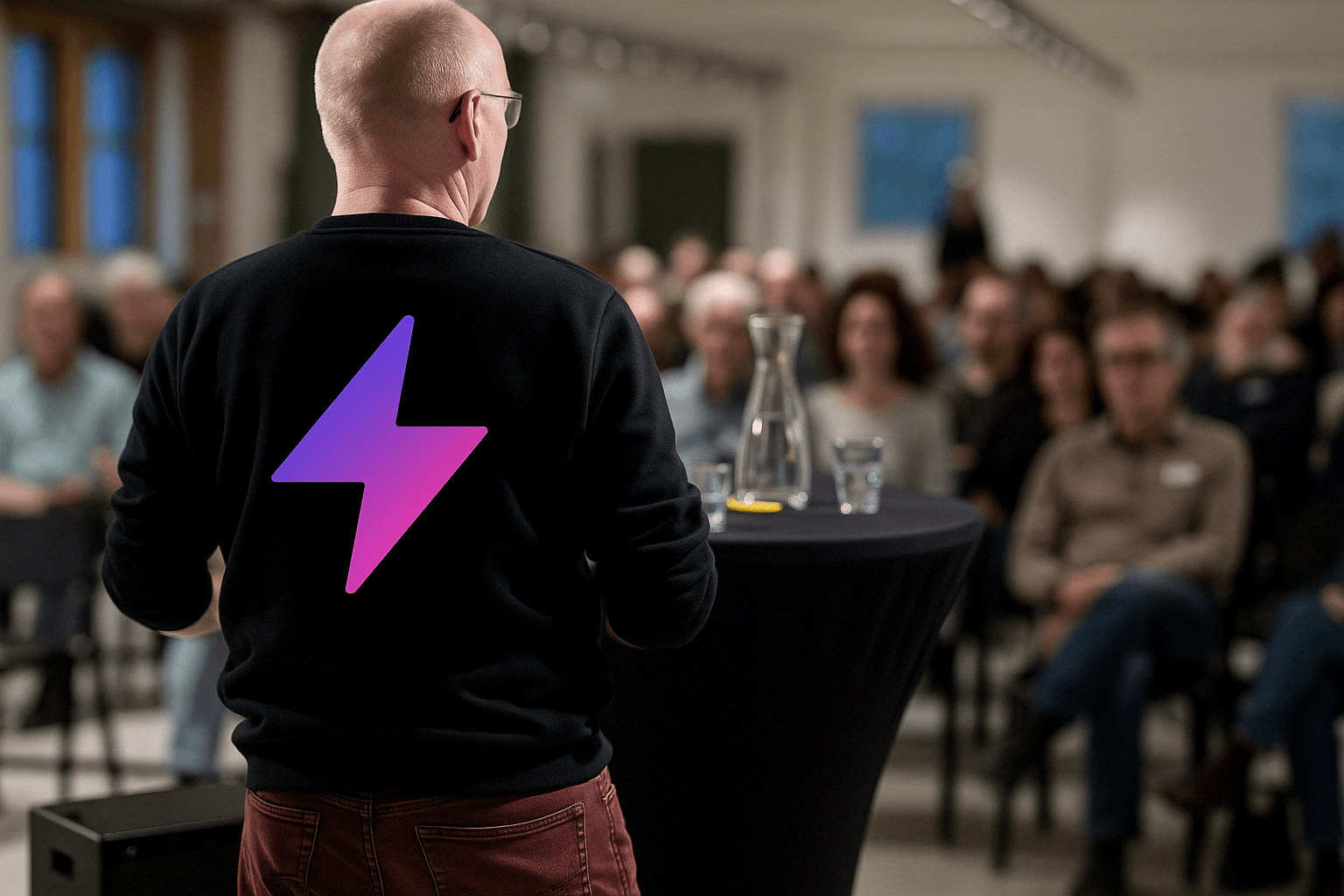
Watt Matters in AI
Watt Matters in AI is a conference that explores the potential of AI with significantly improved energy efficiency. More stories here.
A morning of global policy, data center reality, and GPU trajectories
The morning program blended global analysis with practical insight from the data center front lines:
- Thomas Spencer (IEA) outlined the worldwide rise of data center electricity consumption, now growing at more than 10% per year, and stressed the policy complexity of enabling AI benefits while keeping the energy footprint manageable.
- Stijn Grove (DDA) and Axel Berg (SURF) showed how efficiency improvements in cloud infrastructure have offset some of the growth, but warned that the scale of new AI workloads dwarfs earlier trends.
- Koen van den Berg (NVIDIA) presented the latest GPU advancements and the accelerating push toward denser racks, higher voltages, and workload-specific optimization. Efficiency is improving rapidly, but usage is growing even faster.
- Kristina Irion (UvA) shifted the conversation to regulation, arguing that Europe must use policy tools to prevent rebound effects and guide the sector toward genuine sustainability.
The morning ended with a lively Q&A session, where questions ranged from Jevons’ Paradox to the life cycle of AI servers, GPU reuse markets, and whether strict EU regulations risk putting Europe at a competitive disadvantage. The conclusion: the challenge is not only technical; it is economic, geopolitical, and societal.
Afternoon: hardware frontiers and beyond-GPU paradigms
The afternoon zoomed in on the cutting edge of AI hardware:
- Christian Bachmann (imec) outlined semiconductor innovations required for future energy-efficient systems.
- Martijn Heck (TU/e) showcased the promise and the engineering complexity of photonic integration for AI acceleration.
- Christian Mayr (Spinnaker Systems) brought neuromorphic computing into the conversation, showing how radically different architectures may be required to escape the energy trap.
- Tamalika Banerjee (IMCHIP) explored spintronics and new memory-centric chip concepts.
- Ioannis Papistas (Axelera AI) showed how edge-AI acceleration can reduce the energy footprint by moving intelligence closer to the source.
- Phil Burr (Lumai) demonstrated optical computing’s potential, with ultra-efficient inference systems moving toward real-world deployment.
The final Q&A, chaired by Johan Mentink (Radboud University), illustrated the diversity of the future AI landscape. Discussions ranged from the scalability limits of silicon photonics to the rise of free-space optical computing, the critical importance of software stacks, challenges around analog variability, and the ethics of dual-use technologies. One thing became clear: the next generation of computing will be profoundly heterogeneous.
A day that sparked momentum
Besides the scientific content, the conference catalyzed collaboration. During the afternoon Q&A, organizers announced that a broader national alliance for energy-efficient AI is being formed, supported by universities, startups, industry partners, and Digital Netherlands. A public announcement will follow later this year.
For a field moving as fast as AI, the day offered a rare moment of reflection and urgency. AI will not become sustainable through incremental gains alone. It requires new paradigms: neuromorphic computing, photonics, spintronics, memory-centric architectures, optical accelerators, and intelligent regulation working in concert.
As Hilgenkamp closed his introduction earlier in the day, “The total energy used for computing is rising faster than efficiency improvements can compensate. This makes energy-efficient AI not just a technological question, but a societal one. That’s why we are here today.”
The Watt Matters in AI conference proved that the Netherlands - and Europe - have the expertise and ambition to lead this transformation. What matters now is to turn the momentum into action.