
Two underground heat buffers collapsed
Fifteen municipalities in the Netherlands have been warned by letter about the risks of so-called heat buffers.
Published on December 23, 2025

Team IO+ selects and features the most important news stories on innovation and technology, carefully curated by our editors.
Fifteen municipalities in the Netherlands have been warned by letter about the risks of so-called heat buffers. These are large underground tanks containing hot water. They store heat and use it to heat homes and businesses. Two of these heat buffers collapsed in quick succession.
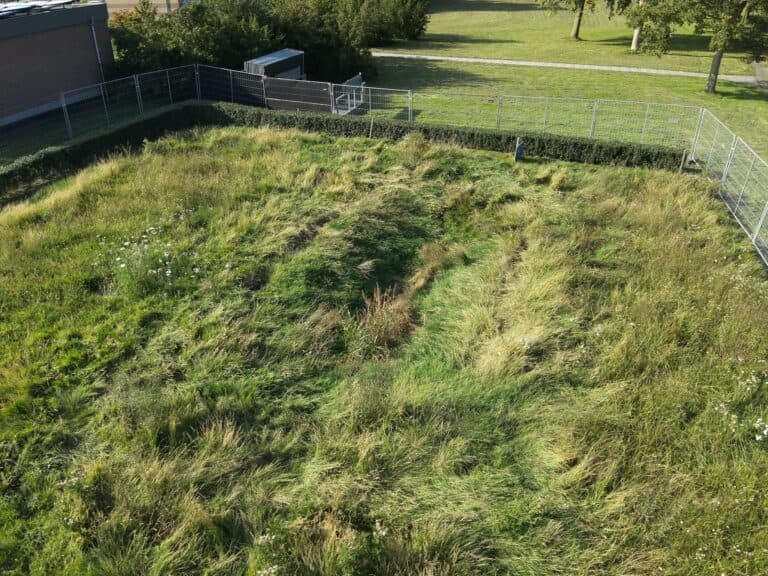
One of the problems occurred in Nagele, in the municipality of Noordoostpolder. A large crack appeared in a lawn. The heat buffer was located underground. As a precaution, fences were immediately erected. There is a daycare center right next to the site. The municipality wanted to prevent children from being endangered.
Nagele is known as a testing ground for the energy transition. The village wants to be completely energy neutral by 2028. The heat buffer was part of a pilot project. In the summer, water was heated to over 60 degrees Celsius using solar collectors. That hot water was stored in the ground. In the winter, the heat was used for homes and a daycare center.
Materials not suitable
The problems turned out to be serious. Repair is no longer possible. The municipality of Noordoostpolder therefore commissioned an investigation. Engineering firm Sinko carried out this investigation, together with TNO. They investigated why the heat buffer had collapsed.
The investigation showed that the wrong materials had been used in the construction. These materials are not suitable for prolonged contact with hot water. The Brabant-based company HoCoSto (HotColdStorage), which installed the buffers, acknowledges that the wrong material was used.
Sixteen municipalities have similar heat buffers
The results of the investigation were published last month. For Mayor Roger de Groot, this was reason to warn other municipalities. Similar heat buffers have been installed by the same company in at least sixteen municipalities. Some are located under schoolyards, playgrounds, and sports fields. Municipalities are now assessing whether these buffers also pose a risk.