
TouchWind CEO: ‘Patents aren't a goal, but a means to innovation’
TouchWind takes steps toward efficient wind turbines. In this process, knowledge, financing, and IP protection are of crucial importance.
Published on June 18, 2026

As Head of Partnerships, Linda liaises with new partners. She coordinates all ongoing collaborations and connects our journalistic editorial and commercial articles. She is not only the connector behind our articles, but also all of our events.
Rikus van de Klippe is a born inventor. It all began in the 1970s, when, as a child during the oil crisis, he laid the groundwork for his future wind energy startups on car-free Sundays. “Of course, I loved biking on the highway, but I also realized that the whole world was dependent on oil,” says Van de Klippe. “It was an exciting time back then, just like it is now.”
After studying aerospace engineering with a focus on business administration, he founded his first startup. “I saw that we could do much more with wind energy than was happening at the time.” He is now the founder and CEO of TouchWind, the third wind energy startup under his name. The company is currently in an exciting development phase, in which it is further developing the technology, protecting its inventions with patents, and seeking the right financing.
For its patent applications, TouchWind receives support from, among others, the Netherlands Patent Office and various patent attorneys. Van de Klippe: “It’s really nice to have a sparring partner in this. The world of patents can be tricky. As an inventor and entrepreneur, you’re at the heart of the innovation and the product, but when you read the patent, it can sometimes get quite complex.”
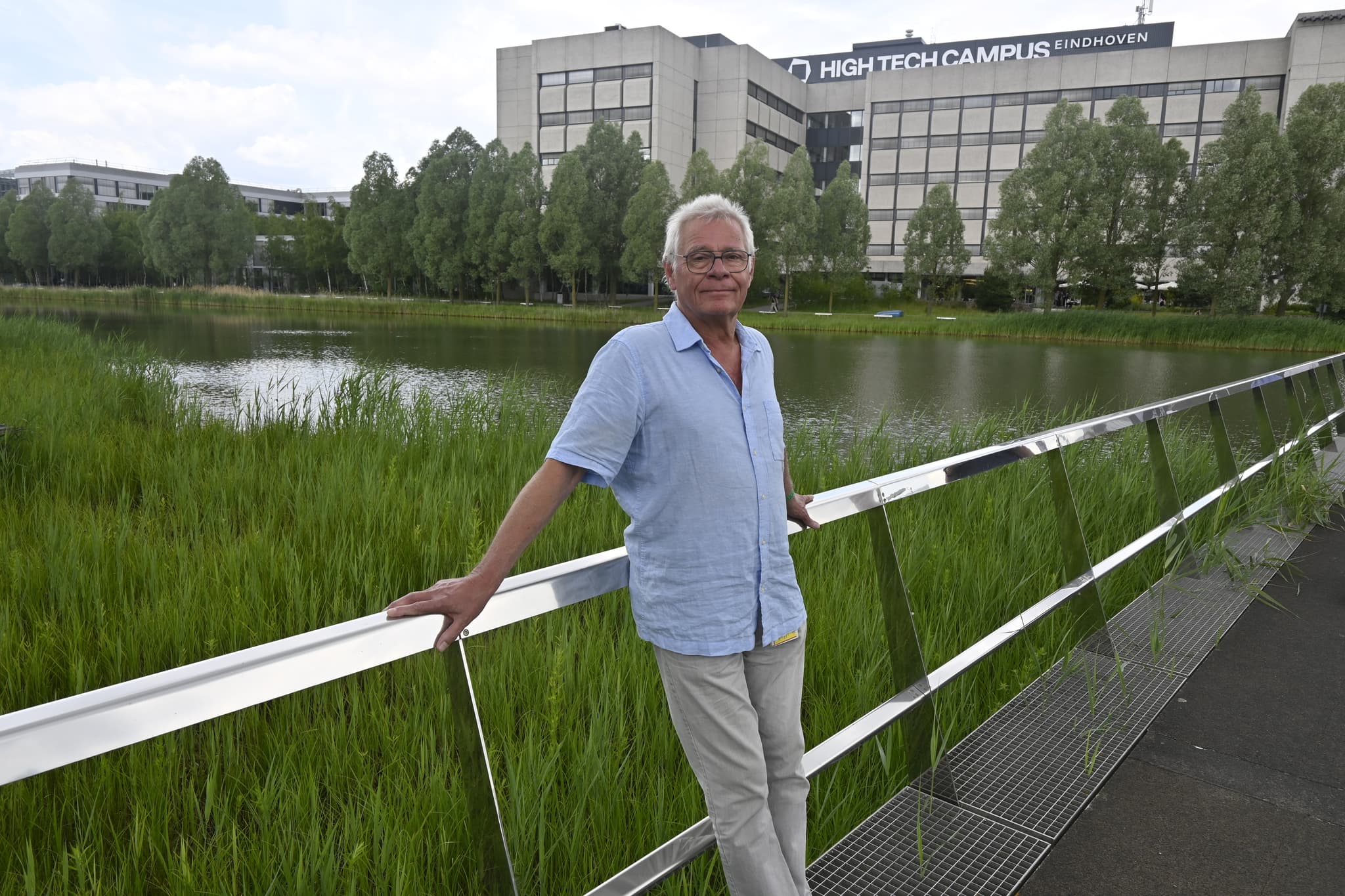
Rikus van de Klippe
A wind turbine like a kite
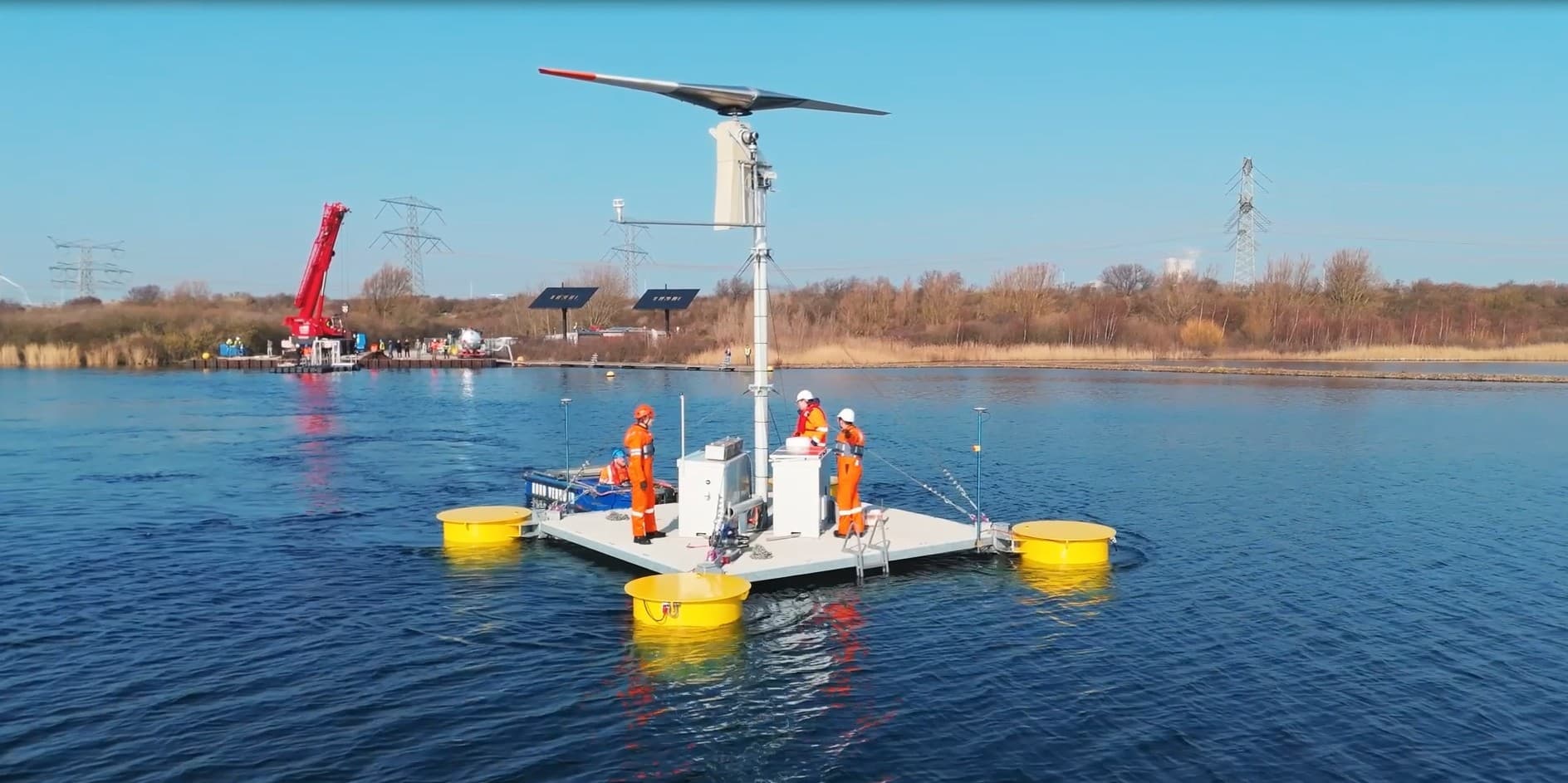
TouchWind is developing different kinds of floating wind turbines. The blades of the wind turbine are not perpendicular to the wind but angled, just like a kite. That is more efficient. The startup is currently conducting several pilot projects to test the technology. “We have a Japanese investor. In Japan, they are looking for incredibly strong wind turbines, because they have to deal with typhoons.” The blades of TouchWind’s wind turbines can shift to a horizontal position during a severe storm. “Then it resembles a helicopter, and the wind can easily blow around it without causing major damage,” explains Van de Klippe.
Thanks to this technology, combined with their floating design, the wind turbines are larger and more powerful than their onshore counterparts. “We’re currently working on a relatively small model with a diameter of 120 meters. Those are the largest onshore models, but at sea we can also look at a diameter of 200 meters,” says the entrepreneur.
Protecting the product with patents
Securing intellectual property (IP), for instance, through patents, is an important step in a startup's development. “You need it to attract investors. No investor will get on board if you haven’t protected the product,” he states. TouchWind’s Japanese investor, Mitsui O.S.K. Lines, thoroughly examined the patent and then used that information to build a model of its own. “That shows how important IP is to them.”
Trust
Patents instill trust not only in investors but also in employees. Van de Klippe says, “Ultimately, as an entrepreneur, you’re going to build a team. I’ve noticed that people often ask for proof that the new technology is being implemented. But you don’t have that proof yet in the beginning. People basically have to trust me on my word. Then we’ll continue developing together and see if we can turn the plans into reality.” That requires something extra from startup employees. “They have to be open to this process and also enjoy being a part of it.”
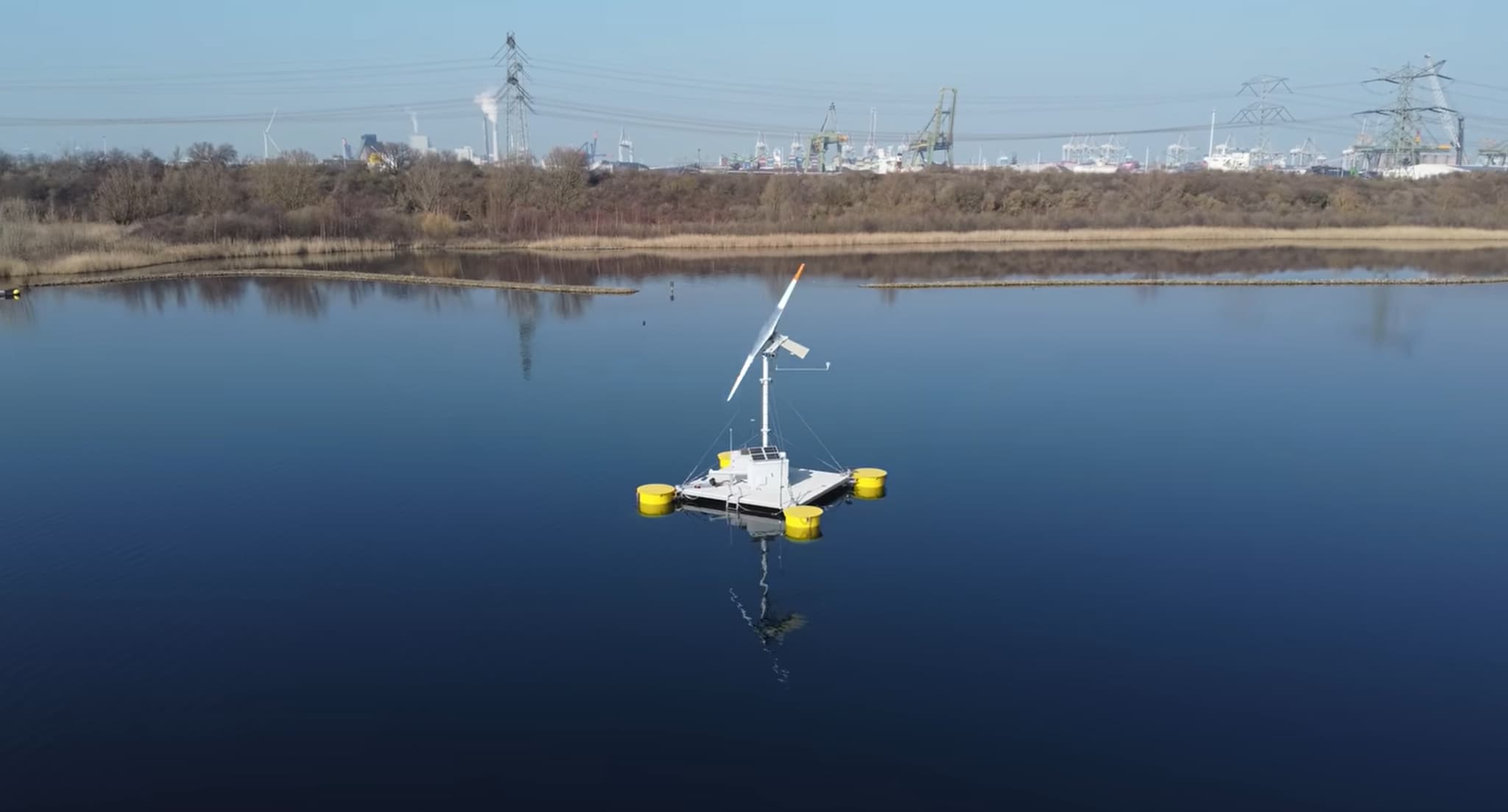
© TouchWind
Patents as a tool
Van de Klippe says he’s now well-versed in “the game of patents.” “Many inventors see a patent as an end in itself. But for me, it isn’t. I see it as a tool to ultimately continue building a product and a company.” The patent offers a certain degree of protection for the technology and the product, but it also has a downside, the entrepreneur notes. “When you file a patent, you’re also telling everyone how the technology works. All documents are made public. If, at some point in the process, you can no longer pay the fees, the patent expires, and the technology becomes the property of the whole world.”
Strategy and fortune-telling
That is why, according to Van de Klippe, it is also relevant to consider what information you choose to include in a patent and at what point. “Anything you include in the patent cannot be patented independently at a later date. Information from a patent becomes public, and then you cannot apply for a new patent for it because it is no longer novel,” he explains.
During the patent process, startups also explore where international growth opportunities lie. “You really have to think a few steps ahead for that. Because international developments and relations between countries play a major role. It remains very challenging for a relatively small startup to be dealing with all of that,” Van de Klippe notes. “Of course, it’s important to come up with a good strategy for this, but it’s also a bit like reading tea leaves.”
Perseverance
Ultimately, the development of the technology, securing patents, and finding the right financing all proceed in parallel. “There’s no clear-cut order to follow. That makes it difficult at times, because you don’t know in advance what the right move is,” says Van de Klippe. Making mistakes is part of the process. “As an inventor and entrepreneur, it’s important to stand behind your product, even when things get tough.”
Wind turbines on a ship
Sometimes, perspectives one did not previously consider may emerge, Van de Klippe notes. “We are currently in talks with a Dutch company that wants to use these wind turbines for Wind-Assisted Ship Propulsion (WASP).” The wind turbine would be mounted on a ship, and the rotor's thrust would propel it, reducing fuel consumption. “We hadn’t considered that as a possibility before. That’s exactly what’s so exciting about building a startup,” he says.
Trade secrets
In addition to patents, TouchWind is also developing a strategy regarding employee confidentiality. “That’s quite complicated. On the one hand, as a startup, you eventually reach a point where you need to create different layers within the team, with some team members handling confidential information and others not. Such matters must therefore be laid out in contracts,” he explains. But simply signing certain contracts isn’t enough, according to the entrepreneur. “It also needs to be safeguarded internally.”
Moreover, the CEO wants to ensure open communication among team members. “You shouldn’t completely shut yourself off either. Everyone needs to understand the company's philosophy and the technology. Otherwise, you can’t brainstorm.”
Ultimately, Van de Klippe has one dream: to develop new technology to realize his vision for wind energy. He concludes: “Patents are not an end in themselves, but a means to better innovations.”
Sponsored
This story is the result of a collaboration between Octrooicentrum Nederland and our editorial team. IO+ is an independent journalism platform that carefully chooses its partners and only cooperates with companies and institutions that share our mission: spreading the story of innovation. This way we can offer our readers valuable stories that are created according to journalistic guidelines.
Want to know more about how IO+ works with other companies? Click here