
TomTom partners with DeepRoute.ai on self-driving cars
Dutch navigation technology company TomTom and Chinese AI company DeepRoute.ai are joining forces to advance AI-powered automated driving.
Published on October 13, 2026
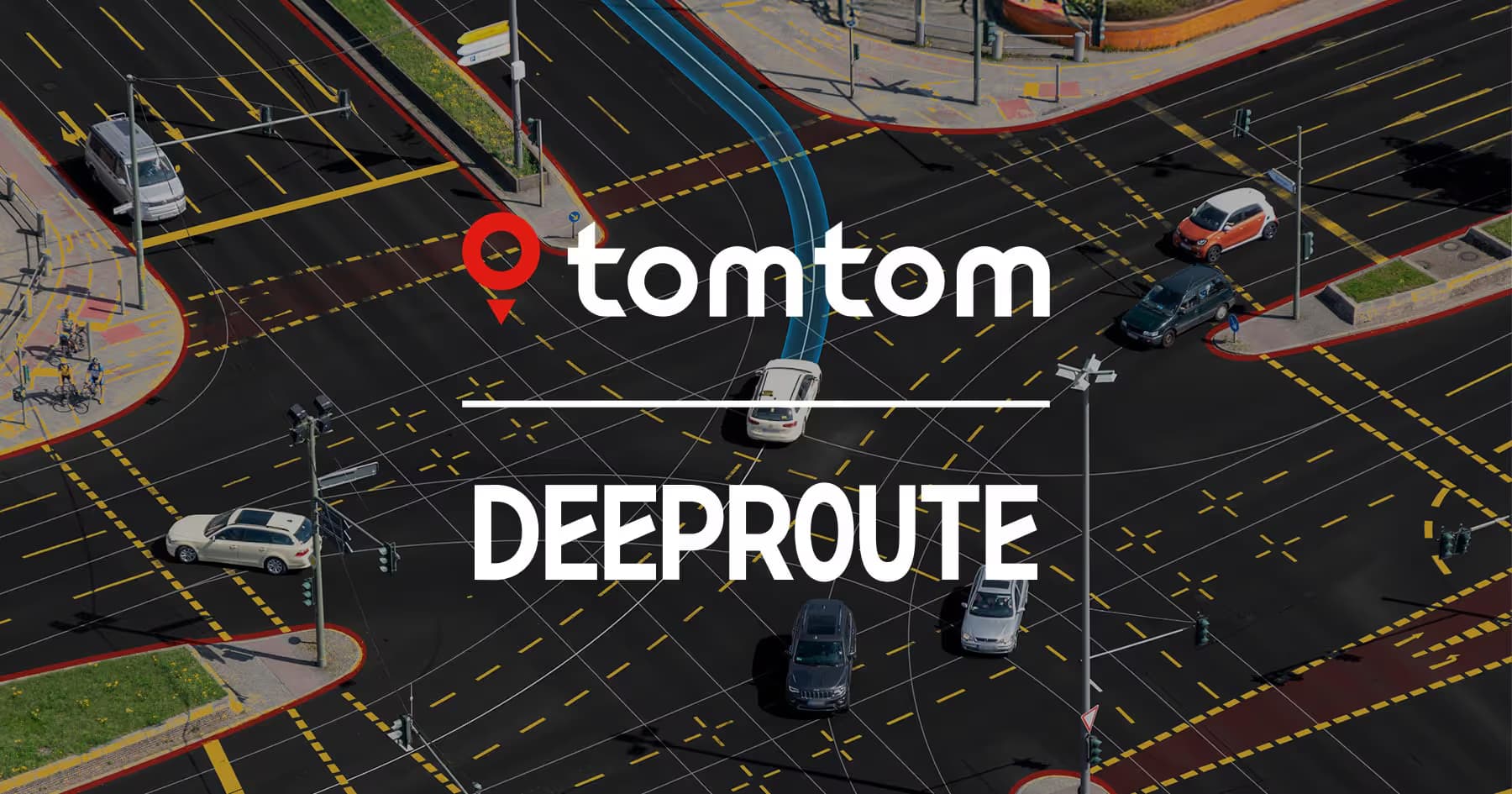
Dutch navigation technology company TomTom and Chinese AI company DeepRoute.ai have signed a collaboration agreement to develop AI-powered automated driving technology. The technology developed by both companies has already been integrated into a demonstration vehicle, which will be showcased on public roads in the French capital during the Paris Motor Show this week.
“By combining our advanced AI driving stack with TomTom’s rich location intelligence, we can better help automakers navigate complex and unfamiliar regulatory and physical environments abroad, bringing safe and scalable automated driving to drivers worldwide faster”, says Xuan Liu, partner at DeepRoute.ai.
Scaling up automated driving
For DeepRoute.ai, the collaboration is part of its international growth ambitions. The company develops AI technology for automated driving. According to the company, 500,000 vehicles across more than ten popular car models are now equipped with its Urban Assisted Driving solution.
TomTom provides maps, route planning and real-time traffic information to automakers and developers, among others. By combining this expertise with DeepRoute.ai’s AI technology, the companies aim to make automated driving more scalable across different markets.
Map data provides context for AI
According to the companies, reliable location information is becoming increasingly important as automated driving systems grow more advanced. Sensors provide information about the vehicle’s immediate surroundings, while map data adds further context. Combining the two should help the system make more accurate decisions, including on unfamiliar roads.
The technology is designed for advanced driving features at Levels L2+ and L2++. The L-level indicates a vehicle’s degree of automation: the more driving tasks a car can perform independently, the higher its level. With these systems, the vehicle takes over certain driving tasks, but the driver remains responsible and must be ready to intervene when necessary.
One of the key challenges is deploying automated driving technology across different countries. Road networks, traffic regulations and driving behaviour vary by region. TomTom’s location data is intended to help adapt the technology to local conditions and simplify its deployment in new markets.
During the Paris Motor Show, taking place this week, media representatives and customers will be able to test-drive the demonstration vehicle. The demonstration aims to show how location data and AI can work together to support automated driving on public roads.