
TNO develops adaptive secondary mirror for Keck Observatory
With TNO's new mirror, the images captured in the future will rival those of the Hubble and James Webb space telescopes.
Published on December 14, 2025

Team IO+ selects and features the most important news stories on innovation and technology, carefully curated by our editors.
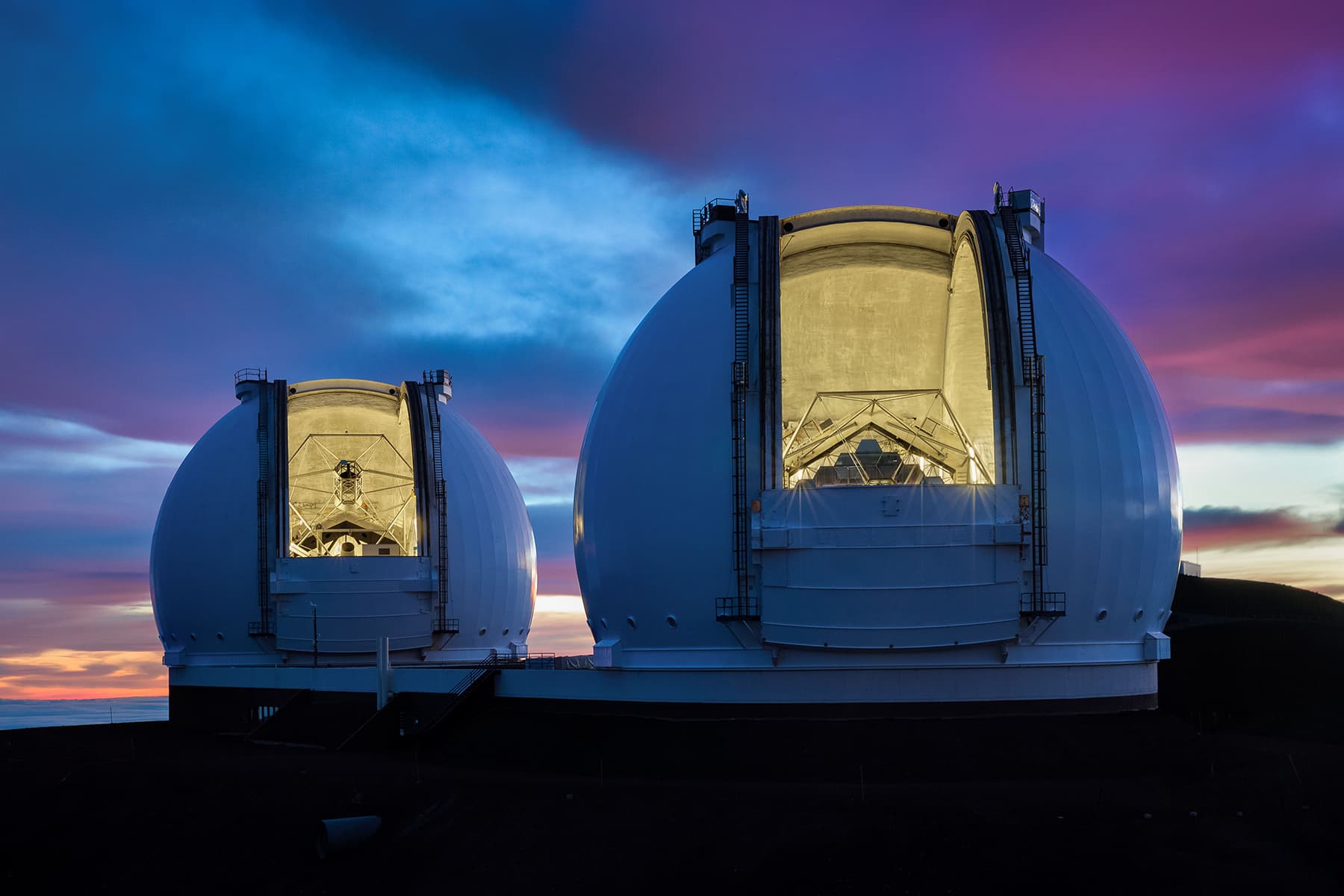
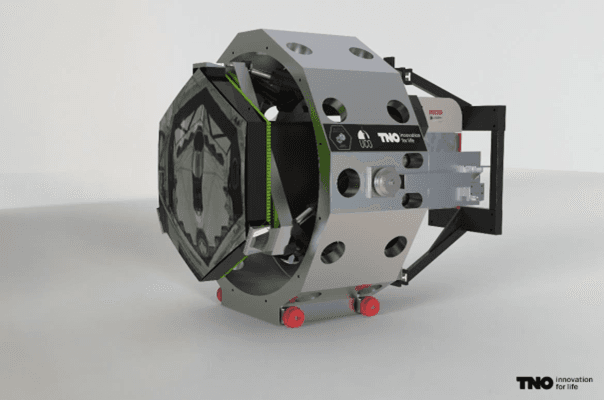
TNO is starting the design of Keck's Adaptive Secondary Mirror (ASM). The mirror uses TNO's patented Hybrid Variable Reluctance (HVR) technology. This significantly improves the observatory's visibility, which is located at 4,145 meters above sea level. The project is a collaboration with the Keck community, including the Keck Observatory, the University of California, Caltech, NASA, and the University of Hawaii.
The telescopes at the W. M. Keck Observatory are among the most scientifically productive in the world. The observatory is a non-profit organization and a scientific partnership between Caltech, the University of California, and NASA, made possible by the support of the W. M. Keck Foundation.
For more than 30 years, astronomers have used the Keck telescopes to advance our understanding of the universe, making groundbreaking discoveries about our solar system, exoplanets, supermassive black holes, and more. The two 10-meter optical and infrared telescopes are equipped with a range of advanced instruments such as imagers, multi-object spectrographs, high-resolution spectrographs, integral-field spectrographs, and adaptive optics systems with laser-guided stars.
© TNO
Better images, more details
With TNO's new adaptive secondary mirror, future images will rival those from the Hubble and James Webb space telescopes. By correcting atmospheric disturbances, the ASM enables sharper and more sensitive observations, especially in infrared and, later, also in visible light. This enables detailed studies of distant galaxies, black holes, exoplanet atmospheres, and our own solar system. It also increases the observatory's efficiency by reducing the time spent waiting for optimal conditions.
“Adding TNO's adaptive secondary mirror to Keck Observatory greatly enhances the science we can do at Maunakea with our current and future Keck I instruments,” says Antonin Bouchez, Head of Adaptive Optics Development at Keck Observatory. “Thanks to the collaboration with TNO, this mirror will play a key role in Keck Observatory's continued contribution to our understanding of the universe for decades to come.”