
TNO: All value starts with the ability to innovate
Lotte de Groen (TNO Vector): “Our ability to generate prosperity depends on how quickly we innovate. That’s where we’re falling short now.”
Published on November 26, 2026

Team IO+ selects and features the most important news stories on innovation and technology, carefully curated by our editors.
By Lotte de Groen *)
The same reflex keeps surfacing in political and economic debates. The Netherlands must first earn more to keep paying the rising costs of maintaining our standard of living. That sounds logical, but it overlooks the real bottleneck. Take healthcare. The Dutch Ministry of Health, Welfare and Sport projects a shortfall of 227,000 workers in health and social care by 2035. A bigger budget can only do so much when there simply aren’t enough people. You can set aside money tomorrow to hire a nurse, but that alone won’t put a nurse at the bedside. The same goes for a business that secures growth capital for a new production line when the electricity grid has no capacity to connect it.
What we’re really short of is the capacity to innovate. That means how quickly the Netherlands can develop a technological solution, put it to work in everyday practice and scale it up nationwide. When we struggle to do that, we lose far more than economic growth. Healthcare becomes harder to access, businesses struggle to become more sustainable, and we lose the freedom to shape our public services ourselves. That decline rarely comes in one big blow. First, a patient waits a few extra weeks for care. Then a business postpones an expansion. Each decision makes sense on its own, but together they create a society that intervenes only when systems break down.
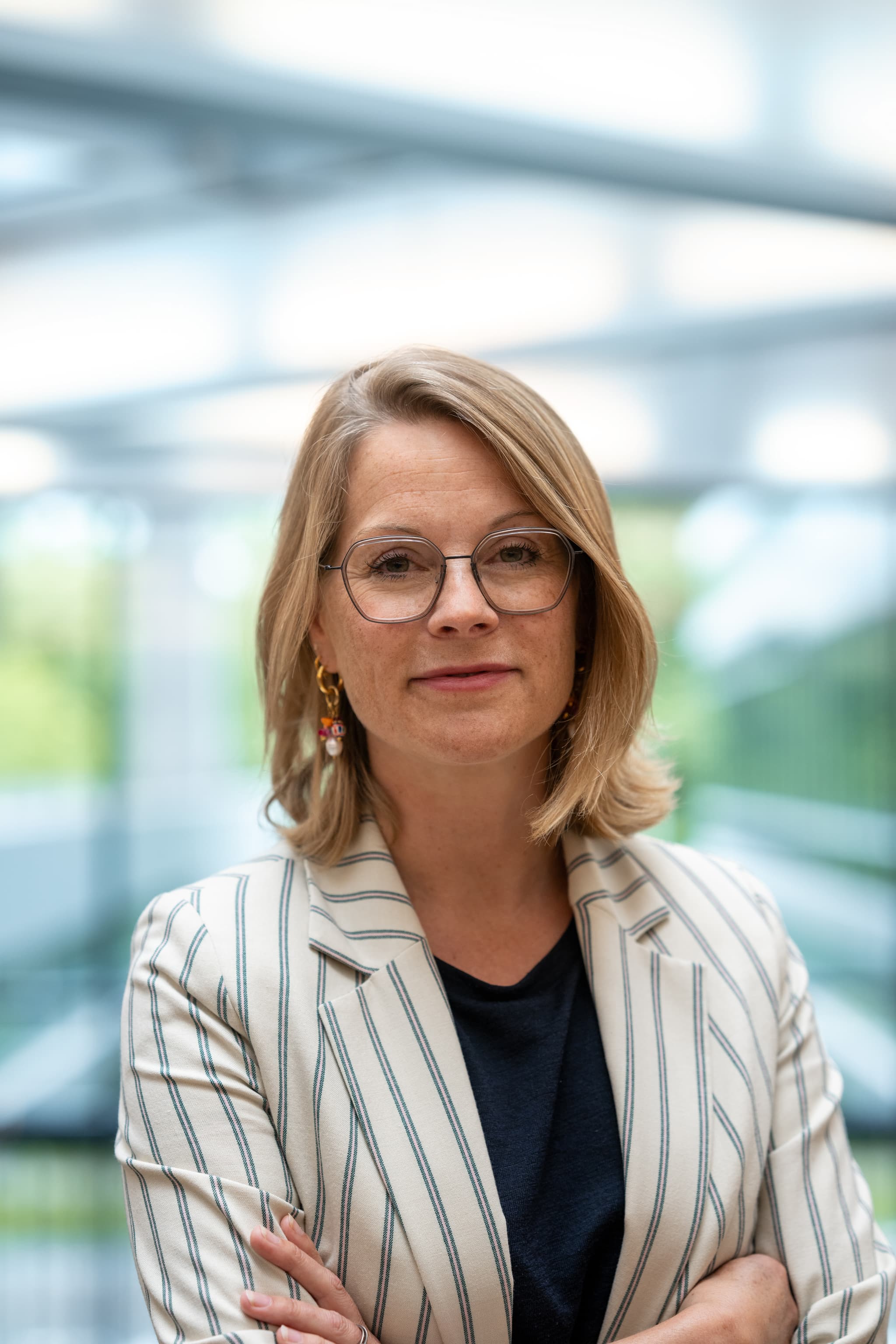
Lotte de Groen
From one-off pilot to nationwide rollout
The Netherlands has plenty of technological ingenuity and already has much of the technology it needs. We’re world champions at running pilots, but we fall behind when it’s time to put proven technology into safe, widespread daily use. Too often, engineers build a solution first. Only after a successful pilot do we work out how it fits into existing workflows, who will pay for implementation and who decides whether to roll it out nationwide. Leaving those questions until after the pilot makes the delay costly while the underlying problem keeps growing.
Moving faster means bringing technology, day-to-day work and the rules that govern it together while the design can still change. A nurse can help decide from the start which alerts a remote patient monitoring app should send, so the app actually frees up time instead of adding to screen time. A grid operator can explain which energy arrangements the local grid can support before a company makes its investment decision.
From solving problems at home to driving exports
That requires decision-makers, research institutions and businesses to break with established routines. Major innovation projects should start only when the people responsible for regulation and funding can help shape the design alongside developers and users from day one. Alongside testing whether new applications work technically, we should ask whether they free up scarce capacity. A healthcare innovation earns its place when it demonstrably helps people live independently for longer, or when it reduces the total time care providers spend on checks so they can give more attention to patients who need it most.
When everyone understands one another’s needs and capabilities from the start, the economic benefits can come sooner too. A successful pilot in Enschede can quickly be put to use in Groningen or Rotterdam. Once a solution proves useful in those places and works at scale, that collaboration can accelerate R&D early on and give Dutch companies a solid basis to grow, invest and export. Our biggest economic opportunity lies in solving problems that other countries face too.
The claim that we need economic growth first to keep our welfare state affordable gets cause and effect backwards. A society that improves its public services faster and more effectively can reduce costs while building new industries. All value, social and economic, starts with the ability to innovate.
Investing in that ability pays off on every front.
* Lotte de Groen is market director at TNO Vector. She has worked at TNO for more than seventeen years at the intersection of innovation, market development and societal transitions. Her previous roles include coordinating the Orchestrating Innovation programme across TNO.