
Three regions account for half of Dutch economic growth
The A2 motorway is our lifeline: Greater Amsterdam, Brainport and Utrecht are the engines of the economy. What makes them so successful?
Published on September 18, 2026
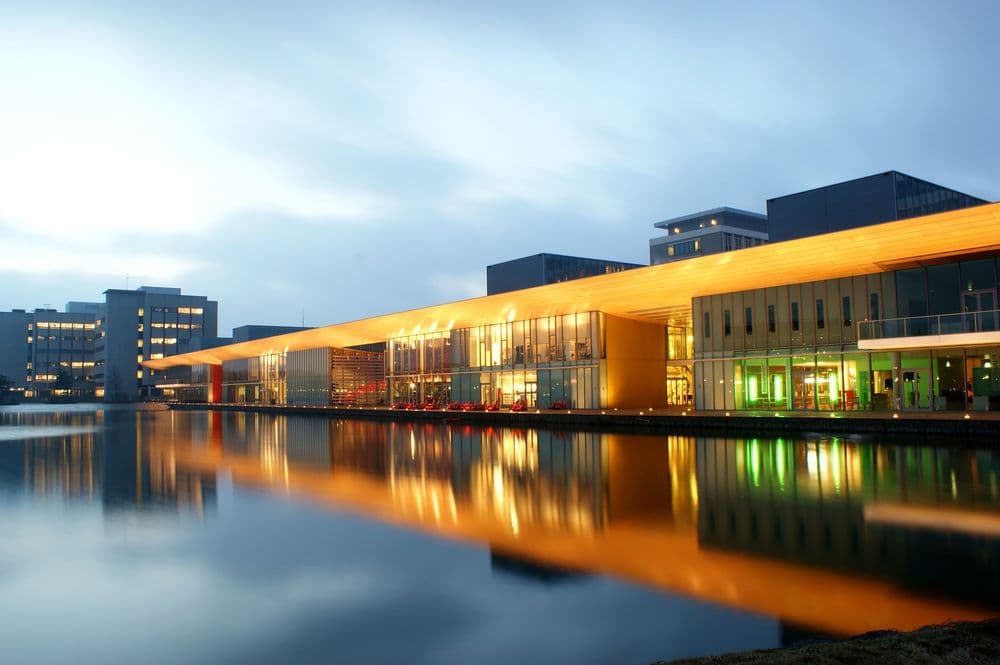
High Tech Campus Eindhoven

Team IO+ selects and features the most important news stories on innovation and technology, carefully curated by our editors.
The Dutch economy is set to grow by 1.3% in 2026, but that growth is anything but evenly distributed. Three regions – Greater Amsterdam, Southeast Brabant and Utrecht – account for 64% of national growth. This concentration is no coincidence: historical patterns, sectoral specialisation and a favourable business climate have turned them into economic powerhouses. But what does this mean for the rest of the country, and how long will this inequality persist?
Greater Amsterdam and Brainport as engines of growth
Greater Amsterdam is expected to grow by 3.1% in 2026, while Southeast Brabant – home to Brainport Eindhoven – will expand by 2.6%. Utrecht is also performing above the national average. Together, these three regions have accounted for more than half of the Netherlands’ economic growth over the past thirty years.
Greater Amsterdam owes its success primarily to business services, media and ICT, which together generate 60% of the region’s growth. Brainport Eindhoven is driven by industry, particularly high-tech manufacturing and semiconductor technology, which account for 60% of growth in Southeast Brabant. Utrecht has a more diversified economy, but is also growing faster than the national average. These findings come from a new RaboResearch analysis.
Strong sectors, weak sectors
Sectors such as ICT, media, business services, and high-tech industry are driving growth in these regions. Agriculture and construction, by contrast, are contracting, as are energy-intensive sectors due to high energy prices. Inland shipping is also struggling with low water levels, which are limiting transport capacity.
In 2025, the ICT sector grew by 3.5%, followed by business services at 3% and manufacturing, which recorded 2% in recovery growth. Agriculture contracted by 1.4%. These sectoral differences reinforce regional inequality: regions with a strong ICT or high-tech manufacturing base grow faster than those focused on agriculture or construction.
Business climate is the key to success
These regions' growth depends not only on their industry mix, but also on their business climate. Factors such as knowledge infrastructure, physical accessibility, the quality of the residential and living environment, and business hubs that facilitate knowledge exchange all play a crucial role.
Greater Amsterdam benefits from the international internet exchange AMS-IX and a strong specialisation in knowledge and technology. Brainport Eindhoven excels in high-tech manufacturing and hardware innovation, supported by its strong industrial focus and R&D investment. Utrecht combines a diversified economy with an attractive business climate.
The price of inequality
The concentration of growth in these three regions also has a downside. Regions such as East Groningen and IJmond are expected to contract in 2026, partly because of their dependence on energy-intensive industries and a less favourable business climate.
Productivity also varies considerably: Greater Amsterdam’s productivity is 80% higher than that of Southwest Friesland, the region with the lowest level. Barbara Baarsma of PwC warns that the gap between regions could widen in the coming years if lagging regions fail to invest quickly enough in innovation, green energy and new economic activity.
European benchmark: room for further growth
From a European perspective, Greater Amsterdam and Brainport Eindhoven rank among the leading regions, but they still trail peers such as Dublin, Paris, Munich and Copenhagen. The Rabobank report emphasises that both regions must invest more in R&D and capital goods to maintain their competitive position.
The Amsterdam–Eindhoven Tech Corridor is a strategic initiative designed to capitalise on the complementary strengths of digital technology, the creative industries and high-tech manufacturing. Launched in 2025, the initiative is intended to strengthen the Netherlands’ international competitiveness.