
This little-known metal could be the next ‘lithium boom’
The current scandium market is unstable and largely controlled by competitors. Scandium Canada aims to change that.
Published on May 1, 2026

Our DATA+ expert and Editor-in-Chief, Elcke Vels, explores AI, cyber security, and Dutch innovation. Her "What if..." column imagines bold scenarios beyond the norm.
In the shadow of the lithium rush, a new revolution is brewing. Scandium, a strong but light metal the average consumer has never heard of, is poised to become the backbone of the modern world. However, the current scandium market is unstable and largely controlled by geopolitical rivals such as Russia and China.
The company Scandium Canada is now positioning itself as a crucial Western supplier set to break this dependence on unreliable sources. “We expect our mine to produce about 90 tons of scandium oxide annually and last at least forty years,” says Guy Bourassa, CEO of Scandium Canada.
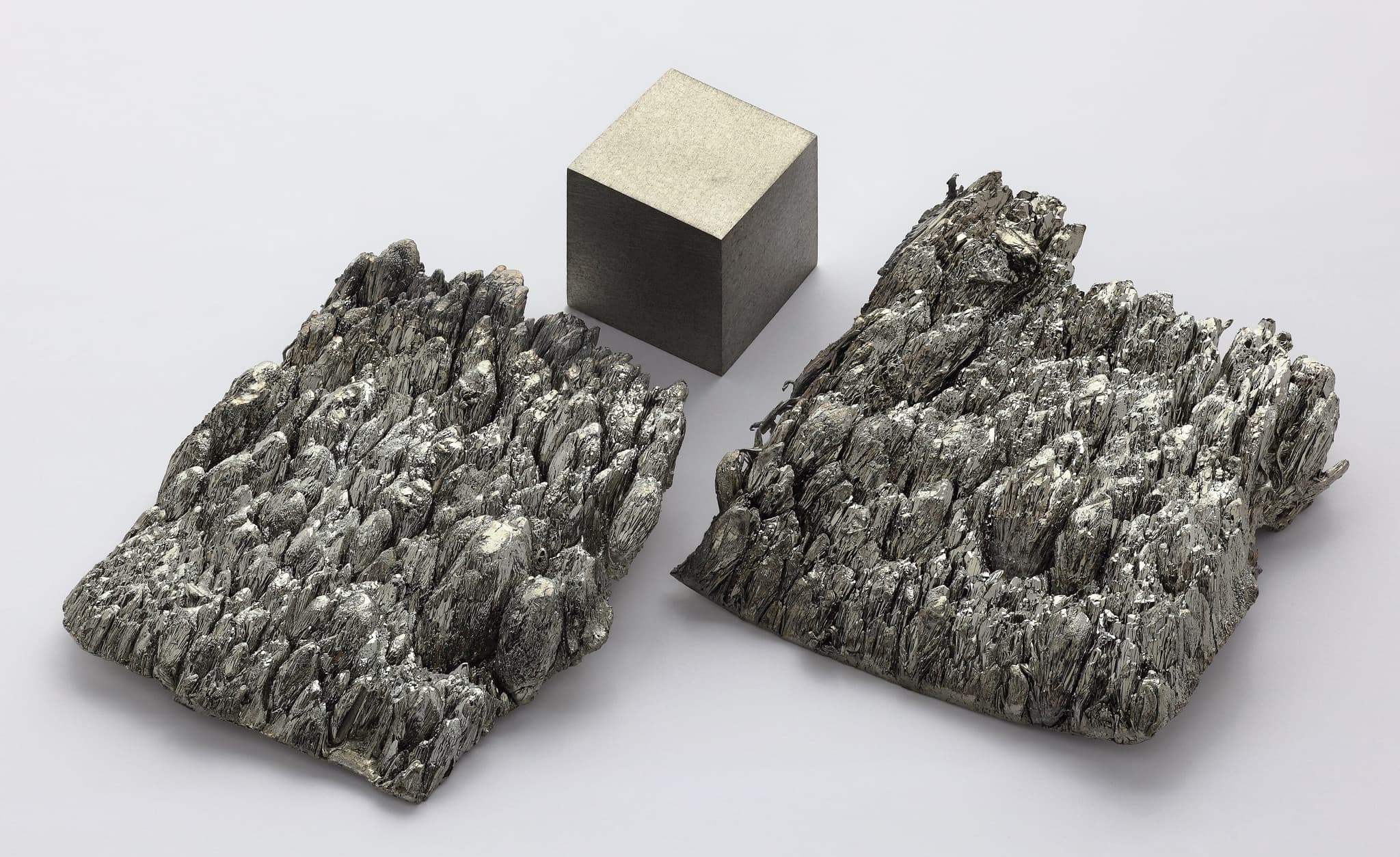
Beneath our feet lies a remarkable metal: scandium. It is a rare metal that almost never occurs in its pure form in nature and is usually hidden in ores of other metals. No one knows scandium, but that says little about how important it could soon become for our modern world. After all, decades ago, no one knew lithium either. Now it is a key ingredient in batteries for smartphones, laptops, and electric cars.
Bourassa was at the forefront of the lithium industry some 25 years ago. He was the founder and CEO of Nemaska Lithium Inc. from 2008 to 2020. “Back then, no one knew what it was or what it was used for—except that it might be in medicines. Two years later, suddenly everyone was talking about it. We’re going to see the same thing happen with scandium,” he predicts.
Extremely strong, yet as light as a feather
He has good reason for this. When a fraction of this metal is added to aluminum, it creates an alloy that is lighter than steel but offers comparable strength. These alloys are not only corrosion-resistant but also maintain their integrity under high temperatures. This makes them indispensable for, among other things, the next generation of aircraft engines and fuselages. European aviation giant Airbus has already certified specific scandium alloys for use in its aircraft. Due to its lightweight properties, the metal is also used in consumer products such as baseball bats.
Russia and China dominate the market
The problem, however, is the scarcity of the metal. The current market is dominated by Russia and China. Moreover, scandium is currently extracted almost exclusively as a byproduct of other mining processes, such as the extraction of nickel in laterite and titanium. This leads to an unreliable supply and rising prices. “If you want to build the next generation of aircraft, you don’t want your supply chain to depend on another raw material over which you have no control,” said Bourassa.
A reliable, Western source
A stable, primary, and reliable source is needed for large-scale industrial deployment. Scandium Canada aims to fill that gap with its Crater Lake project in Quebec. The company is currently well-funded following a recent capital injection of $17.25 million. The Canadian government is also actively supporting the project with subsidies. “We have received a $7 million grant from the federal government to support the testing phase.”
“We are a unique, primary source of scandium from hard rock—essentially a true scandium mine. Other projects often extract it as a byproduct, whereas with us, scandium plays the leading role,” explains Bourassa.
Scandium Canada’s project is located in a remote area of Quebec, over 300 kilometers from the nearest city. To minimize its ecological footprint, the company is exploring options to reduce reliance on diesel generators, including renewable energy sources such as wind and solar.
By joining forces with Canada, a stable democratic partner, Europe can maintain its technological edge without being vulnerable to geopolitical blackmail. In the coming years, Scandium Canada aims to further strengthen its ties with Europe, says the CEO. “Europe has a large aerospace industry. We already have good relationships with major companies in that sector. The US is an important market, but Europe is also very promising for the future.”
More than a mine
Scandium Canada does not limit itself to simply digging ore out of the ground. The company has its own division, Scandium+, which focuses on the development of high-quality alloys for modern manufacturing techniques. They have recently filed patents for new aluminum-scandium alloys specifically designed for 3D printing.
A well-known problem with 3D printing aluminum is the formation of micro-cracks during the solidification process. The addition of scandium solves this by refining the metal’s crystal structure, enabling the production of more complex and lighter parts than is possible with traditional casting methods. This innovation accelerates the company’s commercial viability. Scandium Canada expects to bring the first welding wires and metal powders for the industry to market within twelve months.
90 tons of scandium oxide
The project is now entering the next phase, which will assess whether the mine is technically and economically viable. Bourassa is hopeful. “We expect our mine to produce about 90 tons of scandium oxide annually and to last at least forty years.”