
Bart, co-founder of Media52 and Professor of Journalism oversees IO+, events, and Laio. A journalist at heart, he keeps writing as many stories as possible.
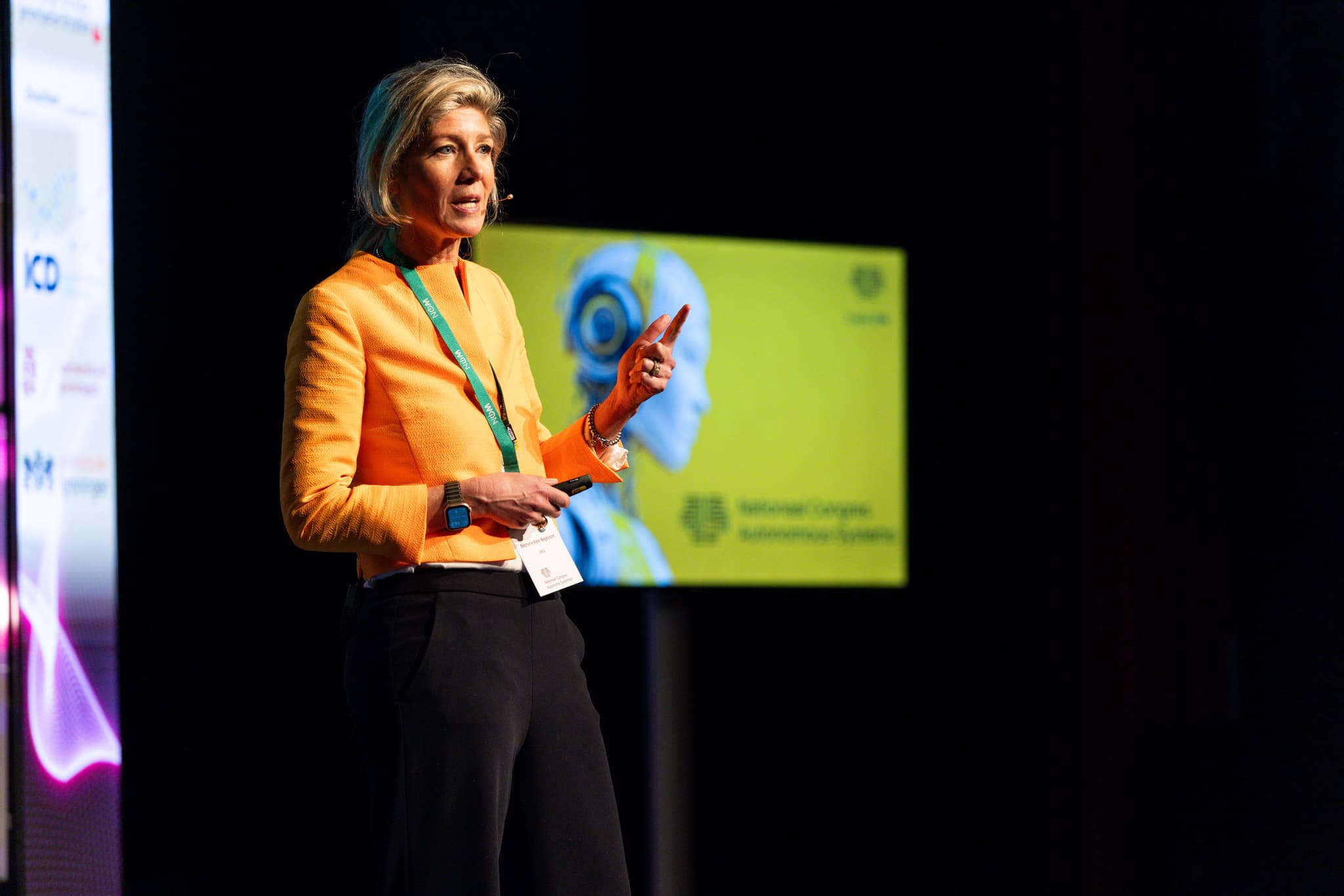
At the Nationaal Congres Autonomous Systems (NCAS’26) in Drachten, the presentation by Stephanie Klein Nagelvoort, a physician, scientist, and member of the Board of Directors at the University Medical Center Groningen (UMCG), delivered a sobering wake-up call. While the Dutch medical system consistently ranks among the best in the world, Klein Nagelvoort described a sector that feels like it is on the Titanic, with executives listening to the music while the ship goes down.
To stay afloat, UMCG is aggressively turning toward autonomous systems and artificial intelligence.
The three numbers defining the crisis
The urgency of the healthcare crisis can be summarized by three alarming figures presented by Klein Nagelvoort:
- 20%: The projected percentage of the Dutch gross national product that healthcare will consume in the coming years if current trends continue, a cost the country simply cannot afford.
- 1 in 4: The ratio of the Dutch workforce that will soon be needed in healthcare. In 1968, it was 1 in 12; today it is 1 in 6, but a shrinking labor pool means the Netherlands must find 100,000 new healthcare workers in just the next three years.
- 15 Years: The difference in healthy life expectancy between higher and lower socioeconomic groups, representing a severe decline in societal solidarity.
Compounding this is the fact that people are developing chronic illnesses earlier in life: at age 46 for women and 42 for men. "We absolutely need to create autonomous systems to be able to replace the doctors and nurses we don't have in the next 20 years," Klein Nagelvoort warned.
Saving PT and boosting PSS
UMCG's strategy is fundamentally rooted in two core acronyms: Saving Professional Time (PT) and increasing Patient Self-Service (PSS).
To achieve this, UMCG has partnered with Epic, the world's largest electronic patient record company. Together, they are integrating AI directly into the medical workflow. For example, the hospital receives about 8,000 patient messages a month. Using large language models, AI now creates automatic draft answers to these questions and instantly summarizes extensive patient medical records. Research shows it traditionally takes a doctor seven minutes to summarize a complex medical record; AI can now do it in just 16 seconds. This drastically reduces "PJ time", the hours doctors spend behind their computers at home in the evening.
UMCG is also exploring "ambient notes," where computers are removed from the consultation room and replaced with ambient listening devices that automatically generate medical charts from the doctor-patient conversation.
Overcoming the rotten tomatoes and certification walls
The transition is not without intense friction. When Klein Nagelvoort first proposed that more than half of the traditional 10-step medical consultation process could be replaced by autonomous systems, she feared professionals would "throw rotten tomatoes" at her. There is a deep-seated distrust among medical professionals toward systems they cannot fully understand or control themselves.
Beyond cultural resistance, technology providers face the "certification wall": strict Medical Device Regulations that require all systems to be flawlessly validated and reproducible. Furthermore, hospitals struggle with an "integration maze," as new autonomous systems must somehow connect with dozens of legacy IT systems already in place.
To guide staff across this innovation chasm, UMCG has established an AI Acceleration Lab and an AI Compliance Agency. These centers help frontrunners deploy new tools while providing "trustworthy, easy-to-access AI" to help the skeptical majority adapt.
A call to action for the tech industry
The Northern Netherlands is uniquely positioned to lead this transformation. The region is home to the world's largest population cohort and biobank, containing data from 167,000 participants over 20 years, providing the ultimate raw material for healthcare AI. Additionally, the new Dutch National AI Factory, located in the region, combines an AI expertise center with the massive computing power necessary to build future solutions.
However, UMCG cannot do it alone. Klein Nagelvoort concluded her presentation at NCAS’26 with a direct plea to the technology companies and engineers in the room. "We need you to help us solve the boring problems," she stated. Only by collaborating to fix the tedious, underlying administrative and integration challenges can the healthcare sector unlock the exciting autonomous solutions needed to save the system.