
The startup making landfills smarter and greener
Hydryx is developing a smart system to address landfills methane outfputs, enhancing energy production and slashing emissions.
Published on January 5, 2026
© Hydryx
Mauro swapped Sardinia for Eindhoven and has been an IO+ editor for 3 years. As a GREEN+ expert, he covers the energy transition with data-driven stories.
Methane is both a potent driver of climate change and a valuable fuel. According to the International Energy Agency (IEA), methane is responsible for 30% of the rise in global temperatures since the Industrial Revolution. Methane emissions come from both natural and human-influenced sources. Wetlands are behind most of nature’s methane emissions. Agriculture, fossil fuel extraction, and landfills are the main drivers of anthropogenic methane.
“Landfills represent 20% of human-derived methane emissions,” explains Joren Tangelder, cofounder of Hydryx. “With methane being a large climate change driver, addressing landfills is putting a significant dent in global greenhouse gas emissions.”
.png&w=2048&q=75)
Hydryx tackles methane emissions through its landfill management system, thereby enhancing gas-trapping capabilities and, accordingly, biogas production. Some landfills do so with a combined heat and power plant that uses the gas to generate heat or electricity. Others remove CO2 from the gas stream, producing methane that can be pumped into the gas grid. Hydryx optimizes yields through real-time sensing.
How Hydryx addresses methane emissions
Biogas is produced through anaerobic digestion, a process that, by concentrating organic matter in an oxygen-free environment, allows trash to decompose. The end result is biogas, a mixture of methane and CO2. Since 1999, a European Union directive has mandated that landfills have a gas extraction system. In short, this is a network of pipes across the site, connected to a blower that extracts the leaking gas. Then, as per European law, methane has to be destroyed—in other words, flared—emitting carbon dioxide.
However, methane concentrations can vary significantly across the different points. Each pipe has to be checked, with the opening and closing valves adjusted accordingly. Being a connected system of pipes, opening or shutting one affects the overall biogas production. Managing all valves manually is inefficient; there can be hundreds on a large site.
Hydryx addresses this problem with a system that attaches to each pipe, featuring a sensor and a motor to open and close the valve. Data collected by the sensor is sent to the cloud, where algorithms continuously optimize the valve position for each well.
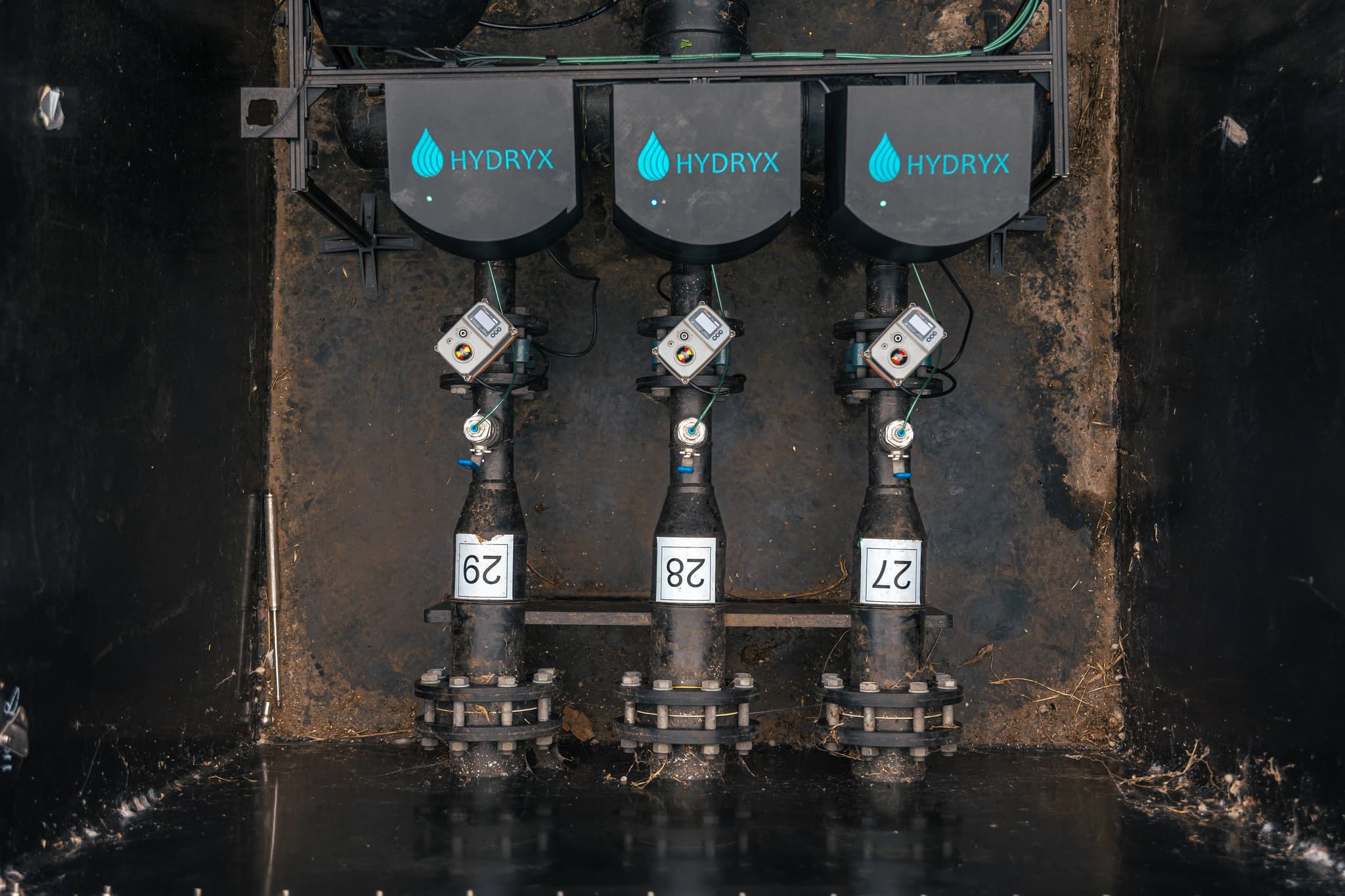
Hydryx's system operating on a landfill's pipes. - © Hydryx
Filling a technology gap
“Measuring continuously allows for efficient collection of methane as the landfill emits it. On the one hand, landfill managers ask operators to increase energy yield, while operators struggle to increase performance. Our technology exactly bridges this gap,” explains Tangelder.
Despite knowing little about landfill management at the beginning, Tangelder and his cofounder and high-school best friend, Anthonie Jacobson, saw the potential of their technology and began pitching it to landfill managers. “To avoid looking like novices on our first visits to landfills, we even bought second-hand boots,” recalls Tangelder, with a laugh.
Growing into an international company
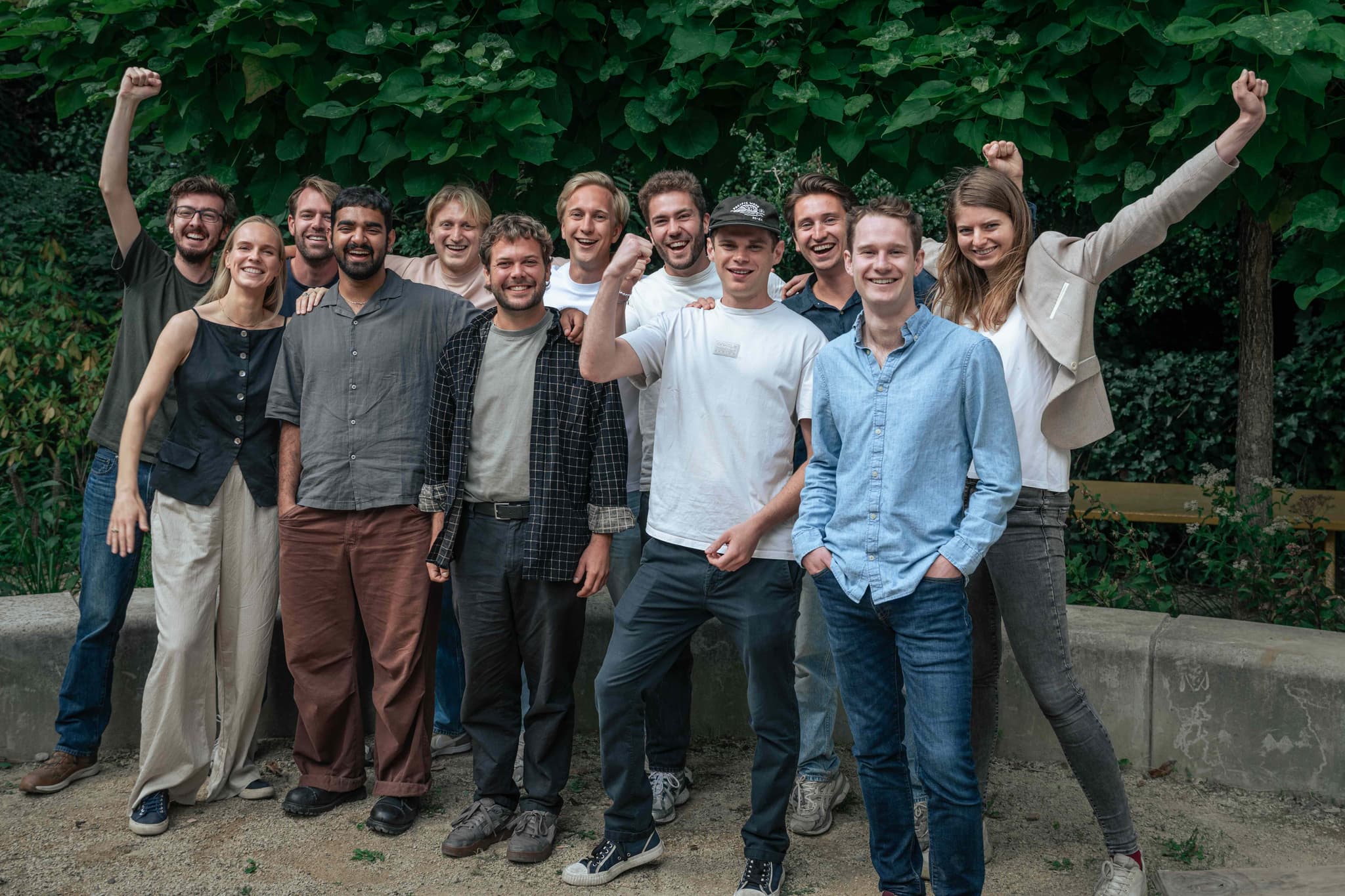
In October, the startup raised €2.5 million. The investment round was led by impact investor Marcel Smits and venture capital fund Graduate Entrepreneur, with a consortium of mission-driven entrepreneurial angel investors joining. The money will help the company hire – it plans to double from 12 to 24 employees — and expand the capabilities of its product.
Hydryx is starting to experiment with machine learning, and initial tests are yielding positive results. “The best business case needs the best software. Having a better forecasting capability can increase extraction and thus grow our customers’ revenue,” underlines the founder.
The Dutch market is “a good backyard to test,” as per Tangelder, who is looking at other geographies to scale the business. “The problem that we are solving exists, and is more severe elsewhere. Our key to success will be to keep our technology simple. We are, in a way, bringing proven technology to an industry that is lacking innovation,” he adds.
Hydryx plans to enact a subscription business model. It intends to ship hardware that landfill operators can easily install and to offer access to its software and support services.
‘Find a complementary cofounder’
The idea of launching his business had been brewing in the back of the founder's head for a while. He even compiled a short list of potential cofounders. Jacobson was among them. And while Tangelder initially tried to convince some of his friends to start a company over beers on Friday evening, eventually Jacobson found the right idea.
“He has a background as a consultant, so he knew how to pitch it. And while I was expecting to simply have a few beers with one of my best friends, he showed up at the bar with his laptop and some PowerPoint slides to strengthen his case,” Tangelder recalls.
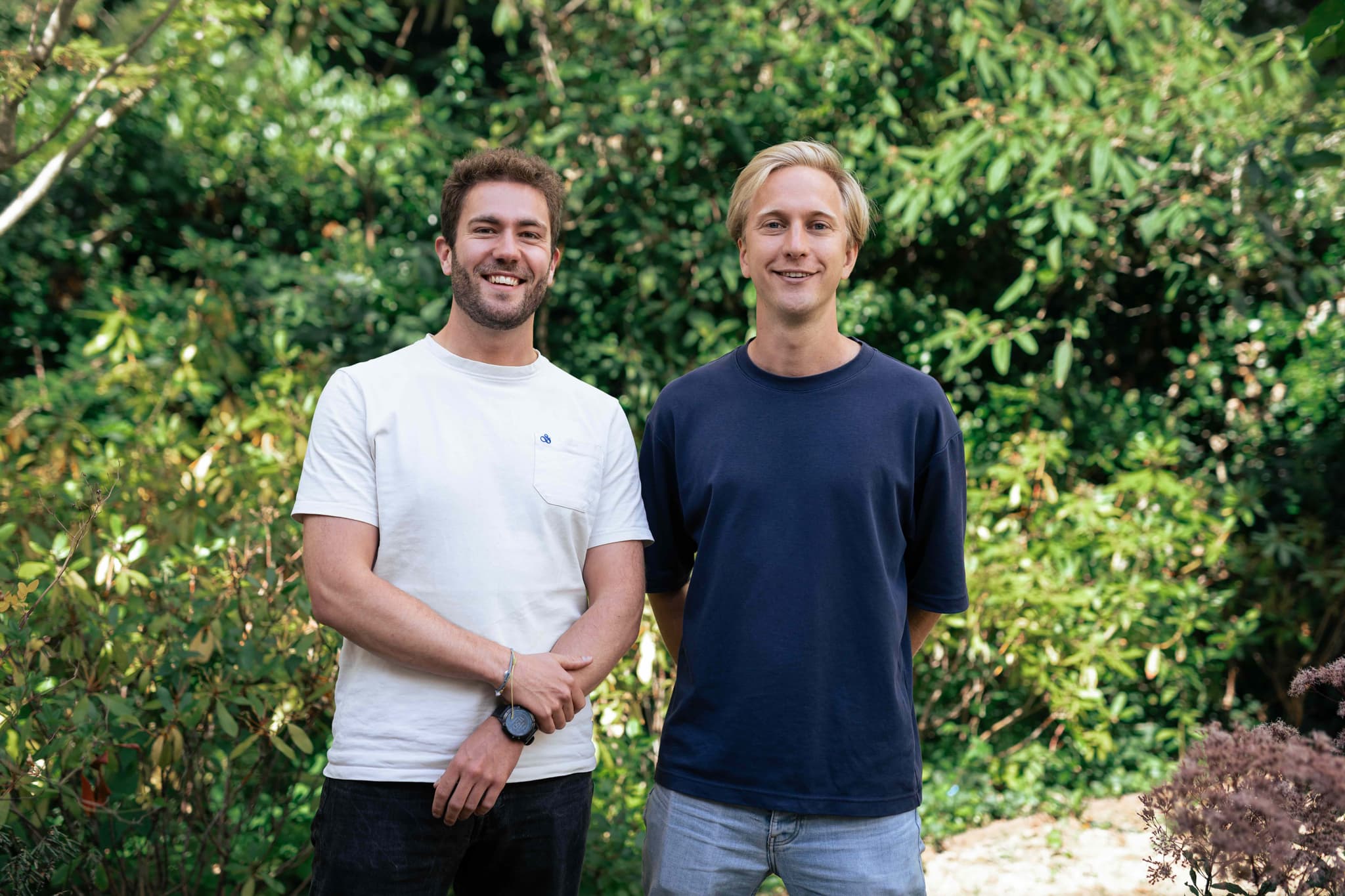
Hydryx founders. On the left is Anthoine Jacobson, on the right Joren Tangelder - © Hydryx
Putting a strong friendship on the line scared him at first, but Hydryx has worked out so far because the two cofounders complement each other. ”He loves doing all the tasks I hate. For an email request I don’t feel like answering, he has already drafted a response,” the founder says.
Having a complementary founder is key to Tangelder. “If not, you will be constantly in each other's lanes, and that creates continuous friction. Not making a decision is, to me, worse than making a bad one, because at least you are moving. So, sometimes it is better to let your business partner decide on the topics they are more knowledgeable about. Luckily, Anthoine and I fully agree on this,” he concludes.