
The Netherlands leader optics/photonics? ‘Counter fragmentation’
If the Netherlands wants to maintain its leading position in optics and photonics, we need to be careful: Asia is catching up fast.
Published on December 24, 2025
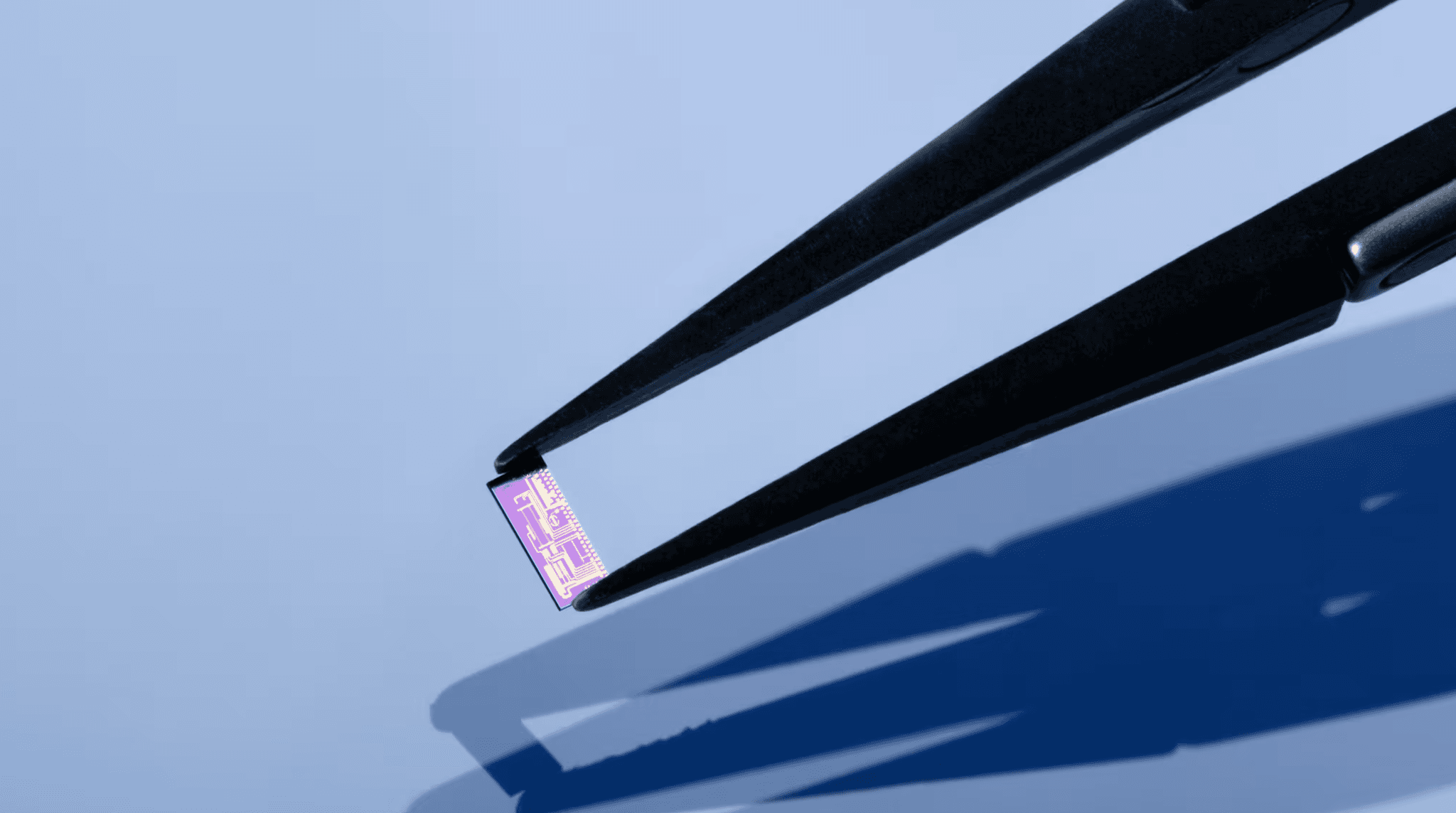
Source: TNO

Our DATA+ expert and Editor-in-Chief, Elcke Vels, explores AI, cyber security, and Dutch innovation. Her "What if..." column imagines bold scenarios beyond the norm.
From the microscopes of Antoni van Leeuwenhoek to the ultra-modern machines of ASML: optical and photonic technology are in the Dutch DNA. For centuries, the Netherlands has played a pioneering role in measuring and understanding the world. But if we want to maintain that leading position, we need to be careful. Just as in the field of solar panels and electric cars, “Asia is rapidly emerging in the production of optical components,” says Wilbert IJzerman, program council member at Holland High Tech in the innovation domain Optical Systems & Integrated Photonics. According to him, one of the solutions is to combat fragmentation within the country's borders.
The Netherlands' ambition to be a leader in optics and photonics is currently becoming visible in Eindhoven, where a pilot factory for the production of photonic chips is already being built. The Netherlands is receiving €133 million from Europe for the construction of these factories. The factory is intended to give the photonics industry in Eindhoven and beyond a boost to grow into a world-class player in the future. The factory will be ready for use in 2027.
It is not only the investment in this factory that shows that optics and photonics are important technologies for the Netherlands. This is also clearly visible at the policy level: the National Technology Strategy identifies optical systems and integrated photonics as one of the ten priority key technologies. These are technologies that all have a strong foundation in the Netherlands. They contribute to earning power and help solve social challenges.
“Integrated photonics generates several hundred million euros in revenue in the Netherlands. The optics sector even generates tens of billions,” says IJzerman.
“As if there is no air”
It is not without reason that the Netherlands is investing heavily in these technologies. IJzerman, who is not only a program council member but also an experienced scientist and industrial R&D leader at Signify, explains: “It's a broad field. Optics and photonics are everywhere. In the sector, we sometimes say: a world without photonics is like a world without air — you only realize how essential it is when it's no longer there.”
Today, the applications are everywhere. Optics and photonics are in our lighting and in the high-tech machines of ASML. They help farmers monitor crop growth, enable doctors to see better into the human body through imaging and endoscopy, and even play a role in defense — for example, in drones that map their surroundings with razor-sharp precision.
The future promises even more possibilities. Optics and photonics can make systems more energy-efficient: an important point that Europe wants to focus on in the coming years. The integration of photonic functions in chips contributes to lower energy consumption in technologies that normally consume a lot of power, such as AI. “With integrated photonics, we can perform operations more efficiently.”
New communication networks are also benefiting from new developments in optics and photonics: Li-Fi (light-based wireless communication) can enable super-fast internet connections, and satellite communication, for example, for measuring nitrogen in the air, is developing further thanks to optical technology. Among others, TNO is focusing on this.
Competition with Asia: more cooperation
The Netherlands is in a strong position, but it cannot afford to sit back and relax. Especially now that Asia is rapidly emerging as a major producer of optical components, caution is called for. As with solar panels and electric cars, Southeast Asia is currently investing heavily in removing trade barriers, improving the business climate, and stimulating the digital economy. China's high-tech manufacturing sector, including the optical communications industry, is benefiting particularly from this.
Cooperation within national borders is essential to compete, says IJzerman. Holland High Tech, among others, plays a crucial role in the Dutch optics ecosystem by bringing together knowledge institutions, governments, and companies. Optical systems and integrated photonics is one of the innovation domains within the top sector. “This puts it firmly on the map,” says IJzerman.
Holland High Tech also supports PhotonicsNL: the Dutch association for photonics and optics companies. Strategic programs, such as Photonics and Optical Technologies 2024–2027, stimulate innovation and economic growth. This program focuses on societal challenges such as sustainable energy, precision agriculture, resilient production, defense, and Earth observation. “Public-private partnerships connect research institutions, SMEs, and multinationals, share knowledge, and accelerate technology development.”
Efforts are also being combined in the field of education. According to IJzerman, one example is the MasterPlus Optics & Photonics program. The program was set up by PhotonDelta and Optics Netherlands in collaboration with the technical universities of the Netherlands. Students take additional electives in optics and photonics, do an internship in the industry, and work on a graduation project in the field. The program forms a talent pipeline for the optics and photonics industry, an important driver of the Dutch economy.
One big city
In short: “The Netherlands must above all hold on to that mentality of cooperation,” IJzerman concludes. “Our country is too small to tackle everything in a fragmented way. We have to see ourselves as one big city: that's the only way to really make a difference on the international playing field.”
Sponsored
This story is the result of a collaboration between Holland High Tech and our editorial team. IO+ is an independent journalism platform that carefully chooses its partners and only cooperates with companies and institutions that share our mission: spreading the story of innovation. This way we can offer our readers valuable stories that are created according to journalistic guidelines.
Want to know more about how IO+ works with other companies? Click here