
The Netherlands is making great strides in sustainable mobility
The Netherlands has a strong starting position in sustainable mobility – from electric trucks to high-tech composites.
Published on February 26, 2026

Our DATA+ expert and Editor-in-Chief, Elcke Vels, explores AI, cyber security, and Dutch innovation. Her "What if..." column imagines bold scenarios beyond the norm.
The Netherlands is currently making great strides in sustainable mobility, from electric trucks to lightweight, high-tech materials for road transport and aviation. However, maintaining a leading position will require considerable effort in the coming years, from more charging points to sufficient support and funding from the government. Speaking is Pim Grol, program council member for Sustainable Mobility at Holland High Tech and director of RAI Automotive Industry NL. He is cautiously optimistic about the future. “I was very pleased to hear that the new cabinet once again considers innovation to be a high priority.”
When you think of sustainable mobility, you probably think of electric vehicles. Part of Grol's work revolves around the successful implementation of electrification in mobility. On the one hand, some experts fear a decline in electric driving in Europe. The plan to ban gasoline engines from 2035 has been scrapped. The original ambition was for all new cars to be emission-free by 2035, but due to strong lobbying, this has recently been watered down to just 90%. This has left the door open for polluting fuels.
“A shame,” says Grol. Fortunately, he knows that “things are still moving in the right direction in Europe.” Countries such as Norway, Denmark, and the Netherlands are showing that electric driving is rapidly gaining popularity. Electric cars have a solid market share in the Netherlands. 2025 will be a record year for sales of electric passenger cars. The total number of newly registered EVs will reach 144,000.
And what about truck sales? In the Netherlands, 1.3% of all trucks are now fully electric. That may not seem like much, but the pressure to accelerate is increasing. Starting in July, transport companies will pay a kilometer charge for using Dutch roads, with CO₂ emissions and truck weight among the factors taken into account in the rate — a financial incentive that makes greening the fleet more urgent. At the same time, the AanZET subsidy for the purchase of electric trucks has been reopened.
The Netherlands and electric trucks
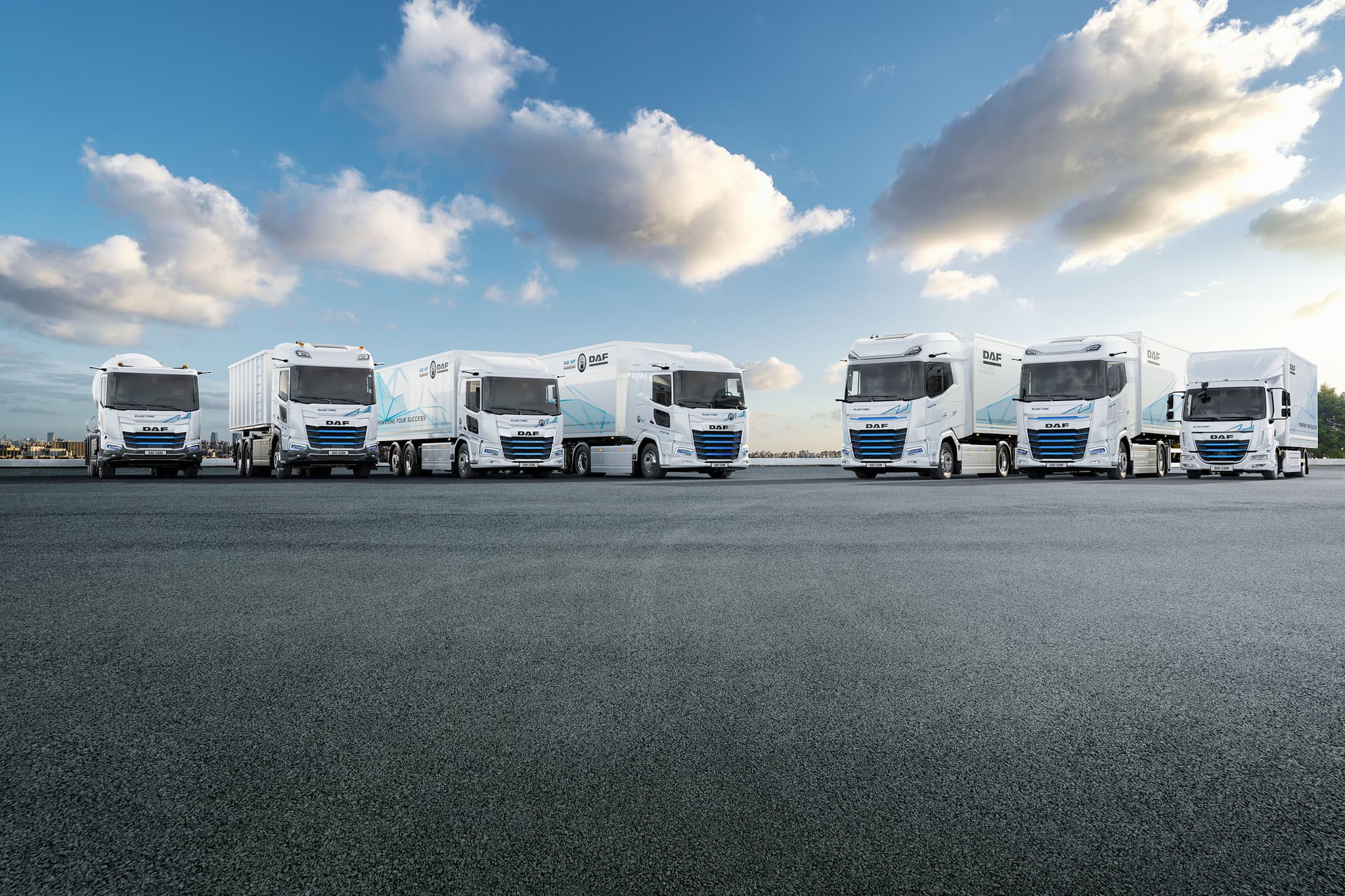
The Netherlands does not play a leading role in the production of fully electric passenger cars, but the situation is different for electric trucks. “A third of the >16-ton trucks in Europe are built in the Netherlands,” says Grol. Brands such as DAF and Scania have deep roots here. “The Netherlands is also doing well in the field of e-trucks.” DAF Trucks recently announced that it is further expanding its e-truck program. The range of 6x2, 6x4, and 8x4 tractor and box truck variants is growing, especially for applications in distribution and construction.
This is a positive development, but why is such a small proportion of trucks electric? “Because the business case is still difficult to make,” explains Grol. The trucks can be built and delivered, and transport companies can also buy them. However, progress is stagnating because the charging infrastructure is lagging behind, which has a negative impact on the total cost of ownership. “A consumer chooses a car partly with their heart. They like the look of it or want to drive green. A transporter does not have that luxury. They calculate.” If an electric truck is less practical or more expensive than a diesel truck, an entrepreneur will not switch.
“The very first thing we need to tackle is thinking from a business case perspective,” says Grol. According to him, that is the key to reconnecting innovation policy and industrial policy. Currently, these worlds too often operate separately, while innovation is precisely what forms the foundation for the Netherlands' future earning capacity. But, he warns, avoid encouraging isolated “firework projects” that do not contribute to future earning capacity. “We have to make strategic choices.”
According to Grol, the fact that the infrastructure for trucks is lagging behind in the Netherlands is also due to physical limitations. The power grid is full. Grol sees that there are almost no power points left for heavy users. “We have to reorganize things,” he warns. Transport corridors need fast chargers with enormous capacities. TNO calculated that the energy demand of delivery vans and trucks could rise to 1,700 GWh in 2030 if many cities introduce large zero-emission zones. This will require 18,600 charging points for delivery vans and 7,400 for trucks. The National Charging Infrastructure Agenda (NAL) is therefore working on plans for chargers along the highway.
Sustainable materials from Dutch soil
So much for electric trucks; sustainable mobility goes beyond electric vehicles and charging points. Materials also play an important role. This applies to both road and air transport, according to Grol, who, as a program council member at Holland High Tech, focuses on both.
The Netherlands also makes an important contribution in this area. Among other things, we are making great strides in the production of light and strong composites. “Whereas in the past we mainly worked with sheet steel, we later saw the rise of aluminum. Now carbon has also made its entrance, which is not only extremely strong, but also much lighter and therefore more efficient and sustainable than steel or aluminum.”
The Netherlands has many companies and knowledge institutions that develop high-quality composites for both aviation and automotive applications. High-tech comes into play to make materials lighter and stronger. For example, TU Delft is working with a quantum algorithm that allows researchers to determine the optimal stacking sequence of fibers in composites, specifically for aircraft.
Holland High Tech: stimulating innovation
In short: without breakthroughs in batteries, charging infrastructure, and smart materials, sustainable mobility will not get off the ground. This requires not only knowledge institutions, but also a robust ecosystem in which companies and governments participate. Holland High Tech plays a connecting role in this.
For example, Holland High Tech recently opened the second round of the SME High Tech Call. SME entrepreneurs are challenged to work with research organizations for two years on innovative industrial projects in key technologies, including sustainable mobility. With a total budget of €5 million, the call strengthens the knowledge and R&D capacity of SMEs.
Holland High Tech is also running the BatteryX project, which aims to make batteries safer, more reliable, and more sustainable: crucial for mobility. Techniques such as X-ray CT are used to detect internal problems that are often invisible to standard tests. Partners such as TNO, INNER, EMOSS, and EcarACCU are participating.
Grol also points to other battery initiatives in the Netherlands that bring together various parties, such as the Battery Competence Cluster (BCC), of which he is chairman. BCC-NL is the coordinator of the program in which 65 parties (companies and knowledge institutions) collaborate. In total, this involves around 800 million euros, of which 300 million is public money (NGF3) and 500 million is private money. Here, giants such as VDL are working together with knowledge institutes such as TNO, TU Delft, and TU Eindhoven. “This is how we are jointly developing the battery technology of tomorrow.”
The future: cautiously positive
The Netherlands seems to have all the ingredients in place to play a leading role in sustainable mobility, both now and in the future. Grol also sees cautiously positive signs in politics that could support this. However, the previous cabinet previously scrapped the National Growth Fund — funds that are crucial to the future earning capacity of the Netherlands and, indirectly, to the strategic autonomy of Europe.
“That's why I was very pleased to hear that the new cabinet considers innovation to be of paramount importance. I hope that important funds, such as the National Growth Fund, will be revived.”
Sponsored
This story is the result of a collaboration between Holland High Tech and our editorial team. IO+ is an independent journalism platform that carefully chooses its partners and only cooperates with companies and institutions that share our mission: spreading the story of innovation. This way we can offer our readers valuable stories that are created according to journalistic guidelines.
Want to know more about how IO+ works with other companies? Click here