
The Netherlands independent: tapping domestic energy sources
TNO studies geothermal energy, but Groningen wants existing problems from gas extraction resolved first.
Published on April 17, 2026
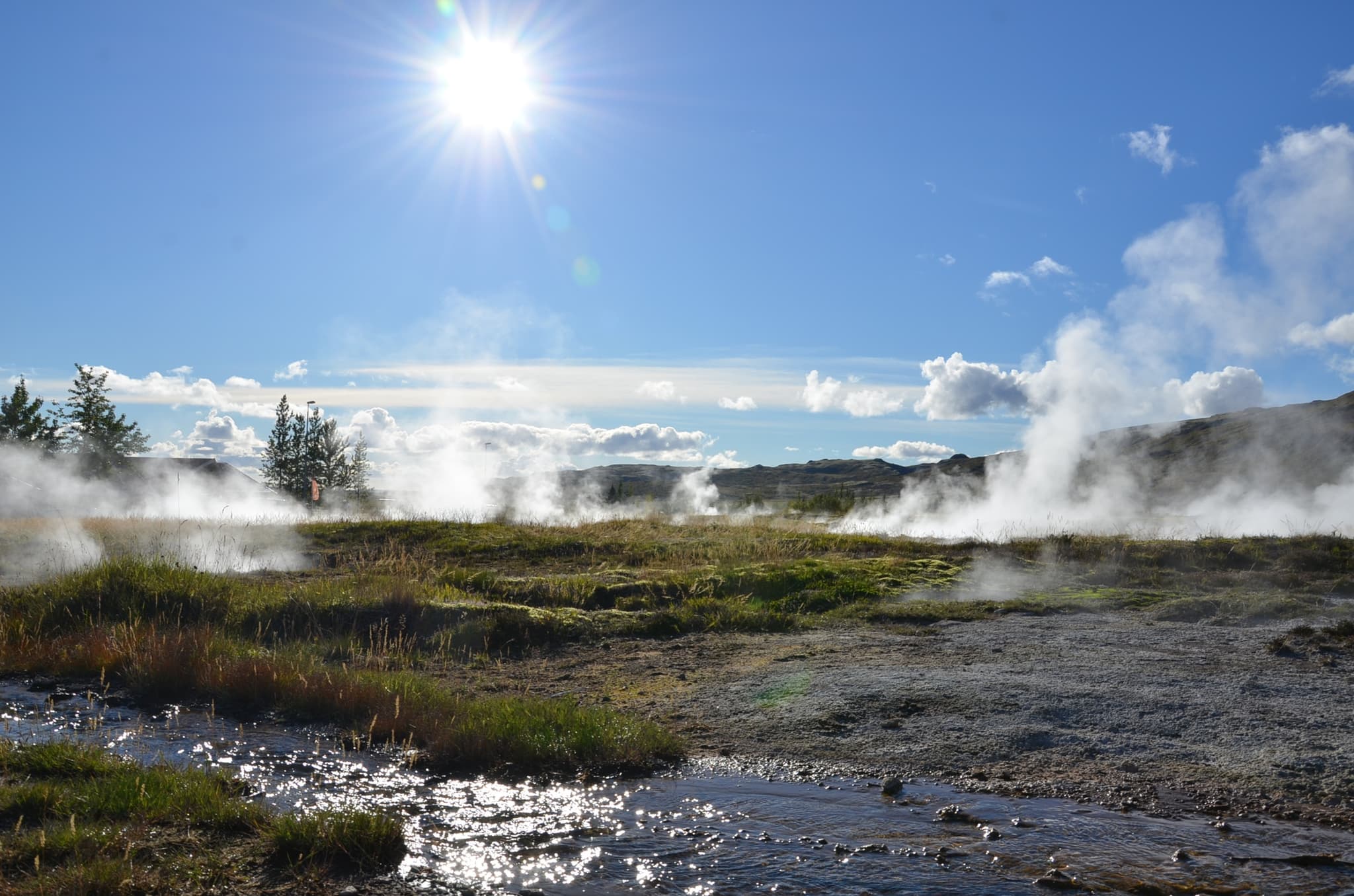
Geothermie © Unsplash
Masterstudente journalistiek aan de RUG, stagiair bij IO+, schrijft graag over de integratie van AI in het dagelijks leven
The Netherlands faces a difficult choice in the energy transition. The Groningen gas field has been closed, and gas production in the North Sea is declining. As a result, dependence on foreign gas is increasing. At the same time, geopolitical tensions, such as the war between Ukraine and Russia, and conflicts in the Middle East, are creating uncertainty about supply.
A debate has flared up about the future of the Dutch energy system. Beneath the province of Groningen lies an estimated 550 billion cubic meters of natural gas—enough for approximately eighteen years of Dutch consumption. Should the Netherlands really leave that gas untouched? TNO proposes keeping the Groningen gas field on a low flame and is also researching alternatives: how geothermal energy can be harnessed in the Netherlands.
The shadow of Groningen
Research institute TNO advises maintaining the Groningen gas field on a pilot light as a strategic reserve in light of geopolitical tensions. However, a different perspective is heard in Groningen itself. There, the consequences of decades of gas extraction are still visible and tangible every day. “A pilot light sounds logical when you look at what is still in the ground,” says Christel Knot, a council member for GemeenteBelangen Veendam. “But in the earthquake zone, you see what it does to people.”
Homes that are unsafe, residents forced to leave their houses, and years spent in temporary housing—the impact is significant. In villages such as Loppersum, characteristic homes stand braced and empty, waiting for repairs. “If you no longer feel safe in your own home, the place where you should feel safest, it has enormous consequences for your life,” Knot adds.
The UMCG recently conducted a study on the psychological effects of earthquakes. It shows that tremors contribute to an increase in mental health issues such as anxiety and depression among residents of the northern Netherlands. “Isn’t it strange to think that, in a country like the Netherlands, children in the core area are taught to dive under tables during earthquakes?” Knot asks.
Robert de Jonge, parliamentary leader of GemeenteBelangen Veendam, also emphasizes that safety must come first. “You can only talk about a pilot light if you can guarantee people’s safety. And that is not the case right now.”
Trust and Responsibility
The debate touches on a broader issue: trust in government. Residents of Groningen have felt unheard and insufficiently compensated for years. Comparisons are often made with the Limburg mining region, where the consequences of coal mining are still felt.
“The government does not have a strong track record when it comes to compensation and aftercare,” says Knot. “After the coal mines closed, Limburg was left neglected, and the effects are still visible today.” According to the council member, the state itself bears responsibility. “The Dutch state earned enormous revenues from gas extraction. You can expect it to guarantee safety, and properly compensate people.”
The conclusion of local officials is clear: solve existing problems first before taking new risks.
Geothermal energy as an alternative
To reduce dependence on imports, and to honor promises made to the people of Groningen, TNO is exploring domestic alternatives. One of these is shallow geothermal energy—the use of heat from the earth. Together with partners such as ENGIE, Huisman Geo, and EBN, TNO is studying whether geothermal energy from thin geological layers is economically viable. As outlined in the 2018 Master Plan for Geothermal Energy in the Netherlands, the ambition is to heat approximately 25% of homes, greenhouses, and light industry with geothermal energy by 2050. Each potential site must first be investigated to determine whether it can be developed safely. Current research focuses mainly on heating homes and buildings.
In geothermal systems, warm water is pumped from depths of two to three kilometers, at temperatures between 70 and 100 degrees Celsius. Through a heat exchanger, this heat is transferred to a district heating network for homes, businesses, and greenhouse horticulture. The cooled water is then pumped back underground, creating a closed and circular system, according to TNO.
Since late February 2026, Delft University of Technology has been heating its campus, and several DUWO student residences, using geothermal energy. Greenhouse horticulture companies, in particular, already make use of both deep and shallow geothermal energy. Examples include Agriport A7 Middenmeer, Aardwarmte Combinatie Luttelgeest (ACL), Aardwarmte Koekoekspolder, Aardwarmte Vogelaer, and Geothermie De Lier.
Beneath part of Veendam in Groningen lies a geothermal source that may be usable. However, further research is needed to determine feasibility, particularly in relation to risks such as the fragile condition of homes, soil contamination from other drilling techniques, and dense urban development.
GemeenteBelangen notes that the discovery of the Groningen gas field made gas cheaper for Dutch citizens. However, the biggest beneficiary was the government, as EBN, together with other companies, carried out the project on behalf of the Dutch state. The government earned substantial revenue, and Knot argues that both companies and the government would have been wiser to set aside financial reserves to address consequences. “They manage it in Norway, so we should follow that example,” she says. For GemeenteBelangen Veendam, geothermal energy extraction must not lead to the same psychological and economic consequences for residents.
Advantages: sustainable and local
Geothermal energy has clear advantages. During use, it produces virtually no CO₂ emissions, and it reduces strain on the electricity grid by lowering the need for electric heating.
According to TNO, geothermal energy can play an important role in the energy transition as a reliable complement to other renewable sources. This is because it is not dependent on sunlight or wind conditions.
Disadvantages: risks underground
At the same time, there are risks. The Dutch subsurface consists of complex layers of sandstone, clay, and rock with natural faults. Changes in pressure and temperature can cause these faults to shift, potentially leading to (micro)earthquakes. “It is not easy to attribute cracks in houses to a single cause. In most cases, it is a combination of factors such as subsidence and underground activities, which also makes it difficult to claim compensation for earthquake damage,” says De Jonge. Ultimately, however, a tremor can be the tipping point, according to the local party.
Location also plays a crucial role. Research, such as the KEM-15 report under the supervision of the State Supervision of Mines (SodM), shows that risks vary significantly by area. Some projects, such as one in Zwolle, have even been halted due to excessive risks.
Financial risks
The Netherlands is an innovation-driven country: “There may be ten innovations for sustainable, and safe energy production, but ultimately perhaps only one will also be affordable,” says Knot.
Drilling for gas, geothermal energy, salt, and water involves high costs. Safely sealing wells and repairing damage can also become very expensive. Drilling for geothermal energy alone, along with building a heating network and installing necessary systems, can easily cost around €20 million. These investments are typically funded through a combination of subsidies, government funding—ultimately supported by taxpayers—and private parties.
Environmental risks
Geothermal extraction also poses risks to groundwater. Leaks of salt or deep groundwater can contaminate shallow drinking water sources. Heat radiation may raise groundwater temperatures to levels that make it unsuitable for drinking. Strict safety measures, such as double-walled pipes, and oversight by SodM, are intended to mitigate these risks. Additionally, temperature differences closer to the surface may expand existing cracks, making previously negligible tremors more noticeable, and potentially causing damage.
SodM advises caution with geothermal energy in areas where earthquakes occur due to gas extraction, or near active faults in the deep subsurface.
Lessons from the Netherlands and abroad
Other countries demonstrate both the potential, and the limitations, of geothermal energy. In Iceland, about 90% of homes are heated using geothermal energy. There, the technology has been successfully used for decades, and hot water is found closer to the surface than in the Netherlands.
Belgium and Switzerland are also experimenting with geothermal energy. Switzerland has successfully used shallow geothermal energy for years, but attempts to develop deep geothermal systems have led to (micro)earthquakes, prompting project cancellations.
TU Delft has recently been connected to a district heating network. Further research must determine the effects of geothermal energy on the subsurface, and on surrounding buildings.
A balancing act between opportunity, trust, and risk
Geothermal energy offers the Netherlands an opportunity to become more sustainable, and more energy-independent. At the same time, it evokes memories of earlier forms of energy extraction, where the consequences for residents only became fully apparent later.
The debate over geothermal energy is therefore not only about technology, but also about trust, safety, and responsibility. The lessons from Groningen are essential: “New energy technologies must never come at the expense of the security, comfort, and well-being of residents,” De Jonge concludes.