
The hunt for cancer cells: a new medical breakthrough
Scientists discover how ‘zombie cells’ survive after chemotherapy. New drugs force these cells to self-destruct.
Published on May 13, 2026

Team IO+ selects and features the most important news stories on innovation and technology, carefully curated by our editors.
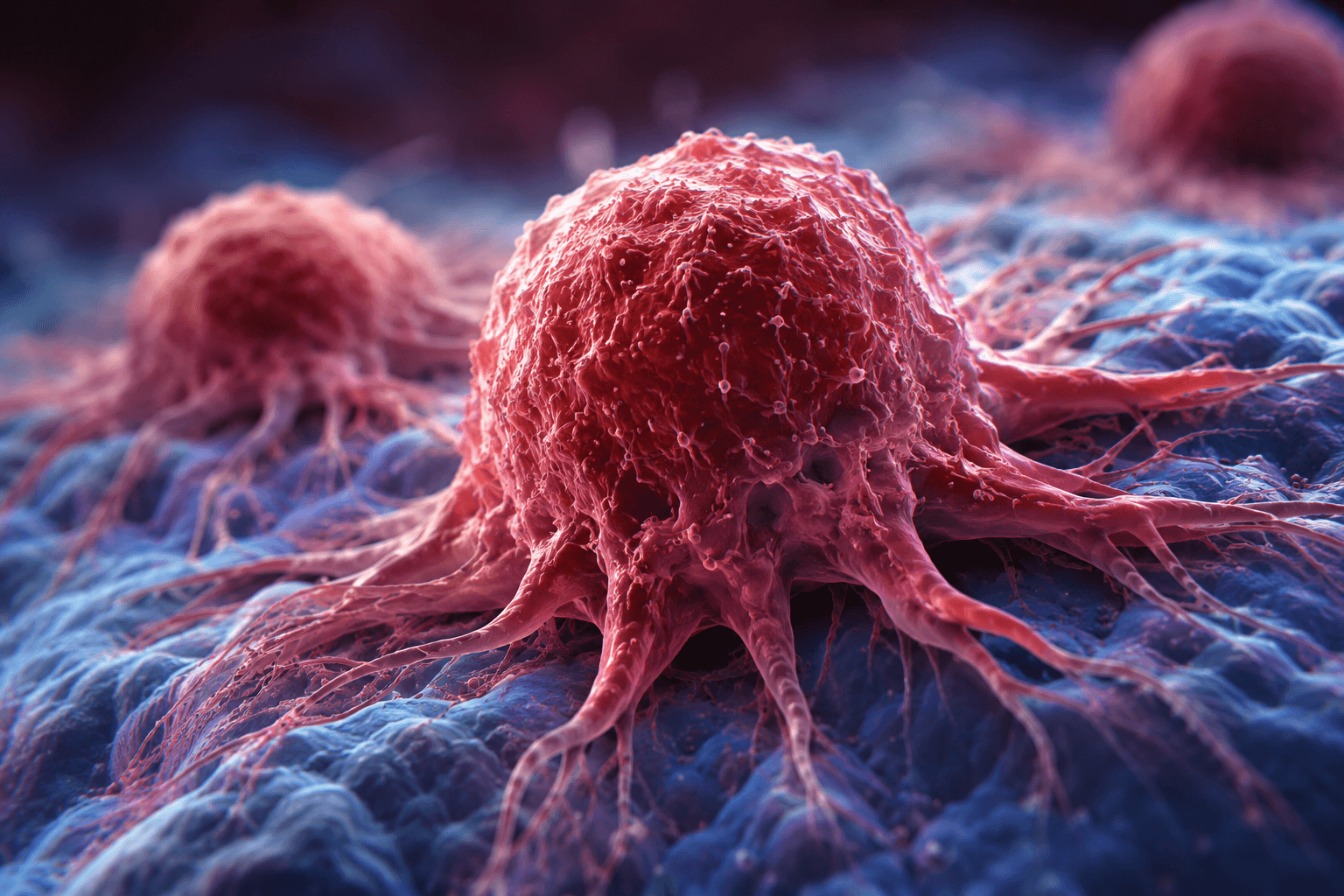
Cancer cells that neither die nor divide are a ticking time bomb in the human body. These so-called zombie cells often remain in the tissue after chemotherapy treatment. They refuse to die and release harmful molecules that promote tumor growth and inflammation. Scientists have now discovered a crucial vulnerability in these cells’ survival mechanism. This breakthrough opens the door to a new generation of drugs.
The danger of the dormant cell
Zombie cells are cells that have stopped dividing due to damage or aging. Normally, the immune system clears them away efficiently. However, after aggressive treatment such as chemotherapy, this does not always happen. The cells get stuck in a sort of intermediate phase. They aren’t dead, but they no longer function normally either. Instead of being passively present, they behave extremely aggressively. They secrete a cocktail of proteins and inflammatory factors that attack the surrounding healthy cells. This process promotes the growth of new tumors and allows cancer to spread to other organs.
A discovery
Researchers at the MRC Laboratory of Medical Sciences (LMS) and Imperial College London have now made a discovery. Cells normally have a built-in mechanism for self-destruction in the event of serious defects. The researchers discovered that zombie cells use a specific protein to evade this fate. This protein is called GPX4. It acts as a powerful chemical shield against a process called ferroptosis. Ferroptosis is a form of cell death caused by the accumulation of iron and lipid-like substances within the cell. Without the protection of GPX4, the zombie cells would literally rust away from the inside out and succumb. The study shows that senescent cells are extremely dependent on this protein to survive after chemotherapy. This dependence is their greatest weakness. By specifically blocking the GPX4 protein, the zombie cells lose their defense. This forces them to initiate the process of self-destruction after all. This mechanism offers an unprecedented opportunity to directly and effectively address the harmful effects of senescent cells in the body.
A search through ten thousand compounds
To find a viable drug, the research team conducted a massive screening. They tested no fewer than 10,000 different chemical compounds for their ability to kill zombie cells. From this enormous database, four compounds emerged as highly promising. Three of these compounds were found to specifically interfere with the function of the GPX4 protein. These agents are called senolytics: drugs specifically designed to eliminate senescent cells.
The results in the laboratory are impressive. When the researchers administered the new compounds to mouse models, they observed an immediate improvement. The tumors in the mice shrank significantly. Furthermore, the survival rate of the test animals increased considerably. This demonstrates that the targeted elimination of zombie cells can be a powerful addition to existing cancer therapies. The research team is now focusing on refining these compounds for future use in human patients.
The research was led by Mariantonietta D'Ambrosio and Professor Jesus Gil. Their work was published on May 12, 2026, in the prestigious journal Nature Cell Biology.