
The Dutch energy transition’s pain point: ‘lost’ renewable power
Once again, the number of hours with energy surpluses rose in 2025, highlighting the need for investments in energy storage and the grid.
Published on January 14, 2026
© Suzanne Dorst - Unsplash

Mauro swapped Sardinia for Eindhoven and has been an IO+ editor for 3 years. As a GREEN+ expert, he covers the energy transition with data-driven stories.
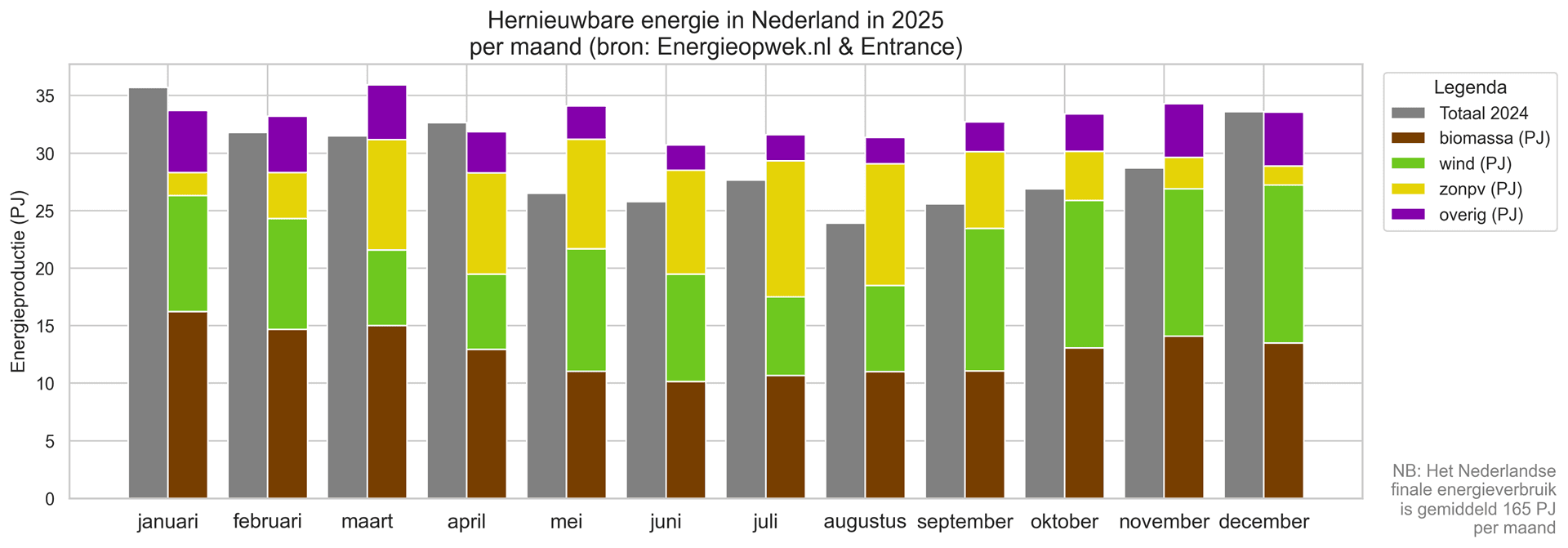
Renewable energy generation in the Netherlands continued to grow in 2025, as did the number of hours with energy surpluses. The pain point that appears evident is the soaring amount of ‘lost’ renewable power, potential solar or wind energy that was not produced, simply because it was not convenient. In short, this is the snapshot of Dutch renewable energy production from energieopwek.nl.
The platform, which aggregates real-time data on nationwide energy production, unveiled the final 2025 energy generation figures. The data were shared in a report on the publicly funded climate information platform Nationaal Klimaat Platform.
According to the report, a sunny spring and a windy autumn contributed to a 7% increase in renewable energy production. 27 more petajoules (PJs) of power were produced, enough to cover twice the annual energy consumption of a city the size of Groningen.
Analysts suggest the increase would have been greater if, during periods of surplus generation, energy had been stored rather than wind and solar capacity curtailed. The amount of ‘lost energy’ in 2025 amounts to 16 PJs–up from the 12 PJs of 2024.
© Energieopwek.nl
Behind the Figures
In Behind the Figures, we take a deep dive into numbers. Using charts and graphs, we break down figures and provide context to help you make more sense of them.
Solar energy production grows
The data collected by energieopwek.nl shows an increase of 17 PJ in solar energy generation. Favorable weather conditions were surely behind this generation surge. At the same time, more solar panels were added–albeit fewer than in previous years—meaning that there was more capacity available to produce electricity.
For context, petajoule is the standard unit used in these reports to measure overall energy production and consumption. In the chart below, solar energy generation is shown in gigawatts (GWs), the unit used to measure capacity and real-time output, which is more appropriate for this metric.
Wind energy production shrank as heat pumps emerged
Spring 2025 was relatively windless compared with the previous year. Yet, the fact that more offshore wind energy capacity was in use compensated for the smaller amount of wind in that part of the year.
The report also highlights that heat pumps are emerging as a significant contributor to renewable energy generation. According to a report from Dutch New Energy Research (DNE Research), 177,000 additional heat pumps were installed in 2025. With these additions, there are now 900,000 installed nationwide, accounting for 2% of the country’s final energy demand last year.
More surpluses
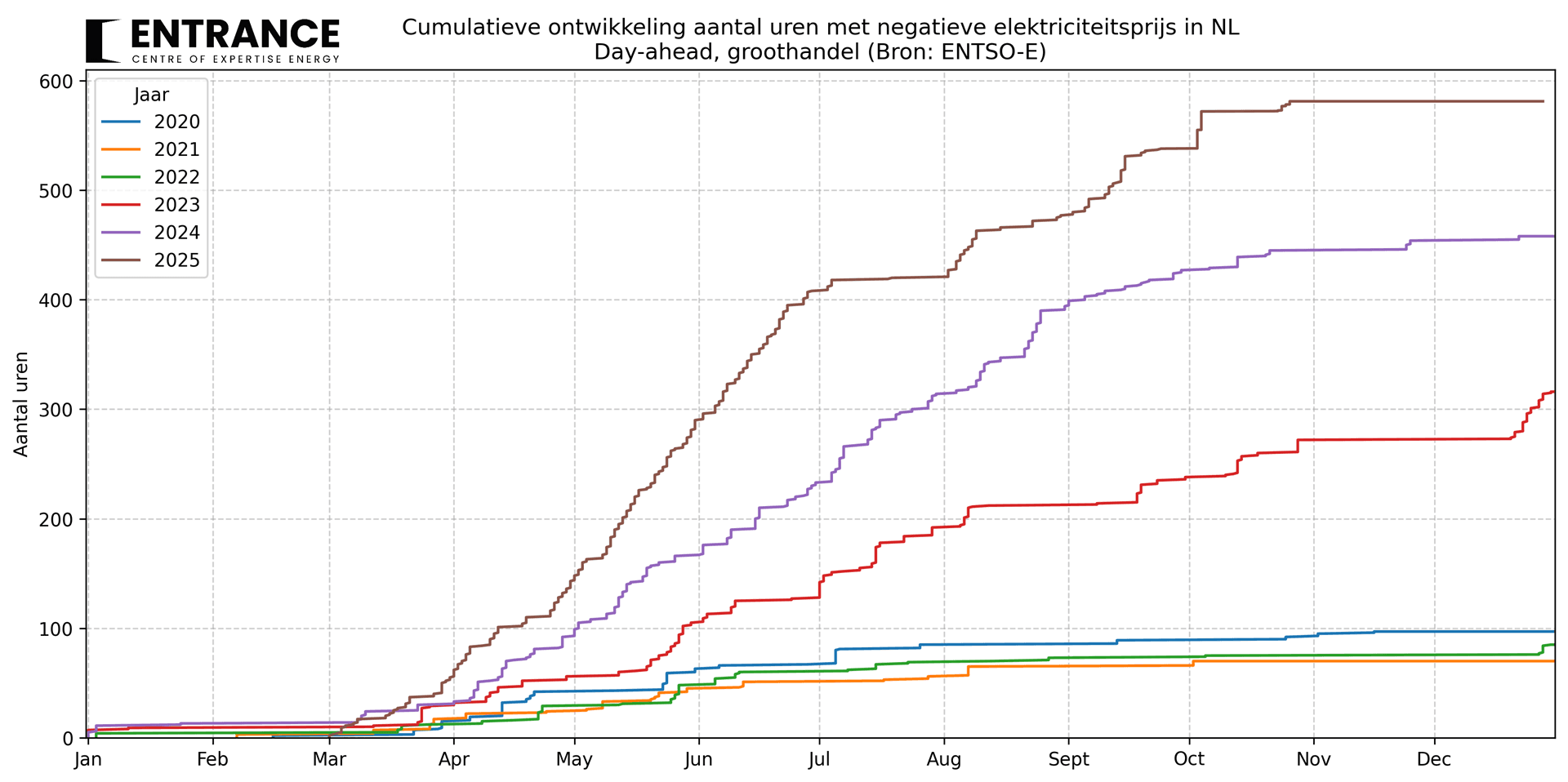
The pain point of the Dutch energy transition is the parallel increase in energy surplus, alongside the surge in renewable energy generation. On very sunny days, solar panels produce more electricity than is needed, so the day-ahead energy price becomes negative. This is not favorable for producers, such as energy companies and households, who, in turn, shut down assets. In 2025, the number of hours with negative day-ahead prices increased by 30%, according to ENTRANCE's figures cited in the paper. In total, 585 hours had energy prices at or below zero, accounting for 7% of the time.
Simply put, this means forgoing more sustainable energy generation because there is no way to store surplus energy. If adequate storage capacity had been in place, electricity production could have been further decarbonized.
In 2025, 57% of Dutch electricity was generated from renewable sources. With sufficient storage, the share would have risen to 60%, the level the Netherlands Environmental Assessment Agency (PBL) projects will be reached in 2030.
© ENTRANCE
A change in the energy landscape
With the definitive phaseout of the net metering scheme (salderingsregleing) scheduled for next year, 2026 is the last year the scheme will be in place. The measure has been instrumental in making the Netherlands the country with the highest per-capita installed solar capacity.
As a result of this decision, fewer solar panels were installed in 2024. Estimates by DNE Research suggest that in 2025, there were 164,000 new solar panel installations–a 72% drop from the 2023 peak.
Dutch consumers are recognizing the value of energy storage solutions. In the same analysis by DNE Research, analysts reported that home battery installations increased by 140% in 2025 compared with 2024. Residential sector installations are leading the charge, as households that previously installed solar panels try to maximize their power generation.
Bridging the gap
To increase the use of renewable energy, it is crucial to invest in and promote the integration of energy storage solutions and the grid. This point is even more relevant amid projected growth in electricity demand driven by electric vehicles and data centers. Green electricity production is on the rise, but to make the most out of the sun and the wind, there is no other answer than greater flexibility.