
The debut of ultra-modern weapons in the Iran War
The airspace over the Middle East has become a testing ground for state-of-the-art weapons systems.
Published on March 26, 2026

Team IO+ selects and features the most important news stories on innovation and technology, carefully curated by our editors.
The war between the U.S.-Israeli coalition and Iran marks a turning point in military history. Since it broke out in February 2026, the skies over the Middle East have served as a testing ground for state-of-the-art weapons systems. The U.S. is also carrying out cyberattacks.
Defense systems
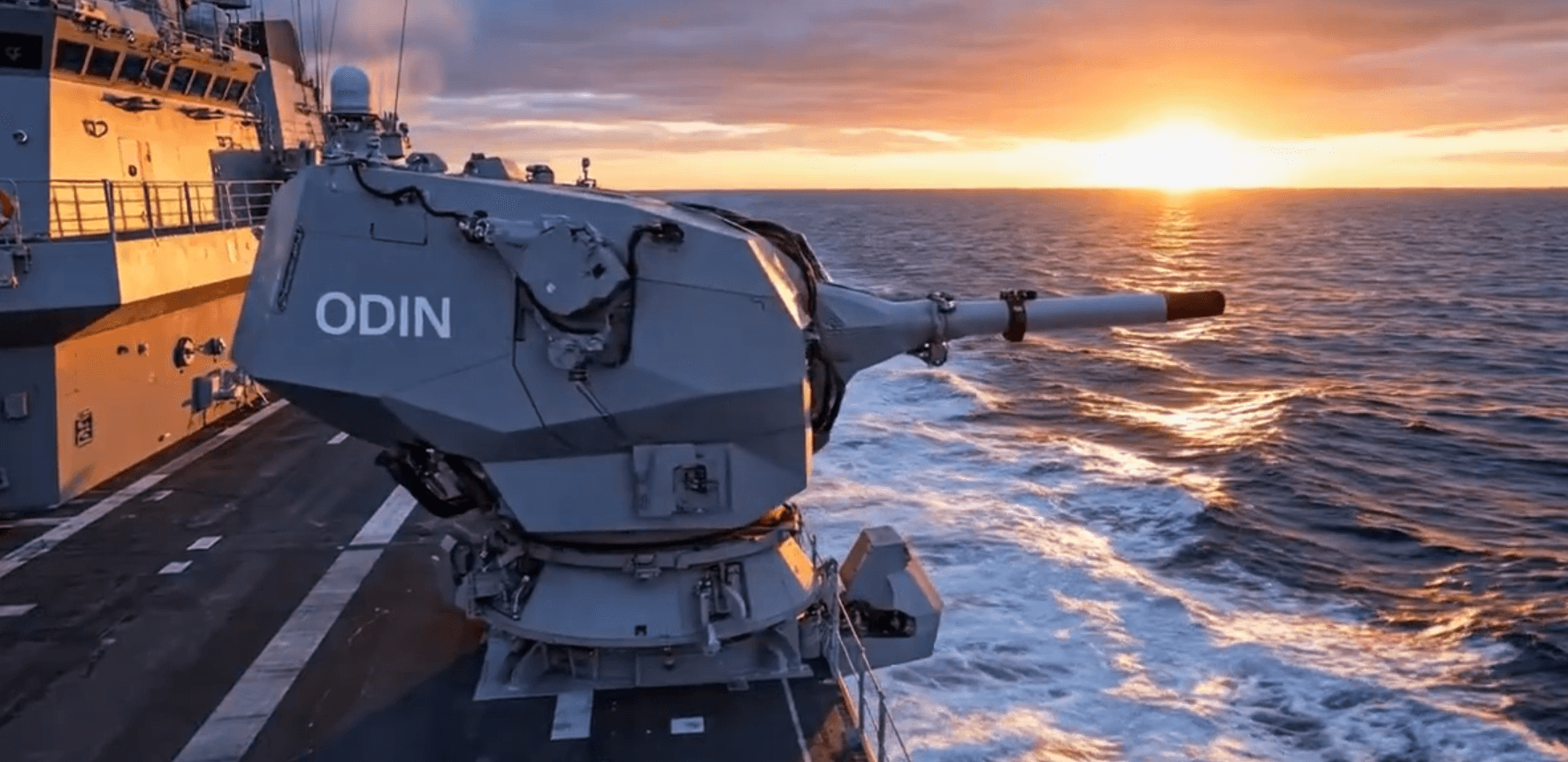
During Operation Epic Fury, the U.S. Navy is deploying the so-called ODIN system on destroyers such as the USS Spruance. This laser weapon, developed starting in 2017 and first installed on the USS Dewey in 2019, is a so-called “soft kill” system. Instead of physically shooting down drones, ODIN blinds their sensors. With relatively low power, the system can disable the electro-optical and infrared sensors of enemy drones, such as Iranian Shahed drones, at distances of several kilometers. As a result, these drones lose their target or can no longer navigate. Especially in a conflict like Epic Fury, where large numbers of drones are deployed, this offers a fast and inexpensive layer of defense alongside traditional missiles.
The U.S. also has the more powerful HELIOS system, but it is not being deployed here. This system is on the USS Preble and is stationed in Yokosuka.
Offensive arsenal
Technological innovation is not limited to defense systems. The offensive arsenal is also transforming. Recently, the so-called LUCAS drones were also deployed in combat for the first time during Operation Epic Fury. These Low-Cost Uncrewed Combat Attack System drones are kamikaze drones. They are based on the design of the Iranian Shahed-136 and, according to a U.S. admiral, were first used in the opening attacks on Iranian targets. Since then, they have been deployed repeatedly. The major advantage of LUCAS is the combination of low cost and effective firepower: the drones can be produced and deployed in large numbers at relatively low cost, making them suitable for prolonged and intense conflicts.
In addition to these inexpensive drones, new precision weapons are also making their debut. The new Precision Strike Missile (PrSM) was deployed in combat for the first time during Operation Epic Fury. This ground-launched long-range missile system was used in the opening phase of the attacks on Iran. PrSM is the successor to older systems such as ATACMS, but has a greater range and can be carried in larger numbers simultaneously on launch platforms. The weapon is primarily intended for the initial phase of a conflict. It enables ground forces to strike key targets with precision. Additionally, PrSM is mobile: launchers can move quickly and fire again, making them difficult to neutralize.
The invisible hand of algorithms
The war is being fought not only with missiles and drones, but also digitally. The U.S. and Israel are also carrying out cyberattacks against Iran. According to NetBlocks, internet connectivity in the country has dropped to about 1% of normal levels for days on end. That means virtually no one can get online anymore. Experts believe this is due to multiple causes. For instance, cyber analyst Kathryn Raines told CNBC that it could be a combination of government intervention and external cyber disruption by the U.S.
It is known that simultaneous cyber operations by the US and Israel have deliberately targeted telecommunications infrastructure to disrupt the command networks of the Islamic Revolutionary Guard Corps during the military attacks.
Weak spots in the global economy
All in all, the US appears to possess more advanced technology than Iran. However, Iran compensates for its technological lag with asymmetric warfare. They target the weak spots of the global economy. The focal point of this strategy is the Strait of Hormuz. This narrow strait normally handles one-fifth of global oil trade. Iran completely closed this vital waterway in early March. The financial markets reacted immediately with blind panic. The price of a barrel of crude oil shot up to over $120.