
Students develop their own solution to academic challenges
Startup TutorMe aims to reduce the pressure on students through affordable peer-to-peer tutoring and practice materials.
Published on May 15, 2026

Our DATA+ expert and Editor-in-Chief, Elcke Vels, explores AI, cyber security, and Dutch innovation. Her "What if..." column imagines bold scenarios beyond the norm.
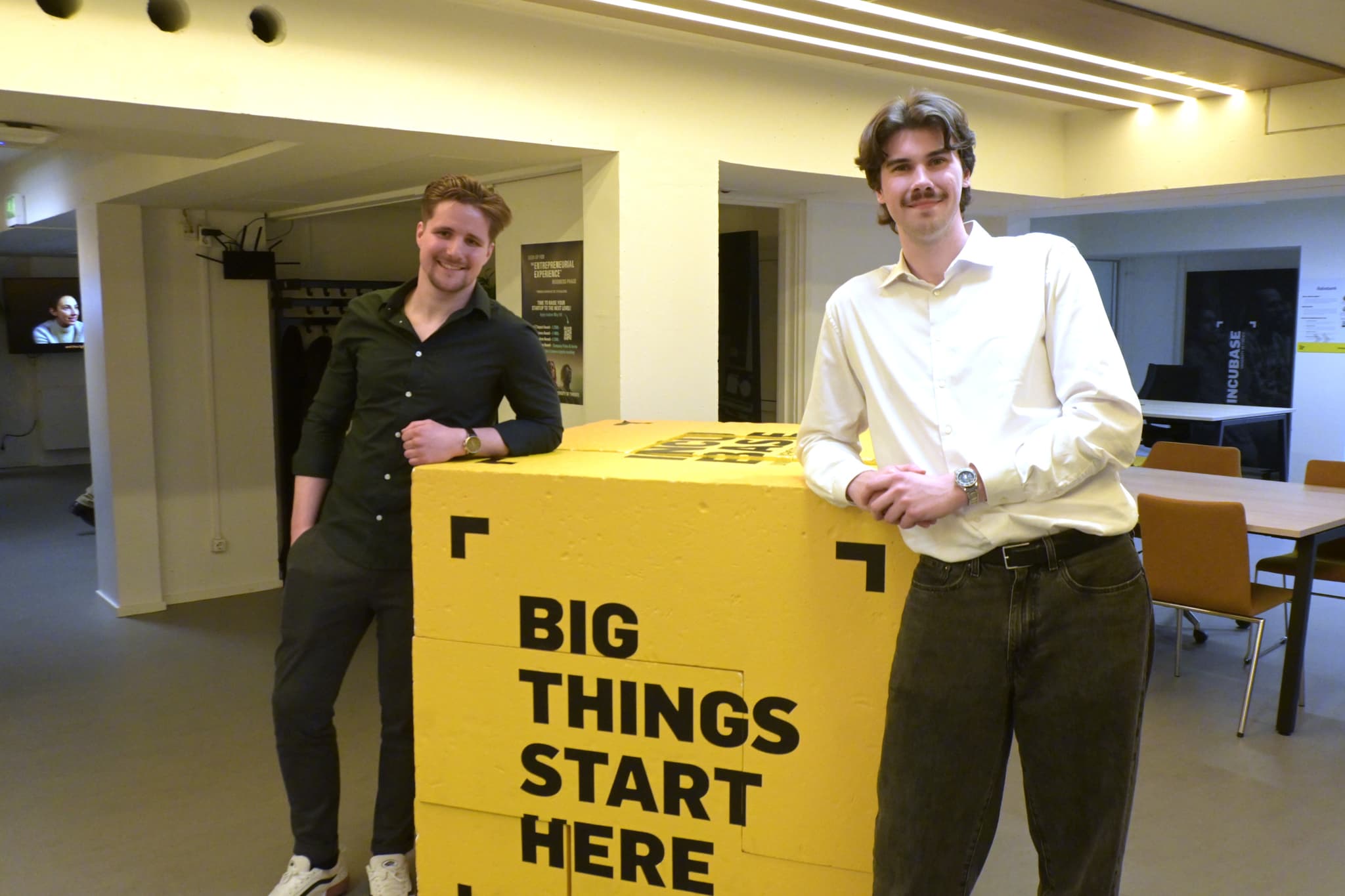
Students are under immense pressure. Nationwide, only 30 percent of students earn their bachelor’s degree within the standard duration of study. In addition, a large proportion of students are struggling with their mental well-being. For example, more than half of the students report symptoms of emotional exhaustion. Time for a change, thought Business & IT student Marius Inselseth and his business partner Robert Grgac. Their AI-driven platform TutorMe offers students peer-to-peer tutoring and practice materials. “When we saw how popular our pilot was, we realized: people really need this.”
Inselseth still remembers well how difficult some of his freshman courses were. Even later in his studies, he continued to run into challenging material. “I fell behind in my studies and wanted to seek out extra academic support,” he says. That search, however, proved frustrating. “Academic support was poorly organized and hard to find.”
His fellow student and co-founder, Robert Grgac, a master student Data Science at the UT, also saw how difficult it could be to arrange support within the university. As the head of a team of ten student assistants, he noticed that colleagues were sometimes not reappointed, despite their important role in education.
This prompted the two students to launch TutorMe in 2025. Through the platform, and soon an app as well, students are matched with academic mentors and also gain access to practice tests, summaries, and other study materials. AI is used to create those materials, but humans are always kept in the loop. “Current pilot pricing is €2.99 per exam. At launch, we plan to switch to a €15 per semester subscription.”
TutorMe’s goal is to make education more accessible and achievable. The peer-to-peer approach also lowers the barrier to asking for help.
Significant interest
The startup initially began as a peer-to-peer platform at the UT. “We built a large network of tutors and organized many sessions.” Yet, a major problem remained: the price. “For many students, 15 to 20 euros per tutoring session remains a significant expense.”
Conversations with students then revealed that the need for affordable preparatory study materials was even greater. “That’s why we launched a pilot with practice tests, summaries, quizzes, and flashcards.”
Interest turned out to be immediate and substantial. “Out of a potential group of about 1,200 students, more than 600 created an account and actively used the practice exams and summaries,” says Inselseth. “That’s when we knew: there’s a real demand for this. And that was without us having done any marketing at all.”
Five major universities
Meanwhile, TutorMe is working on further growth. A funding round is currently underway, through which the startup aims to expand to five major universities in the Netherlands. The expectation is that the platform will grow to approximately 37,000 users by September 2027.
“We’re currently in talks with investors to better understand how such a process works,” says Inselseth. “After all, this is my first startup, so I’m still learning every day.” In addition, the founders have applied to various incubators.
Expanding the team
That growth also brings new challenges. “Right now, the two of us are handling everything. But as we expand to other universities, the team will naturally need to grow as well. That’s what we’ll also be focusing on.”
Balancing student life and building a startup
In the meantime, the cofounders also have to finish their studies. “As a startup founder and student, you’re incredibly busy,” says Inselseth. “In the morning, you give an interview, then you record an Instagram Reel, next you work on new practice exams, and later in the day you have more meetings.” He grins: “And studying? That’s what the weekends are for.”
All for a good cause, though. “The best compliment we can get is when someone comes up to us and says: You’ve done a great job, thanks for the help. That feels incredibly good.”