
Solar-powered demo vehicle: Lightyear teams with Nissan
A new demo car shows how Lightyear and Nissan make solar a practical part of EVs.
Published on January 27, 2026
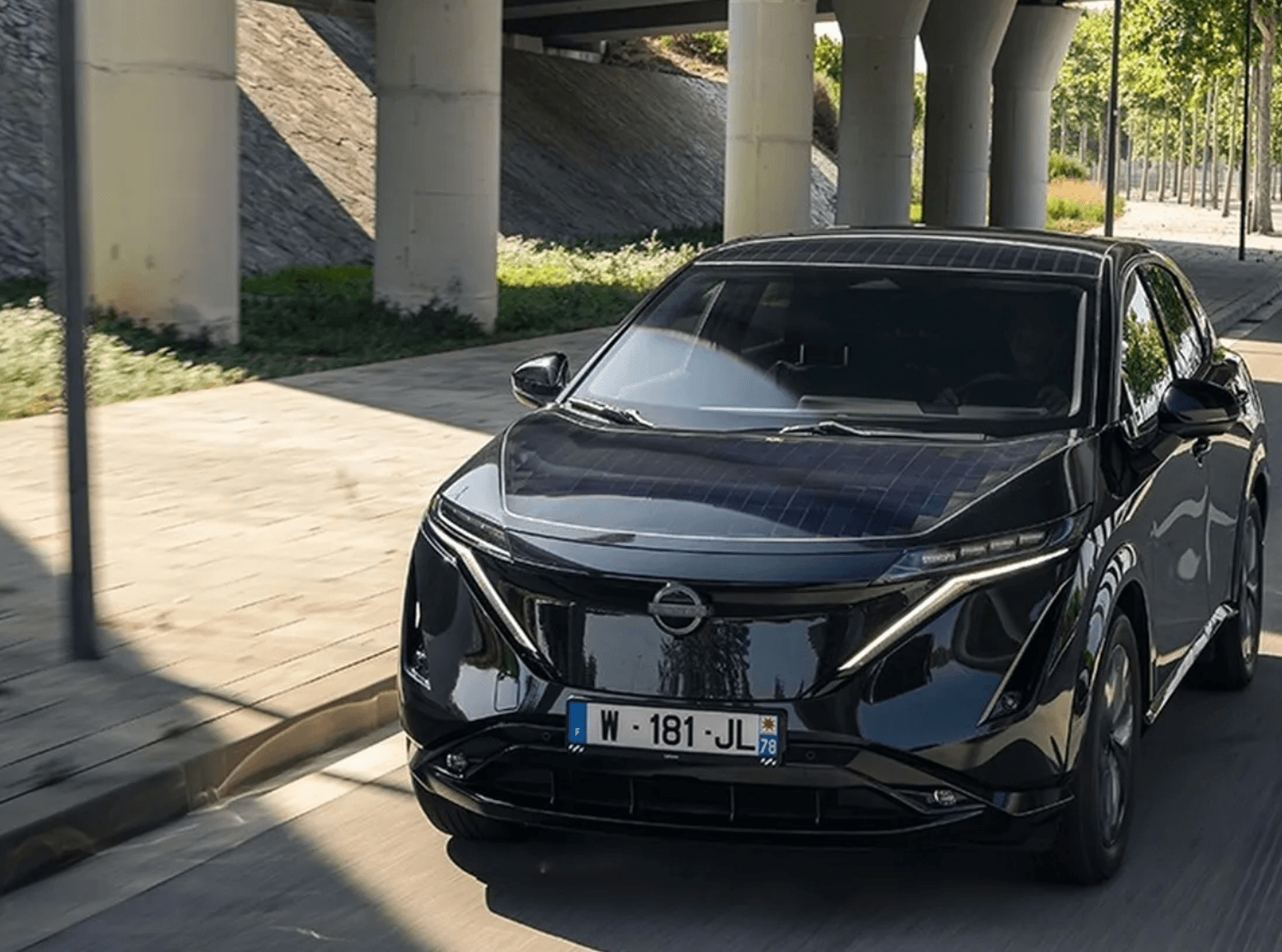
Photo: Lightyear

Team IO+ selects and features the most important news stories on innovation and technology, carefully curated by our editors.
Lightyear is teaming up with Nissan to add advanced solar panels to a demonstration car. What started in 2023 as a concept has now become a near-production Lightyear vehicle with integrated solar technology that delivers real benefits on the road. The demo car has 3.8 m² of solar panels on the hood, roof, and tailgate, showing that solar tech can be built into a car’s design without affecting performance or looks. The company is now demonstrating their technology with multiple OEMs (vehicle manufacturers).
Collaboration with Nissan
The Lightyear–Nissan collaboration showcases a new level of integration between solar technology and vehicle platforms. The jointly developed system meets automotive standards and demonstrates high levels of aesthetic integration, performance, and reliability.
Rather than a conceptual demonstration, the project delivers tangible energy gains under real driving conditions, supporting vehicle systems and contributing to increased efficiency—particularly in urban and commuter scenarios. Under clear, sunny conditions, the integrated solar system can enable up to 23 km of additional driving range generated directly from solar energy.
“We’ve moved past the proof-of-concept stage,” says CFO Herman van Barneveld. “This project demonstrates that Lightyear’s vehicle-integrated solar is ready to go to market.”
Future mobility
While not a replacement for plug-in charging, solar integration can reduce charging frequency, extend usable range, and enhance user convenience by generating energy while the vehicle is moving or parked.
Real-world usage data shows that annual charging visits can be significantly reduced: from approximately 23 to 8 charging sessions per year for drivers covering around 6,000 km annually, and around 50% more time between charges for commuters driving approximately 12,000 km per year.