
Social media not the only factor for belief in misinformation
The Rathenau Institute examined the relationship between trust in science and belief in misinformation on social media in the Netherlands.
Published on June 19, 2026
Bart, co-founder of Media52 and Professor of Journalism oversees IO+, events, and Laio. A journalist at heart, he keeps writing as many stories as possible.
New research by the Rathenau Institute adds nuance to the debate about science, trust, and social media: those who want to combat misinformation need to look beyond platforms and fact-checks.
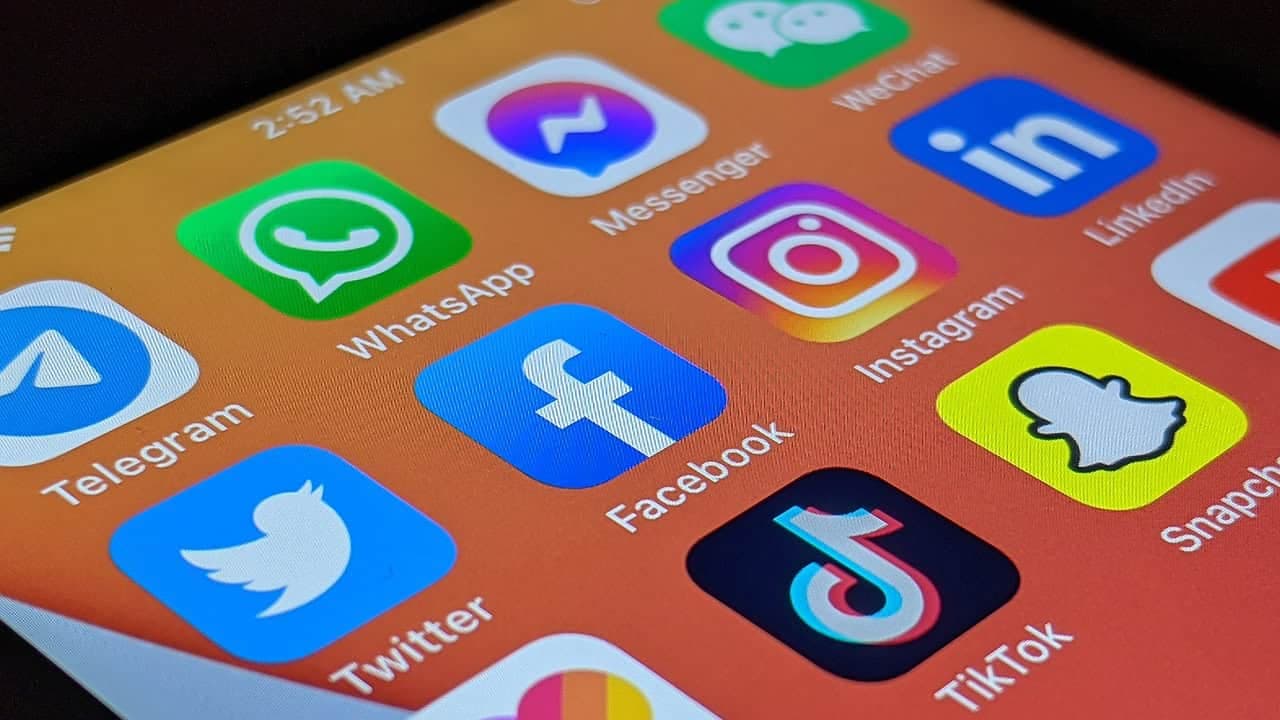
Anyone concerned about misinformation is quick to point to social media. Videos, posts, and messages circulate there about vaccines, climate change, cultivated meat, or contraception that call the scientific consensus into question. The assumption is often: the more time people spend on social media, the greater the risk that their trust in science will be undermined.
But it is not that simple, according to the new Rathenau report Wikken en Weten. The institute examined the relationship between trust in science and belief in scientific misinformation on social media in the Netherlands. The central conclusion: social media matters, but they are not the only, or even decisive, factor. Misinformation only really takes hold when there is fertile ground for it, shaped by personal experiences, conversations with friends and family, trust in institutions, media use, and previous views about science.
The study combines a representative survey of 8,437 Dutch people with seven focus groups in which participants were presented with social media posts containing scientific claims. In doing so, the Rathenau Institute offers a rare Dutch perspective on a debate that is often conducted on the basis of American research.
More social media, more belief in misinformation, but not for everyone
One of the most striking findings is that there is indeed a link between time spent on social media and belief in scientific misinformation. According to the model, someone who spends less than one hour a day on social media has about a 22 per cent chance of believing at least one of the misinformation statements presented. For one to three hours a day, that rises to about 25 per cent; for more than three hours, to about 33 per cent.
Yet this is not a general effect that applies equally strongly to everyone. The link is particularly visible among people over the age of 45, people with vocational education, people with a lower level of scientific knowledge, people with little trust in science, and users who mainly use Facebook or X. For people under the age of 34, the researchers found no correlation between greater social media use and greater belief in misinformation.
In this respect, the report challenges an important cliché. According to this study, young people who spend a lot of time on TikTok or Instagram do not necessarily constitute the highest-risk group. It is precisely older users who appear more susceptible to the combination of heavy social media use and belief in scientific misinformation.
No evidence that social media undermines trust in science
Perhaps even more important is what the Rathenau Institute does not find. In the Netherlands, more time spent on social media is not associated with lower trust in science. The often-heard assumption that social media in themselves damage trust in science is therefore not supported by these results.
There is, however, a clear correlation between belief in misinformation and trust in science. People who more often believe scientific misinformation have, on average, less trust in science — both in specific scientific domains and in science as a whole. But the direction of that relationship cannot simply be established. It may be that misinformation damages trust, but it may also be that people with little trust are more inclined to believe misinformation. Above all, the study shows that the relationship is reciprocal and context-dependent.
For policymakers, that is a crucial nuance. Those who focus solely on removing or correcting online misinformation may be missing a large part of the problem.
The importance of a varied information diet
A second important finding concerns what the report calls the “scientific information diet”: the diversity of channels through which people encounter science. This includes newspapers, television, podcasts, popular science magazines, social media, but also conversations with family and friends.
The more diverse the information diet, the greater the trust in science. And because higher trust is linked to less belief in misinformation, people with a broader information diet also tend, on average, to believe scientific misinformation less often. When social media are the main channel for scientific information, this is associated with lower trust in science.
This makes the task of science communication broader than simply “explaining more”. It is not only about the content of individual messages, but also about the environment in which people encounter science. A message from a university, a conversation with a doctor, an explanatory article in a newspaper, and a podcast with a researcher can together mean more than a single fact-check under a viral post.
People weigh more than facts alone
The focus groups show how complex this assessment is in practice. People do not judge scientific claims on social media by using a fixed checklist. They pay attention to text and images, to the sender, to the platform, to the content of the message, and to whether they can verify the information. But at least as important is their own frame of reference: previous experiences, stories from people they know, basic attitudes towards science, and trust in institutions.
For example, a participant may find a message about health more reliable when it aligns with their own experience with a doctor or medicine. Another person may trust information sooner when it comes from an established institution such as the NVWA, the Consumers’ Association, or a general practitioner. At the same time, scientific information can appear less reliable once it becomes politically charged. During the focus groups, some participants distinguished between distrust of science and distrust of the political use of science.
That is an important lesson at a time when science increasingly plays a role in major social debates: climate, health, agriculture, AI, energy, and security. Scientific knowledge is never just information; it enters a landscape of interests, experiences, and trust.
Less alarmism, more connection
The Rathenau Institute also warns of a risk in the way misinformation is addressed. Alarmist communication about misinformation, including fact-checks, can backfire when it reinforces general distrust of information. Constantly stressing that people are being misled may unintentionally feed the feeling that nothing can be trusted anymore.
The options for action mentioned in the report are therefore broader. Healthcare providers and other professionals should be aware that beliefs do not arise only online. Policymakers, science journalists, and science communicators can work towards a more diverse information diet, especially among groups that are more susceptible to misinformation. The government could consider setting up a reporting point for harmful scientific misinformation. Social media platforms should give independent researchers better access to data, so that it becomes clearer how misinformation actually spreads.
The core message is therefore less technological than is often assumed. Of course algorithms, platforms, and online networks play a role. But trust also emerges — and disappears — at the kitchen table, in the consulting room, at work, in the newspaper, at school, and in conversations with neighbours, friends, and family.
Those who want to protect science from misinformation should therefore not look only at the screen. The real question is what happens before someone opens that screen.