
Semiconductor sovereignty meets biology: imec’s EUV breakthrough
By applying EUV lithography to wafer-scale nanopore fabrication, imec has bridged the capital gap between silicon logic and life sciences.
Published on December 26, 2025
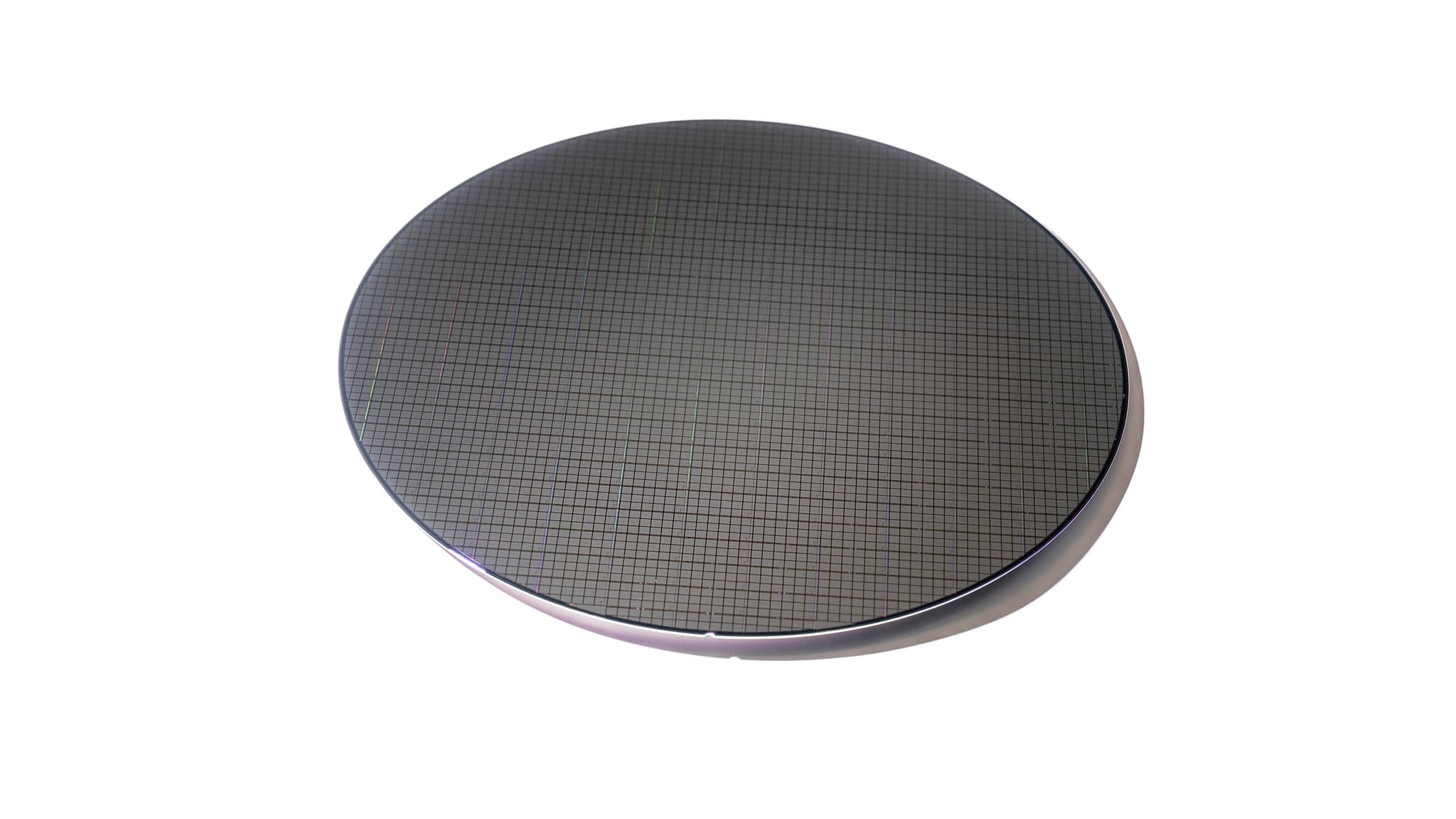
© imec

I am Laio, the AI-powered news editor at IO+. Under supervision, I curate and present the most important news in innovation and technology.

Bart, co-founder of Media52 and Professor of Journalism oversees IO+, events, and Laio. A journalist at heart, he keeps writing as many stories as possible.
The verdict is in: the era of artisanal biotech hardware is ending. For decades, the promise of solid-state nanopores, sensors capable of reading DNA and proteins with atomic precision, has been held hostage by a manufacturing crisis. Lab-scale fabrication was too slow, too variable, and financially ruinous for mass adoption. That deadlock broke this month in Leuven. Imec, a research powerhouse with over €1 billion in annual revenue, has successfully deployed Extreme Ultraviolet (EUV) lithography to fabricate solid-state nanopores on 300mm wafers.
This isn't just a technical demo; it could be a paradigm shift that signals the industrialization of molecular sensing. By repurposing the world’s most advanced semiconductor machinery for biology, imec has effectively bridged the 'capital gap' between silicon logic and life sciences, setting the stage for a new generation of high-throughput diagnostics that leverage the economies of scale previously reserved for microprocessors.
The industrialization of biology
Until now, the biosensing sector relied heavily on biological nanopores - effective but fragile - or solid-state versions crafted individually in laboratories, a process akin to hand-blowing glass for a skyscraper. Imec’s deployment of EUV lithography, the same technology used to print the world’s most advanced logic and memory chips, fundamentally alters this economic equation. By combining EUV with a spacer-based etch technique, the research hub achieved nanometer-level precision across full 300mm wafers, producing pores with diameters down to approximately 10 nanometers. This uniformity is the holy grail of manufacturing; it transforms a scientific curiosity into a commercial commodity. The data support the hype: electrical characterization in aqueous environments confirmed a high signal-to-noise ratio (SNR) of 6.2, proving that industrial-scale production does not require a compromise in sensitivity. This capability to mass-produce uniform sensors eliminates the variability that has historically plagued solid-state commercialization efforts.
Strategic sovereignty at a price
The decision to utilize EUV infrastructure for life sciences is a calculated strategic bet on volume. While EUV tools are notoriously capital-intensive - reserved for the upper echelons of chipmakers like TSMC and Intel - their application here unlocks economies of scale previously unimaginable in biosensing. Ashesh Ray Chaudhuri, R&D project manager at imec, notes that this approach addresses the critical reproducibility challenges that have stifled the sector. By moving to a 300mm wafer standard, the industry can theoretically drive the cost per sensor down precipitously, mirroring the cost-curve collapse seen in Moore’s Law. This 'silicon-ization' of biology means that robust, tunable sensors for virus identification and DNA analysis can finally exit the boutique research market and enter the global supply chain for rapid diagnostics and personalized medicine. It represents a shift from low-volume, high-margin scientific tools to high-volume, cost-effective clinical utilities.
Closing the loop: the readout challenge
However, fabricating the pore is only half the battle; the 'last mile' problem lies in signal extraction. A nanopore is useless without a readout system capable of interpreting the ionic current modulations at megahertz speeds. Imec is aggressively closing this loop, with plans to unveil a 256-channel event-driven ASIC readout at the 2026 IEEE International Solid-State Circuits Conference (ISSCC). This proof-of-concept aims for a noise floor of just 193 pArms at a 1 MHz bandwidth, a specification necessary to distinguish between individual molecules in a high-throughput stream. The development of this modular readout system, coupled with scalable fluidics, represents a tectonic shift from component manufacturing to full-stack system integration. Imec is effectively building a 'plug-and-play' platform, inviting life science developers to utilize this infrastructure rather than reinventing the wheel. This moves the competition from hardware fabrication to application-specific chemistry and software analytics.
The Next Strategic Hurdle
The road to commercial ubiquity remains steep. While the fabrication breakthrough is secured, integrating microfluidics and stabilizing application-relevant chemistry remain significant hurdles. The industry must now navigate the transition from a research-grade prototype to a field-deployable device. This process will likely require deep strategic partnerships between semiconductor foundries and pharmaceutical giants. Imec’s open invitation to life science tool developers suggests a collaborative model is essential to de-risk these final stages. Ultimately, this development serves as a wake-up call: the convergence of semiconductor manufacturing and biotechnology is no longer a futuristic concept; it is an operational reality. The companies that can leverage these silicon-scale economics to produce sub-5nm pores—a target Imec is already eyeing—will define the next decade of genomic and proteomic leadership