
'Scientific knowledge needs to be shared with the public'
Auke van den Hout of Graduate Ventures explains how a unique ecosystem of universities helps young entrepreneurs grow.
Published on June 3, 2026
.jpg&w=2048&q=75)
Our DATA+ expert and Editor-in-Chief, Elcke Vels, explores AI, cyber security, and Dutch innovation. Her "What if..." column imagines bold scenarios beyond the norm.
The Netherlands has strong universities, a wealth of technical expertise, and ambitious founders. Yet many good ideas still end up lost in research labs. Graduate Ventures aims to change that. The fund, which involves an increasing number of universities, is building an ecosystem where young entrepreneurs gain access not only to capital but also to knowledge, coaching, and networks. It was already active in Delft and Rotterdam, but Wageningen has recently joined as well. According to co-founder Auke van den Hout, the fund aligns remarkably well with the direction the Netherlands wants to take at the national level.
Medtech, climate tech, AI: Dutch universities are brimming with knowledge across many different fields. It is therefore not surprising that startups regularly emerge at universities that can help society move forward. But this requires the right financing and guidance.
Graduate Ventures certainly doesn’t lack ambition. It is a startup fund focused on supporting and developing a new generation of top entrepreneurs. Since its founding in 2021 by Erasmus University Rotterdam and Delft University of Technology, the fund has supported over 80 startups. Notable names in its portfolio include Workwize, QuantWare, and Eddy Grid. Graduate Ventures has a pre-seed fund for small early-stage investments and a seed fund for larger growth financing.
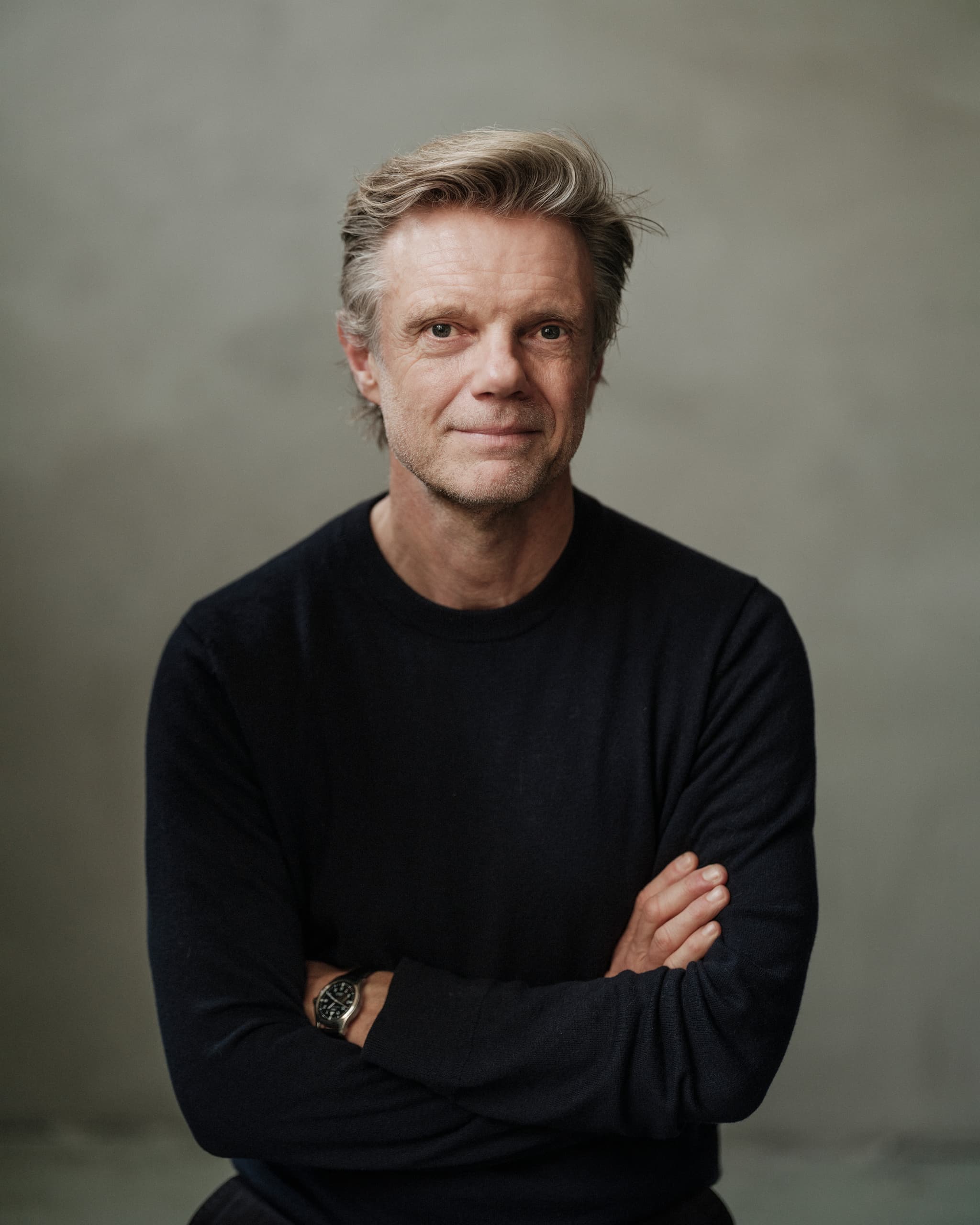
Auke van den Hout
Lessons from Stanford
“Graduate Ventures was founded back then by entrepreneurial alumni from the universities of Rotterdam and Delft. Among them are the founders of well-known companies such as Picnic and Booking.com,” Van den Hout begins.
Van den Hout himself was also involved from the start. During his time at Stanford University, he discovered his passion for entrepreneurship. “That’s where I saw what it takes to build a successful company. What it’s like to get something off the ground from day one,” he says. That experience served as a clear ‘spark.’ After Stanford, he founded a company with a business partner, which was later sold.
But in addition to that entrepreneurial drive, his time there brought something else: an important insight. “In the U.S., there is much more interaction between the business community and the university. Successful entrepreneurs there systematically give back to the next generation. This principle is known as the ‘giving back’ culture. It’s not just about money; sharing knowledge and opening up networks are just as important.”
Bringing the ecosystem to the Netherlands
According to him, it is precisely that broader ecosystem that is still missing in the Netherlands. “What we lack is an ecosystem in which capital, support, networks, and knowledge are made available to young entrepreneurs,” he says.
In addition to financing, Graduate Ventures focuses on three recurring needs: expertise, networking, and coaching. When it comes to expertise, the questions are often practical ones related to growth. “For example, someone might say: I need to apply for a patent for my deep-tech company. Which countries should I include? How do I go about it?” Issues like international expansion also raise many questions. “If you can just call someone who’s done it before, that’s a huge help.”
Networking also plays a major role. Startups often need access to sectors where they don’t yet have a foothold. “For example, a medtech company wants access to a hospital chain in Germany. We make those connections.”
The third component is coaching. According to Van den Hout, founders are often pretty much on their own. “A young entrepreneur has to make all kinds of difficult decisions. It helps enormously if you can talk to someone who’s been through that before.” For that reason, Graduate Ventures also developed the so-called Founder Forum, where founders exchange experiences in small groups. “There, they discover that others are struggling with exactly the same challenges. They learn an incredible amount from that interaction.”
Rapid growth
The organization continues to grow rapidly. Discussions with other universities are still ongoing. In addition to its geographic expansion, the fund recently announced a second seed fund totaling €80 million, following the success of the first €50 million seed fund. A separate pre-seed fund of nearly €10 million is fully financed by donations from alumni and university-affiliated funds. The network now consists of more than 200 alumni who also support early-stage entrepreneurs with information, feedback, and guidance.
‘We’re in favor of de-fragmentation’
According to Van den Hout, greater collaboration between regions is important. The Netherlands is geographically small, but the startup landscape is highly fragmented. Many regions compete with one another for talent and capital. This creates unnecessary barriers for young companies. Graduate Ventures aims to break this down. “We’re in favor of de-fragmentation,” says Van den Hout.
This national approach should ultimately lead to stronger collaboration between universities and founders from different regions. “Someone from Eindhoven starting a company with someone from Delft. Or Wageningen and Amsterdam together; We want to encourage those kinds of combinations.”
National ambitions
According to the co-founder, Graduate Ventures’ plans align remarkably well with the direction the Netherlands aims to take at the national level. Looking at current policy and Wennink’s report, he sees confirmation of what the fund is already trying to do in practice.
“It’s clear that we need more innovation in the Netherlands,” he says. In his view, the role of universities is crucial in this regard. “That scientific knowledge needs to get out there. Into society.”